
Nepal Loves Football, So Why Is The World Cup Still A Distant Dream?
Nepal loves football deeply, but love alone has not taken the country to the FIFA World Cup. Weak leadership, ANFA disputes, and unstable management have kept the dream far away
· 5 min read
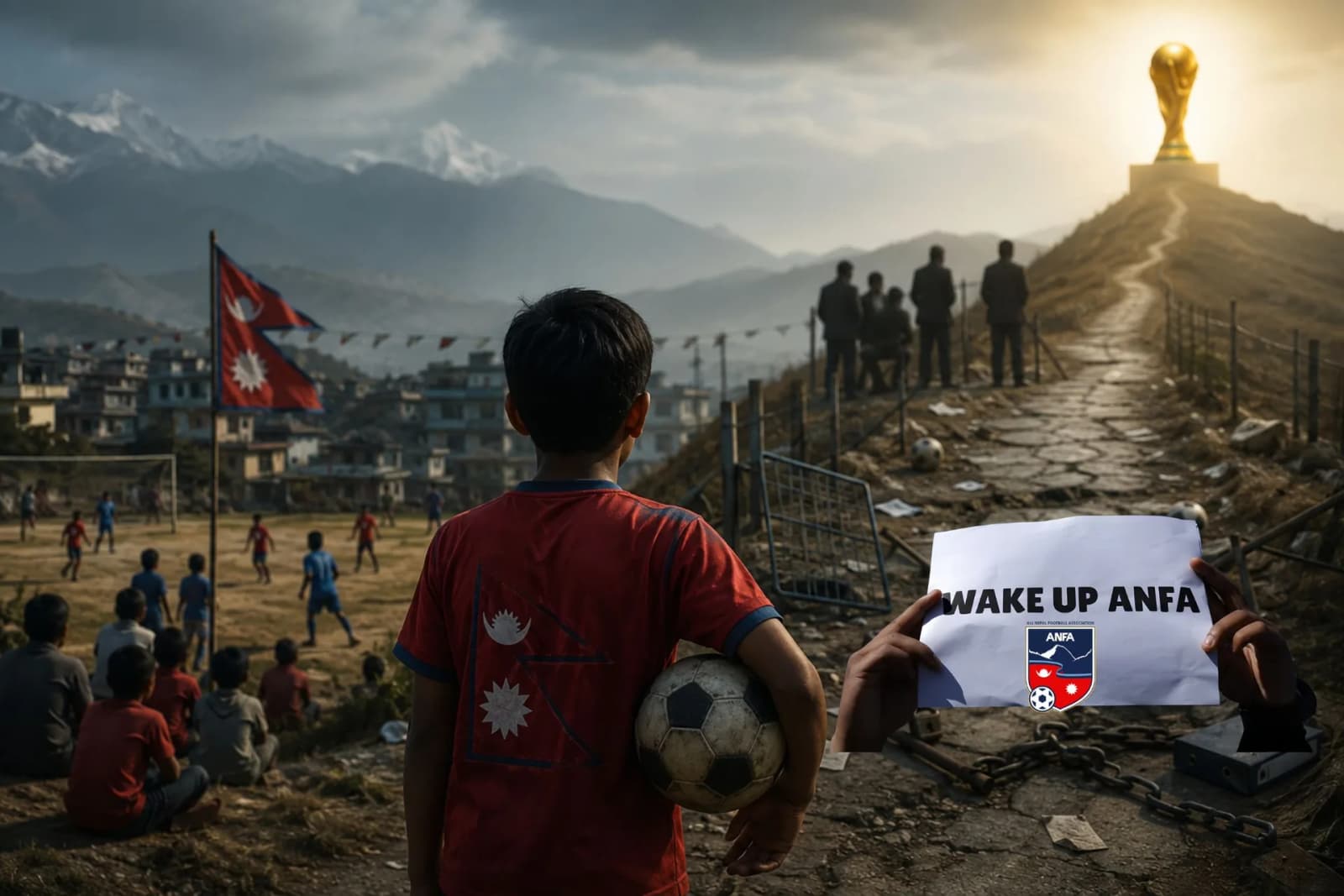
Nepal has loved football for more than a century. From palace grounds during the Rana era to local matches, national team dreams, and today’s World Cup conversations, football has always had a special place in Nepali hearts. But love alone has never been enough to take a country to the FIFA World Cup.
Before The Dream: The Birth Of Nepali Football
Football first arrived in Nepal during the Rana regime in 1921 and quickly caught public attention. Narayan Narshingh Rana of Thamel and Chandrajung Thapa of Naxal are believed to have helped introduce and organize the sport in Nepal. In its early days, football was mostly played on palace grounds, but by the 1930s, both palace and local teams were playing at Singha Durbar, Chhauni, Gaucharan, Jawalakhel, and Lainchaur.
As the game grew, the All Nepal Football Association was established in 1951 as the country’s football governing body. ANFA became affiliated with FIFA in 1972 and has since been responsible for Nepal’s national team and domestic competitions.

Football’s roots in Nepal also connect to the country’s historic bond with Britain through the Gurkhas. The game became more organized in 1921, gained mass popularity by the early 1930s, and received a major push in 1934 when Prime Minister Padma Shumsher started the Ram Janaki Football tournament. In those days, the game even looked different. Until around 1990, many teams played without goalposts or nets, scoring simply by getting the ball across the goal line. In places like Dadeldhura in the Far West, some communities still play it that way today.
More than a century later, Nepal’s love for football remains strong. The passion has never been the problem. The bigger question is why that passion has still not turned into a World Cup journey.
When The Problem Is Not On The Field
If Nepal dreams of reaching the FIFA World Cup, the challenge is not only about players, training, or talent. Sometimes, the bigger problem is off the field.
In June 2026, ANFA President Pankaj Bikram Nembang and General Secretary Kiran Rai were stopped at Tribhuvan International Airport while trying to travel to Mexico for the opening match of the 2026 FIFA World Cup. They had already entered the international terminal and received boarding passes, but immigration officials stopped them after finding that their passports were on a government watchlist.
The issue began after the National Sports Council suspended ANFA for three months on March 25, 2026. After that, passport details of 24 ANFA officials, including Nembang and Rai, were placed under watchlist in April. Although the NSC later lifted the suspension on May 15 after pressure from FIFA, the travel alert was not removed.
The controversy became bigger because ANFA CEO Indraman Tuladhar had earlier traveled to Canada for the 76th FIFA Congress by going through India. According to officials quoted by The Kathmandu Post, this was possible because Nepal and India share an open border and the passport restriction had not been shared with Indian authorities. Officials also said ANFA officials were on a watchlist, not a blacklist, meaning they were stopped from leaving Nepal but were not arrested.
For Nepali football, this matters because it shows how administrative disputes can damage the country’s football image. If the officials responsible for football are facing travel restrictions while trying to attend major FIFA events, it raises serious questions about coordination, leadership, and trust.
FIFA Suspension Deepens The Crisis
Then came the biggest blow. FIFA suspended ANFA indefinitely over third-party interference. Nepal had been a FIFA member since 1972 and had never been expelled in more than fifty years. But in June 2026, the crisis reached that point.
According to The Kathmandu Post, FIFA’s letter followed months of warnings. FIFA had even sent delegates to eastern Nepal in March to monitor an election that never happened after the NSC suspended ANFA just one day before the vote. The situation became worse when the government blocked 24 ANFA officials from traveling, preventing the president and general secretary from attending both the FIFA Congress and the World Cup’s opening match.
By June 11, FIFA had asked for written confirmation that interference would stop. That confirmation did not come. Days later, the suspension became official.
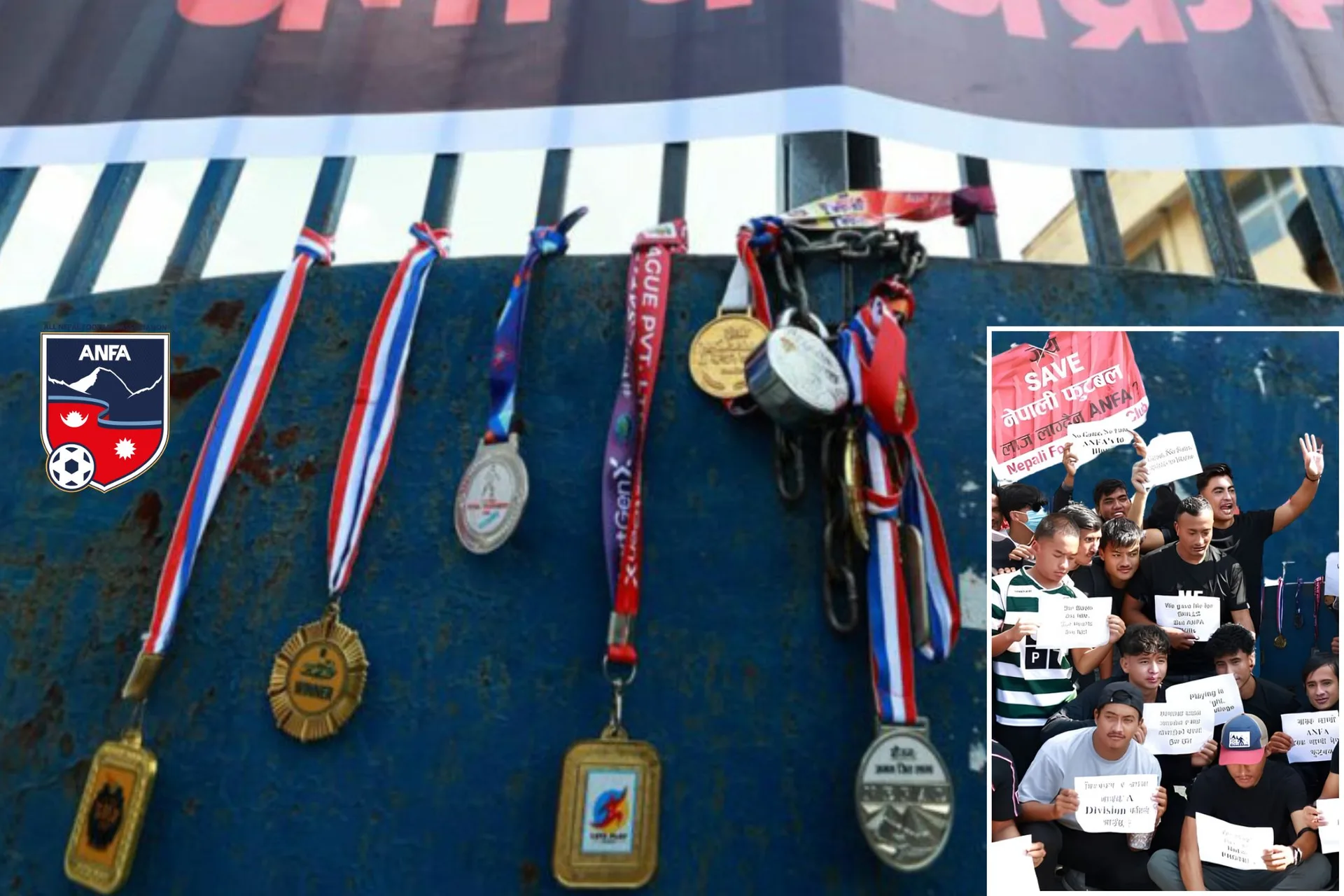
The impact was immediate. ANFA’s offices in Satdobato were left quiet. Around 70 employees were left uncertain about their jobs. Players posted satirical “Thank You ANFA” signs outside the building. Both sides blamed each other, while Nepal’s place in the SAFF Championship came under threat and the country was locked out of international football, and the women’s league was also reportedly cancelled.
The Real Reason The Dream Feels Distant
Nepal’s love for football has never disappeared. It was there in 1921 when the game first arrived. It was there when people gathered to watch local matches. It is still there today in conversations, social media, and the dreams of millions of fans.
But the World Cup is not reached by love alone. It needs strong leadership, stable institutions, fair elections, proper planning, and a football system that works as seriously as the fans support it.
So when we ask why Nepal has not reached the FIFA World Cup, the answer is not just about talent or passion. The deeper problem is leadership. Until Nepali football is managed with the same seriousness that fans show for the game, the World Cup will remain what it has been for decades: close enough to dream about, but still far from reach.
Source:
All Nepal Football Association. (n.d.). About us.
Nepali Cultural & Social Heritage. (n.d.). Football. Nepali Cultural Heritage.
Nayak Paudel. (2026, June 10). Banned at TIA, grounded ANFA officials still have an open road to Mexico via India. The Kathmandu Post.
Paudel, N. (2026, June 25). How Nepal's football establishment destroyed itself. The Kathmandu Post.
Published Jul 6 in Researched Article