
Former Qatar Emir Sheikh Hamad Dies At 74, Leaving A Legacy That Reached Thousands Of Nepali Families
Former Qatar Emir Sheikh Hamad bin Khalifa Al Thani has died at 74 after spending nearly two decades guiding Qatar through major economic, political and social transformation. His rule also influenced Nepal by expanding employment opportunities in Qatar and strengthening diplomatic and labour relations between the two countries.
· 5 min read
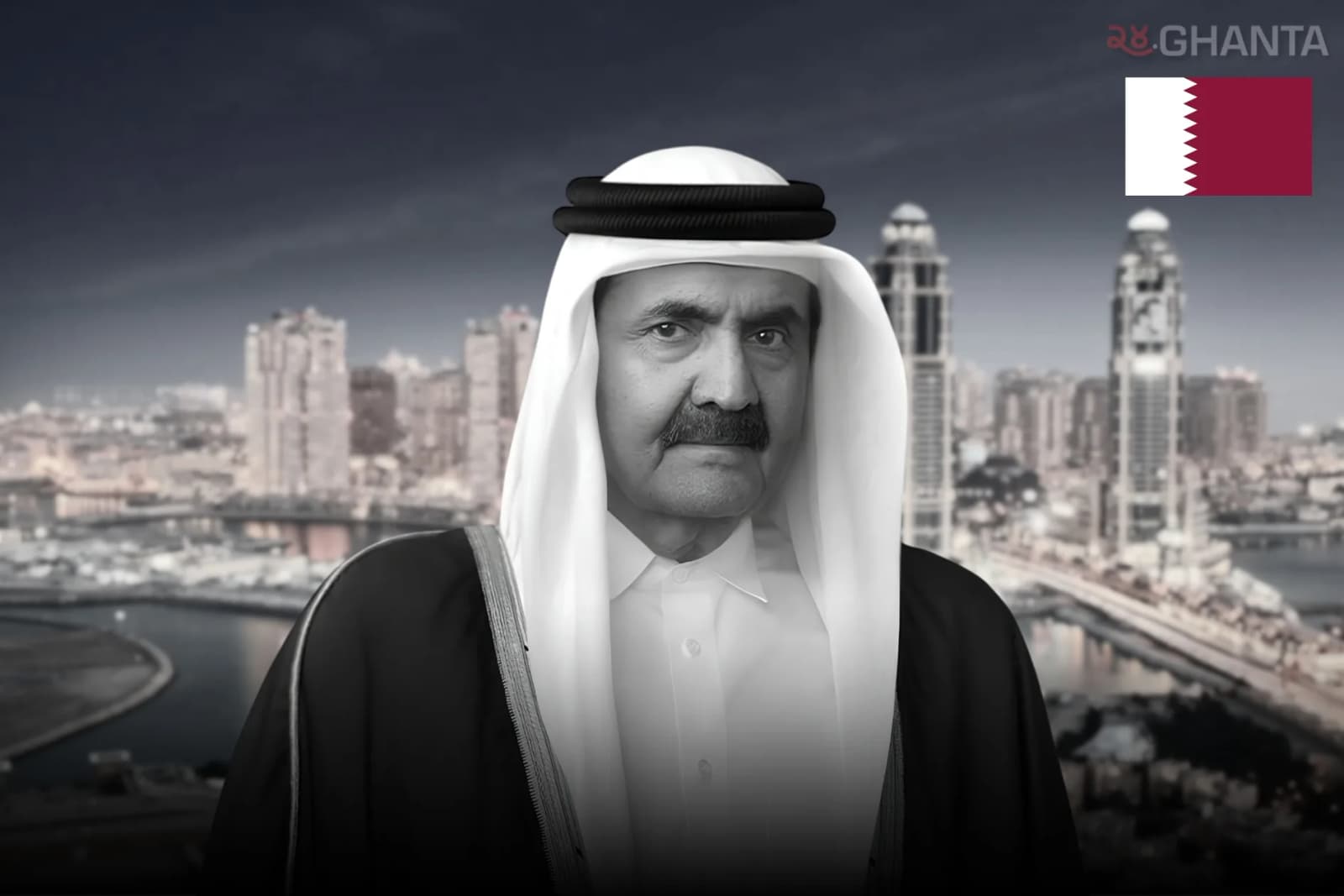
Sheikh Hamad bin Khalifa Al Thani, the former Emir of Qatar, died in Doha on Sunday at the age of 74, according to an announcement carried by Qatar’s state authorities. He led the country from 1995 until 2013 and became known for using Qatar’s energy wealth to modernise the nation, strengthen its international position and expand its influence far beyond the Gulf region.
Rise Of A New Qatar
Sheikh Hamad came to power in 1995, at a time when Qatar had not yet achieved the international visibility it enjoys today. During his leadership, the government invested heavily in roads, hospitals, schools, airports, housing and other major public projects.

The rapid development of Qatar’s natural gas industry gave the country the financial strength to carry out these changes. Revenue from liquefied natural gas helped Qatar become one of the wealthiest countries in the world and turned Doha into a major centre for business, aviation and international diplomacy.
Building An Energy Powerhouse
One of Sheikh Hamad’s most important contributions was the expansion of Qatar’s vast gas resources. His government supported large-scale production and export projects that placed the country among the world’s leading suppliers of liquefied natural gas.
The growth of the energy sector provided funding for national development while also allowing Qatar to invest in companies, properties and major projects around the world. These decisions formed the economic foundation that continues to support the country today.
Expansion Of Qatar’s Global Influence
Sheikh Hamad wanted Qatar to be recognised for more than its oil and gas wealth. During his rule, the country developed a more active foreign policy, hosted international negotiations and built relationships with governments and organisations across several regions.
His era was also linked with the expansion of Qatar Airways and the launch of Al Jazeera, which later became one of the most influential news networks in the Arab world. These institutions helped introduce Qatar to a much wider global audience.
World Cup Achievement
Qatar’s successful bid to host the 2022 FIFA World Cup became one of the defining achievements associated with Sheikh Hamad’s leadership. The hosting rights were awarded in 2010, three years before he stepped down.
The decision made Qatar the first Arab and Middle Eastern country to host the men’s football World Cup. It also led to years of construction involving stadiums, transport networks, hotels and other facilities.
Growing Employment For Nepali Workers
Qatar’s economic expansion created a strong demand for foreign workers, particularly in construction, hospitality, transport, cleaning, security and service-related jobs. Nepal became one of the countries supplying a large number of workers to meet this demand.
Over the years, Qatar developed into a major foreign-employment destination for Nepalis. Income earned by migrant workers supported families across Nepal and contributed significantly to household expenses, education, healthcare, housing and local businesses.
Stronger Nepal-Qatar Relations
The increasing movement of Nepali workers encouraged both governments to deepen their official relationship. Nepal established its embassy in Doha, while labour-related agreements and discussions were introduced to organise recruitment and improve cooperation.
Qatar also became important to Nepal not only as an employment market but as a source of remittance income. The relationship grew further through official visits, diplomatic meetings and negotiations concerning the welfare and rights of migrant workers.
Difficult Experiences Behind The Opportunities
Although Qatar provided employment for thousands of Nepalis, the migration story was not without hardship. Some workers faced recruitment debt, delayed wages, difficult working conditions, excessive heat and restrictions connected to earlier labour systems.
International criticism, particularly during preparations for the World Cup, placed pressure on Qatar to revise several labour policies. Reforms were later introduced, although rights organisations and workers continued to raise concerns about how effectively some protections were enforced.
Voluntary Transfer Of Power
In 2013, Sheikh Hamad handed leadership to his son, Sheikh Tamim bin Hamad Al Thani. The peaceful transfer was considered unusual in a region where rulers commonly remain in power for life.
His decision allowed the next generation of leadership to continue the development strategy created during his reign. Sheikh Hamad remained widely known afterward as Qatar’s Father Emir.
A Legacy Beyond Qatar
Sheikh Hamad’s legacy can be seen in Qatar’s energy strength, modern infrastructure, global investments, diplomatic profile and role in international sport and media. He took control of a relatively low-profile Gulf country and helped turn it into a state with influence far greater than its physical size.
For Nepal, his period of leadership is closely connected with the rise of Qatar as a major labour destination. The opportunities created during Qatar’s expansion changed the economic circumstances of many Nepali families, even as concerns over migrant rights remained part of the wider story.
The death of Sheikh Hamad closes a major chapter in Qatar’s modern history. His decisions transformed the country’s economy and international identity while producing effects that reached workers and families in countries including Nepal.
His rule will therefore be remembered not only through Doha’s skyline, energy projects and global institutions, but also through the lives of migrants whose work became part of Qatar’s extraordinary development.
Published Jul 12 in World