
Nepal Introduces New Film Grading System, Moving Away From Traditional Censorship
Nepal’s Central Film Examination Committee has started a new film grading system, replacing traditional scene cuts and beeps with age-based classification to support creative freedom.
· 4 min read
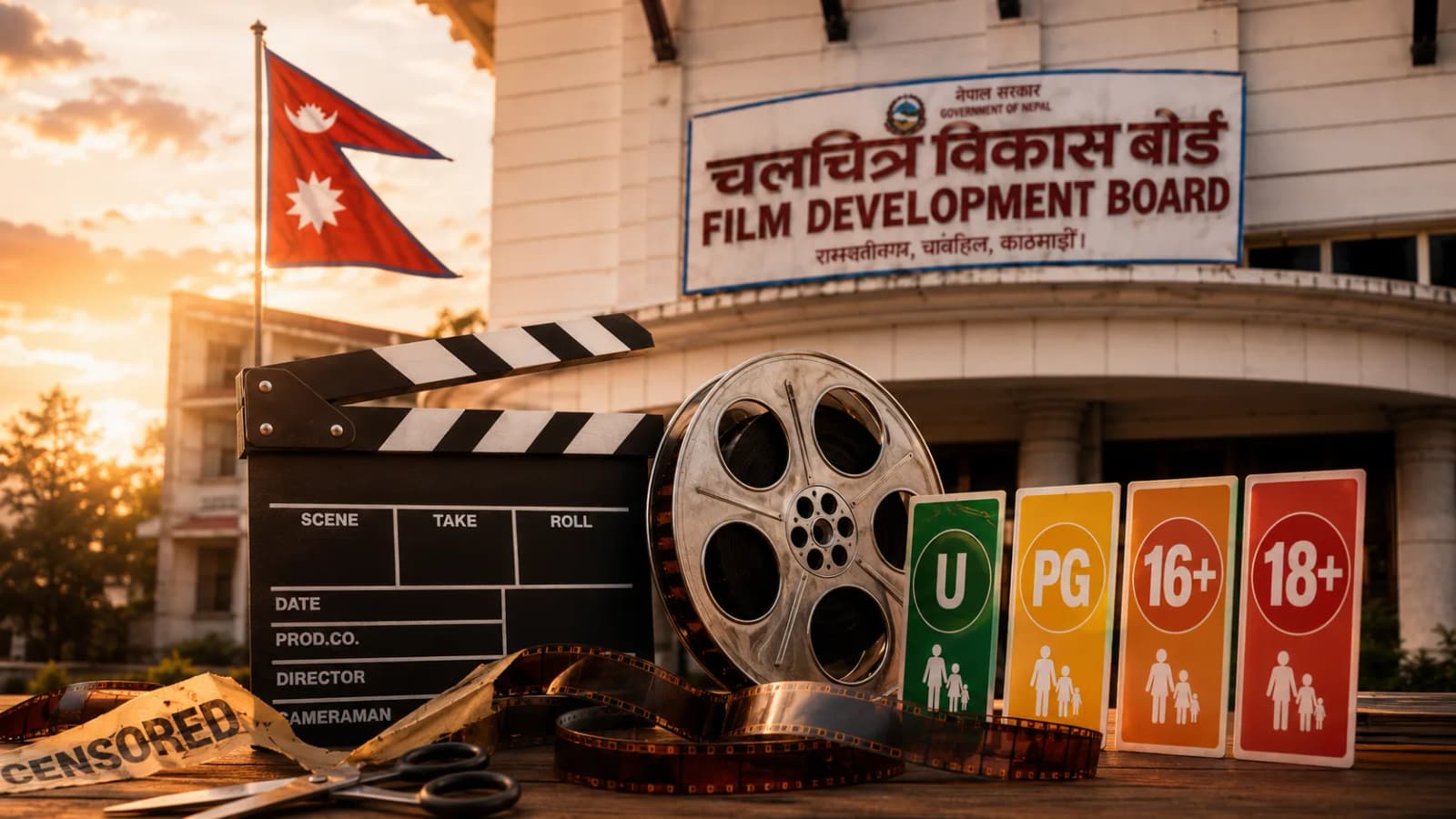
Nepal’s film industry is set to witness a major change as the Central Film Examination Committee has started implementing a new grading system for movies. The committee has moved away from the long-practiced system of cutting scenes or adding “beeps” to sensitive dialogues and has now started classifying films based on their content, age suitability, and sensitivity.
The change is being seen as an important reform for Nepali filmmakers, who have often expressed concern that the old censorship system created fear and limited creative freedom. With the new grading system, films will not be judged only by what should be removed. Instead, they will be examined to decide which audience group can safely watch them.
According to committee expert member Manoj Pandit, the Nepali films “Mitjyu” and “Kaji” have already received certification under the new system. This marks the beginning of a new approach in Nepal’s film examination process.

From Cutting Scenes To Classifying Content
Under the earlier system, the film checking process was often linked with censorship. If a scene, word, or dialogue was considered sensitive, the board could ask filmmakers to cut the scene or mute the dialogue. This created pressure among filmmakers and sometimes affected the way stories were told on screen.
The new system aims to change that approach. Instead of directly using scissors on a film, the committee will now classify movies under different categories. These categories may include films suitable for all viewers, adult audiences, or specific age groups.
This means a movie with mature themes may not be cut simply because it is not suitable for children. Instead, it can be given an age-based classification so that viewers and families can decide whether it is appropriate for them.
Children’s Safety Will Remain A Key Concern
The committee has said that special attention will be given to content that may affect children’s psychology. Scenes involving violence, disturbing visuals, strong language, or sensitive themes may be reviewed carefully before a grade is given.
The idea is not to stop filmmakers from telling serious stories. Instead, the goal is to guide audiences, especially parents, about what kind of content a movie contains.
This system is expected to create a balance between creative freedom and audience protection.
A New Name With A New Message
Along with the change in working style, the committee has also changed its English name. The earlier name, Central Board of Film Censor, has now been replaced with Central Film Examination Committee.
According to Manoj Pandit, removing the word “censor” from the name is an important symbolic step. He said the word “censor” created psychological fear among creators. The new name gives a message that the committee’s role is not just to control films but to examine and classify them responsibly.
This change shows that the committee wants to shift from a control-based system to a viewer-information-based system.
What This Means For Nepali Filmmakers
For Nepali filmmakers, this reform could open the door to more creative storytelling. Directors and writers may now feel more confident in exploring realistic, bold, emotional, or socially sensitive subjects without the constant fear that important scenes will be removed.
The change could also help Nepali cinema grow professionally. Many countries around the world use rating systems instead of heavy censorship. Nepal’s move toward grading can help the local film industry follow a more modern and audience-friendly model.
However, the success of this system will depend on how fairly and consistently it is implemented. Filmmakers will expect the committee to apply the rules clearly and avoid unnecessary interference in creative work.
Digital Platforms May Also Come Under New Rules
The discussion around film grading is not limited to cinema halls. Digital platforms such as YouTube and OTT services have also become major spaces for films, short movies, web series, and other video content.
Pandit said that many contents released on digital platforms are currently outside the direct monitoring of the committee. He believes that the upcoming new law should also address such platforms.
This could become an important topic in the coming days, as more Nepali creators are now publishing content directly online. A clear law for digital content could help protect viewers while also giving creators proper guidelines.
A Major Shift For Nepal’s Film Industry
The new grading system marks a major shift in Nepal’s film examination process. It changes the focus from cutting content to classifying content. For filmmakers, it may feel like a step toward more freedom. For audiences, it means clearer information before watching a movie.
If implemented properly, this reform could help Nepali cinema become more open, responsible, and creative. The move also sends a clear message that the future of film regulation in Nepal may not be about fear and scissors, but about choice, clarity, and classification.
Published May 22 in Entertainment