
Oli Claims Dipendra Did Not Commit Narayanhiti Palace Massacre, Raises Fresh Questions Over 2058 Tragedy
KP Sharma Oli has claimed that the then Crown Prince Dipendra did not commit the Narayanhiti Palace massacre, calling the widely circulated narrative a “readymade” story.
· 3 min read
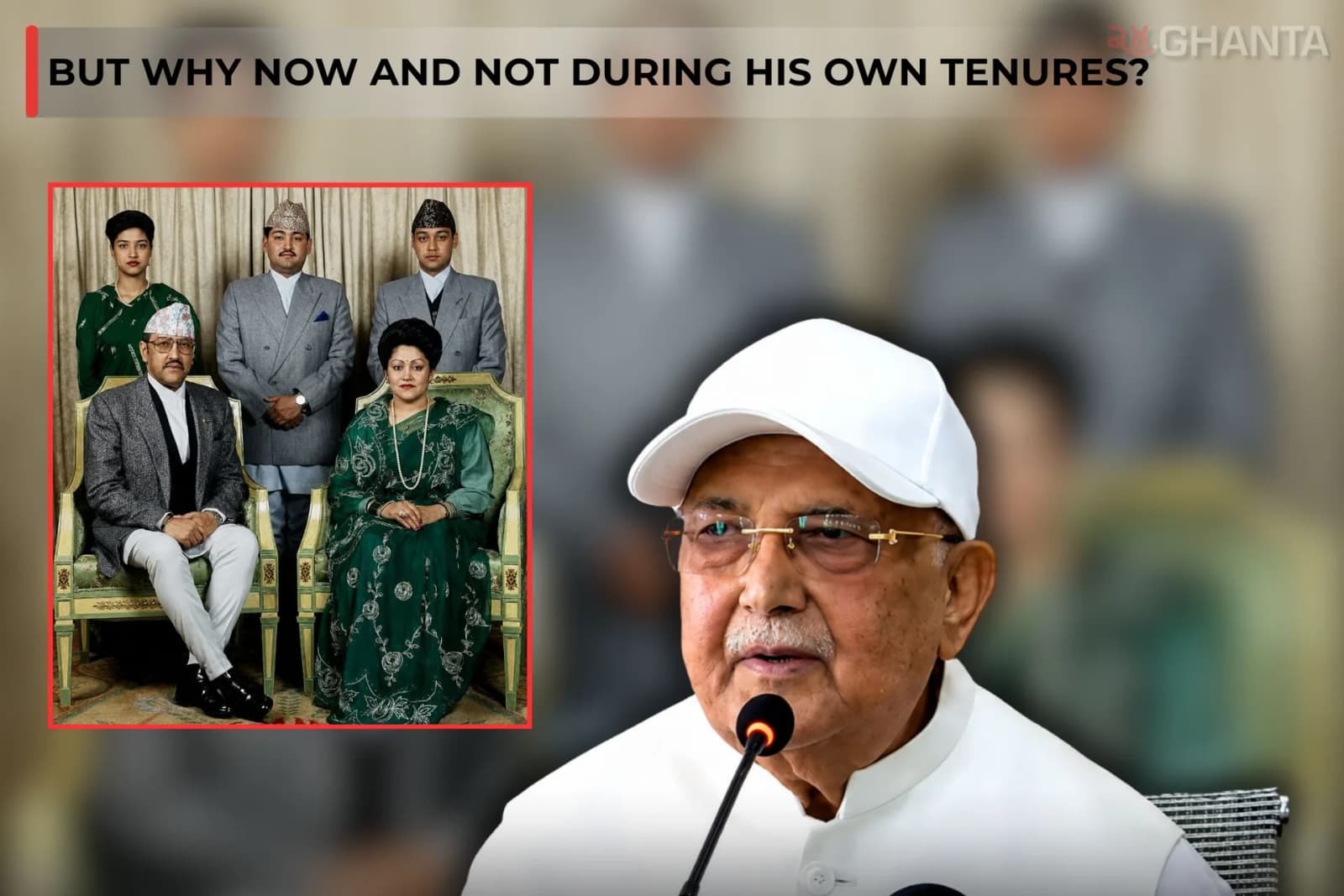
KATHMANDU — Former Prime Minister and CPN-UML Chairman KP Sharma Oli has claimed that the then Crown Prince Dipendra Bir Bikram Shah did not commit the Narayanhiti Palace massacre of Jestha 19, 2058, saying the widely circulated story linking the killings to Dipendra’s love affair was a “readymade” narrative spread without truth.
According to reports, speaking at a program organized at the UML party office in Chyasal, Lalitpur, Oli said that the accepted public version of the palace massacre was not correct. The massacre killed King Birendra Shah, Queen Aishwarya, and several members of the royal family, bringing a shocking end to King Birendra’s direct dynasty.
Oli Rejects Dipendra Narrative
Oli said the story that Dipendra killed his father, mother, brother, sister, and other royal family members before shooting himself was false.

He claimed that the narrative was quickly spread across the world after the massacre and was linked to Dipendra’s alleged love affair.
According to Oli, the real truth of the palace massacre has still not been revealed.
“Readymade Story” Claim
Oli said a prepared story was circulated globally immediately after the incident, claiming the massacre happened because of Dipendra’s personal relationship issue.
He questioned who originally created that story and said the source of the narrative remains unknown.
Oli also expressed surprise that major international media outlets accepted and repeated the same account instead of investigating the facts behind such a major national tragedy.
Palace Massacre Background
The Narayanhiti Palace massacre took place on Jestha 19, 2058, corresponding to June 1, 2001, inside the royal palace in Kathmandu.
The official investigation at the time blamed the then Crown Prince Dipendra for the killings. The official version said that he shot members of the royal family before shooting himself. Dipendra was later declared king while in a coma and died days later.
However, the massacre has remained one of Nepal’s most debated and controversial historical events. Many people have continued to question the official explanation, while several alternative theories have circulated for years.
Questions Over Timing
Oli’s latest statement has also raised a political question: why is he making such a strong claim now, years after serving multiple terms as prime minister?
Some may see the statement as a renewed call for transparency into one of Nepal’s darkest national events. Others may question whether the remarks are politically timed, especially because Oli did not formally reopen the issue during his previous tenures in government.
The claim could also revive public demand for a deeper investigation into the massacre, but Oli has not presented new evidence publicly to support his latest statement.
Debate Likely To Continue
The palace massacre remains deeply sensitive in Nepal’s public memory. Oli’s remarks are likely to reopen debate over the official investigation, the role of political leadership, and whether the state should revisit unanswered questions surrounding the tragedy.
For now, his statement adds another major political voice to the long-running public skepticism over the massacre, but it does not replace the need for evidence, formal inquiry, or official documentation.
Published Jul 17 in Politics