
Former Prime Minister KP Sharma Oli Named In Statement Over Controversial Passport Tender Split
A statement given to Nepal's anti-corruption agency has linked former Prime Minister and UML chairman KP Sharma Oli to the controversial passport procurement process, with a Foreign Ministry official claiming he instructed authorities to split the tender into two packages. The allegation has surfaced as the CIAA pursues a corruption case over the passport contract, arguing that dividing the tender may have facilitated irregularities and caused financial losses to the state.
· 4 min read
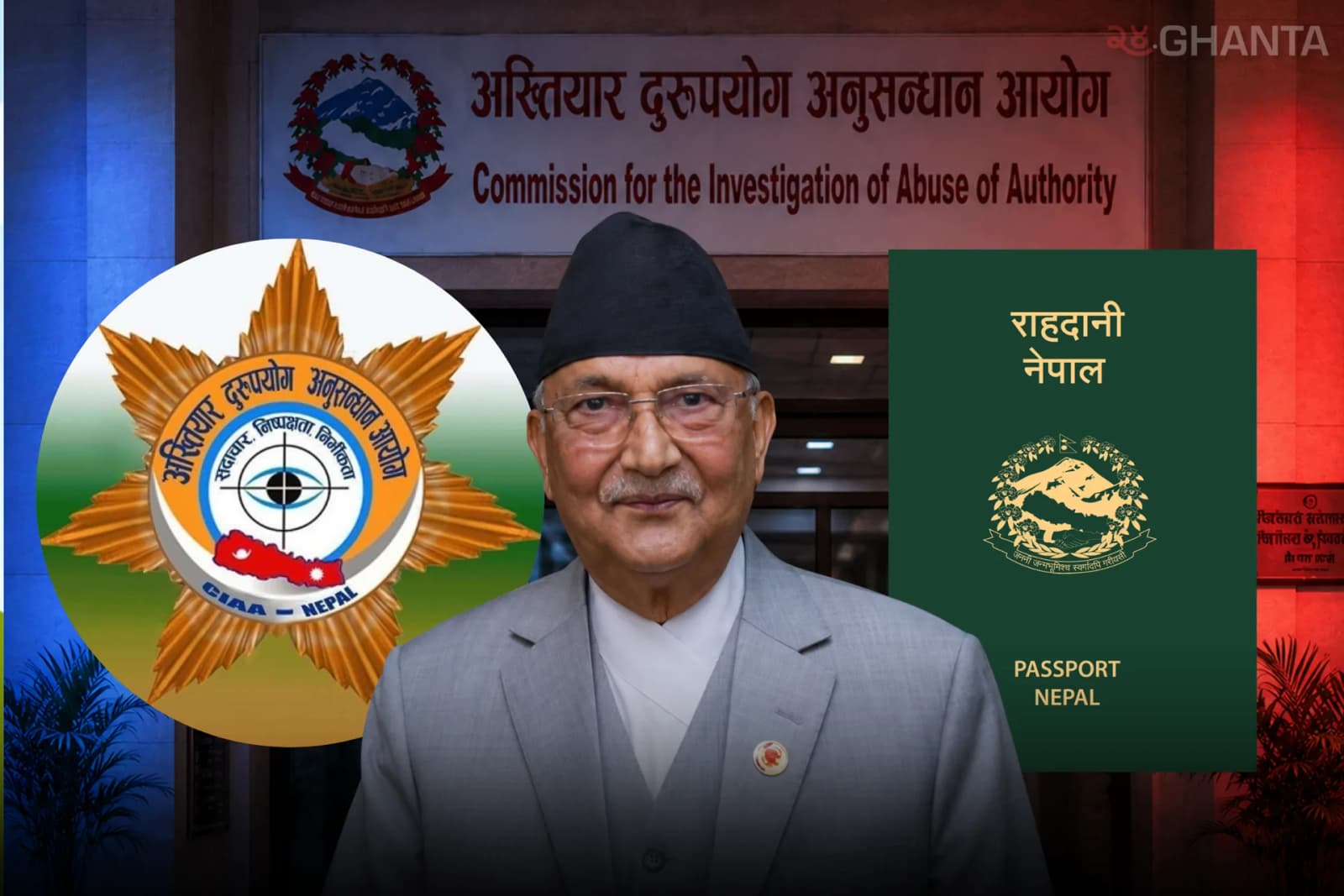
Former Prime Minister KP Sharma Oli, currently chairman of the Communist Party of Nepal (Unified Marxist–Leninist), has been linked to Nepal's controversial passport procurement case after a Foreign Ministry legal official told the Commission for the Investigation of Abuse of Authority (CIAA) that Oli instructed authorities to divide the passport tender into two separate packages. The statement emerged in Kathmandu on June 24, 2026, as the CIAA's corruption case over the passport contract continues to unfold, with investigators arguing that the tender was split in a manner that may have benefited specific interests and resulted in financial losses to the state.
The allegation comes from Pushkar Raj Nepal, a legal under-secretary at the Ministry of Foreign Affairs, whose statement has been included in the corruption charge sheet filed by the CIAA before the Special Court.

According to his statement, discussions regarding Nepal's passport management system were repeatedly held at the Prime Minister's Office. He claimed that senior officials from the Ministry of Foreign Affairs, the Department of Passports, the Prime Minister's Office, and technical experts participated in meetings where options for the passport procurement process were discussed.
The official told investigators that during one such meeting, then-Prime Minister Oli reportedly instructed officials to divide the procurement process into two separate packages in order to encourage competition and potentially reduce costs. According to the statement, the proposal was presented as a way to make the process more transparent and open to more bidders.
Why The Tender Split Is Controversial
The CIAA's corruption case argues that the decision to divide the passport procurement contract into two separate packages was not justified and may have been part of a broader scheme that enabled irregularities in the bidding process.
Investigators claim that officials were aware that splitting the contract could create additional costs and render existing software investments less useful. Despite those concerns, the procurement process moved forward after various committees and subcommittees were formed to review the proposal.
The anti-corruption agency alleges that these reviews ultimately supported a decision that benefited specific parties rather than protecting the public interest.
Political Figures Drawn Into Investigation
At the time the passport contract was awarded, KP Sharma Oli was serving as Prime Minister, while then Foreign Minister Arzu Rana Deuba oversaw the ministry responsible for the passport system.
The CIAA has stated that it has opened a separate investigation involving Arzu Rana Deuba. However, while Oli's name appears in statements and evidence cited in the charge sheet, the agency has not publicly indicated that a separate investigation has been launched against him.
The charge sheet primarily focuses on the actions of officials and individuals directly involved in the procurement process.
Allegations Of Political Connections
The passport contract was ultimately divided into two packages, with different companies securing each portion of the procurement process.
Critics of the arrangement have long alleged that political connections influenced how the contracts were awarded. The controversy has fueled claims that the tender was divided to accommodate competing interests linked to different political and business groups.
These allegations remain part of the broader corruption case now before the Special Court.
What Happens Next?
The Special Court will now examine the evidence presented by the CIAA, including witness statements, procurement documents, and financial records related to the passport contract.
As court proceedings continue, one of the key questions will be whether the decision to split the passport tender was a legitimate policy choice aimed at increasing competition or whether it formed part of a deliberate effort to manipulate the procurement process for unlawful gain.
The case has become one of Nepal's most significant corruption investigations in recent years because it involves a major government contract, senior public officials, and questions about how public procurement decisions were made at the highest levels of government.
Published Jun 24 in Crime