
Kathmandu’s Blue Bus Plan: Free Electric Buses For Women Await Budget Approval
Sajha Yatayat is preparing to operate 8 electric “Blue Buses” for women in Kathmandu Valley, but the service will start only after the Ministry of Finance approves the cost proposal and a formal agreement is completed. The first-phase routes are expected to cover Lagankhel–Budhanilkantha, Thankot/Nagdhunga–Airport, and clockwise and anti-clockwise Ring Road services, while questions remain over yearly operating cost and passenger rules.
· 2 min read
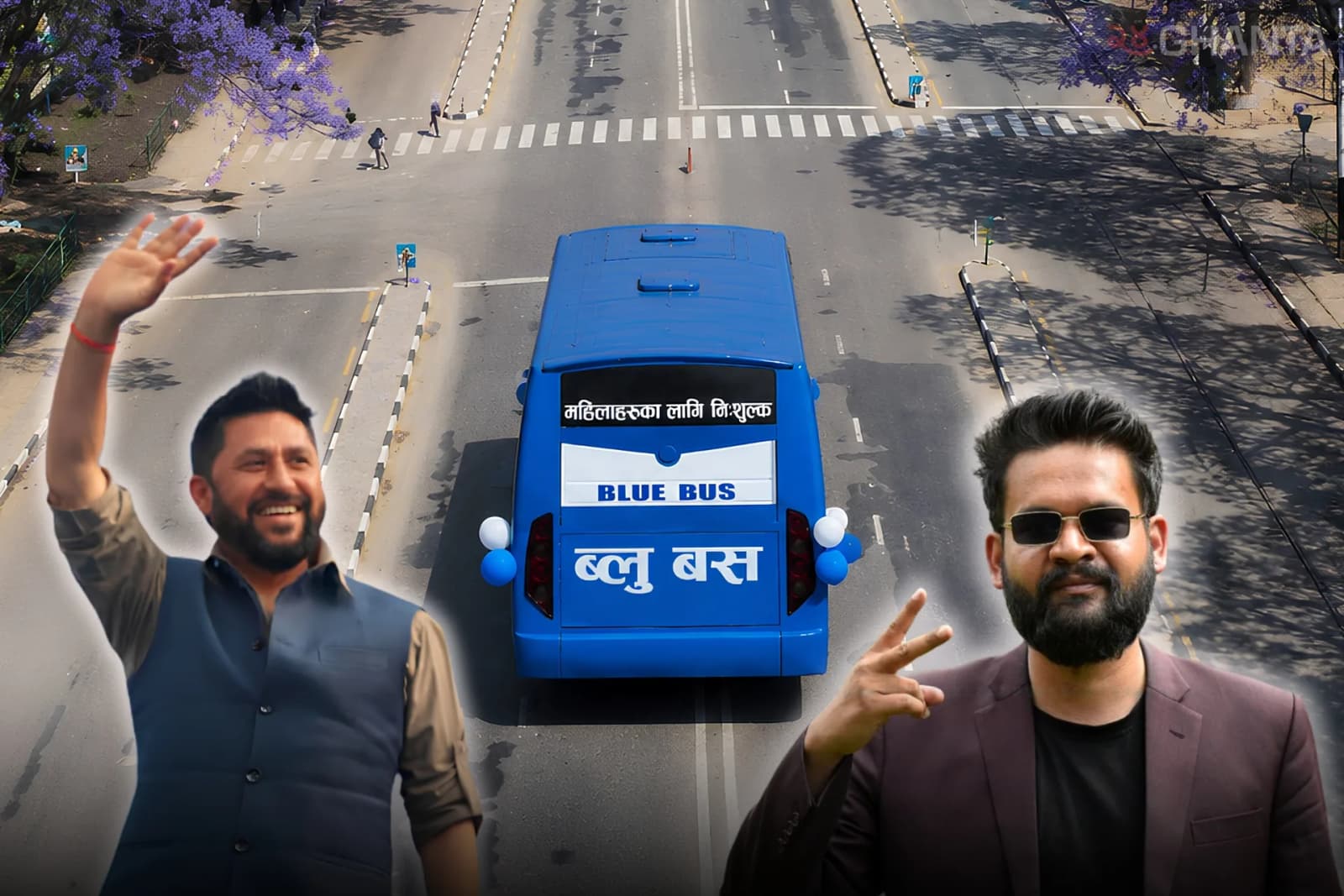
Sajha Yatayat is preparing to run 8 electric buses as free “Blue Buses” for women in Kathmandu Valley from mid-July, mainly to make public transport safer, easier, and more dignified for women passengers. The service is planned for key Valley routes including Lagankhel–Budhanilkantha, Thankot/Nagdhunga–Tribhuvan International Airport, and different Ring Road sections, but it will begin only after the Ministry of Finance gives approval and a formal agreement is signed with the government.
Cost Proposal Sent

The biggest issue in the plan is the operating cost. Sajha Yatayat has sent a proposal to the Ministry of Finance, seeking approval and feedback before the buses are launched. Sajha estimates that one electric bus may cost around NPR 10,000 to NPR 12,000 per day to operate, which means 8 buses could require at least around NPR 3 crore every year.
First-Phase Routes
In the beginning, 2 buses are expected to run on the Lagankhel–Budhanilkantha route, while another 2 buses are planned for the Thankot/Nagdhunga–Airport route. Four more buses are expected to serve Ring Road areas, with 2 moving clockwise and 2 moving anti-clockwise through busy points such as Koteshwor, Gaushala, Kalanki, and Satdobato.
The Blue Bus service is part of the government’s wider plan to deploy 25 buses within its first 100 days. Officials have said the service could later be expanded beyond the initial 8 buses if the first phase becomes practical and financially manageable.
Women are expected to travel free on these buses, but Sajha Yatayat has not yet made a final decision on whether men travelling with women, children, elderly people, or other passengers will be allowed. This means the exact operating rules still need to be clarified before the launch.
The plan is being promoted as a step toward safer and more accessible public transport for women in Kathmandu Valley. However, its success will depend on proper funding, clear passenger rules, strong route management, and whether the government can continue covering the operating costs in the long run.
The idea has received attention because it offers free travel for women, but the financial model is still the key challenge. Without a clear budget and long-term management plan, the service could face sustainability problems even after launch.
Published Jul 3 in Politics