
Messi Missed the World Cup Trophy—So Why Did IFFHS Name Him the Tournament’s Best Player?
Lionel Messi was named the IFFHS Best Player of the 2026 FIFA World Cup after recording eight goals and four assists during Argentina’s run to the final. The recognition came despite Argentina’s 1–0 extra-time defeat by Spain, although FIFA separately awarded its official Golden Ball to Rodri and the Silver Ball to Messi.
· 4 min read
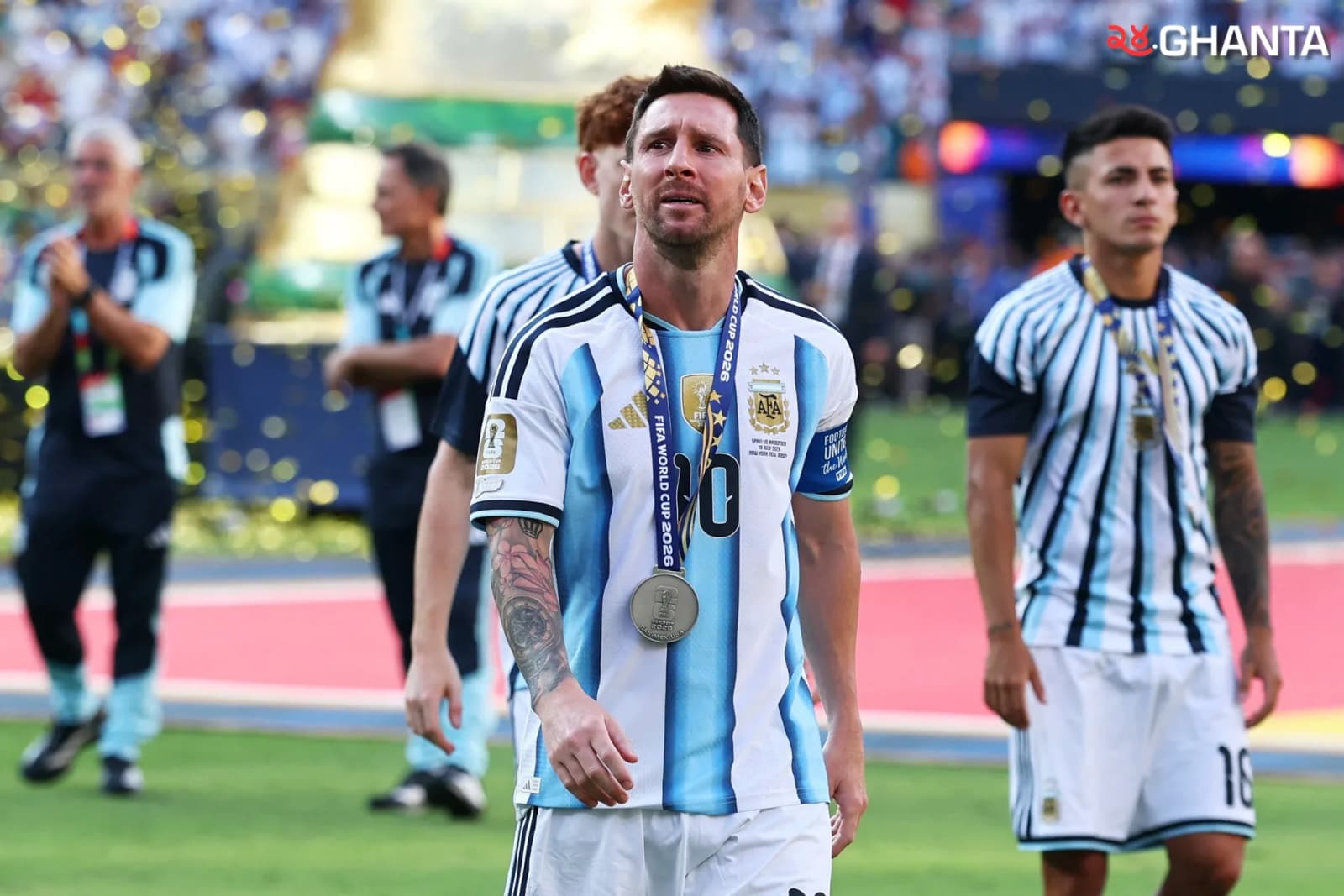
Messi Receives IFFHS Recognition
Argentina captain Lionel Messi was named the International Federation of Football History & Statistics Best Player of the 2026 FIFA World Cup following the tournament’s conclusion in the United States, Canada and Mexico in July 2026. IFFHS selected the 39-year-old because of his eight goals, four assists and consistent influence during Argentina’s journey to the final, where the defending champions suffered a 1–0 extra-time defeat against Spain in East Rutherford, New Jersey.
A Separate Award From FIFA
The IFFHS honor should not be confused with the official FIFA World Cup Golden Ball.

FIFA selected Spain midfielder Rodri as the tournament’s Golden Ball winner after he helped his country lift the trophy. Messi received FIFA’s Silver Ball as the competition’s second-best player, while the separate IFFHS assessment placed the Argentine captain first.
The distinction matters because the two organizations used different evaluation systems and announced separate awards.
Messi’s Tournament Numbers
According to IFFHS, Messi finished the tournament with eight goals and four assists, while receiving an average match rating of 8.33 in its performance index.
The IFFHS award page lists Messi as having played seven matches and 626 minutes. However, other tournament reports describe his eight goals and four assists across Argentina’s full run, including the final. The difference in the published appearance totals is not clearly explained in the available IFFHS material.
Leading Argentina to the Final
Messi remained central to Argentina’s attack throughout the tournament, contributing as both a scorer and creator.
His goals kept Argentina competitive in difficult matches, while his passing and ability to create opportunities helped the defending champions progress through the expanded competition and reach another World Cup final.
Argentina’s reliance on Messi was particularly notable because he was 39 during the tournament and competing in what may have been the final World Cup campaign of his career.
Final Ends in Heartbreak
Argentina faced Spain in the final on July 19, 2026, at the New York New Jersey Stadium in East Rutherford.
The match remained scoreless through regulation time before Spain substitute Ferran Torres scored in the 106th minute. Spain held on for a 1–0 victory after extra time to win its second men’s World Cup title.
Argentina finished the match with 10 players after Enzo Fernández was sent off shortly before Spain’s winning goal.
Spain Limits Messi’s Influence
Spain managed to control Messi and Argentina more effectively than any of their previous opponents.
Argentina failed to register an attempt during regulation time and produced its first shot only late in extra time. Spain controlled possession and created most of the opportunities, although Argentine goalkeeper Emiliano Martínez prevented a larger defeat with several saves.
Messi therefore ended the final without a goal or assist, but his earlier performances remained strong enough for IFFHS to rank him as the tournament’s leading player.
Why IFFHS Selected Messi
IFFHS said its World Cup recognition was based on overall performance, consistency and contribution throughout the tournament rather than solely on whether a player’s team won the trophy.
Messi’s combined total of 12 direct goal contributions gave him one of the strongest individual attacking records at the competition. His influence across Argentina’s campaign helped him finish above players from tournament-winning Spain in the IFFHS assessment.
Rodri Wins FIFA’s Golden Ball
FIFA reached a different conclusion and selected Rodri as the official best player of the tournament.
The Spanish midfielder played a central role in controlling matches, protecting Spain’s defense and setting the tempo of the eventual champions. His leadership and consistency helped Spain complete an unbeaten campaign and concede only one goal across eight matches.
Messi finished behind Rodri in FIFA’s voting but was officially awarded the Silver Ball.
Messi’s Goalscoring Impact
Messi’s eight goals placed him among the tournament’s leading scorers, although he did not receive the Golden Boot.
France forward Kylian Mbappé finished as the World Cup’s leading goalscorer and received FIFA’s Golden Boot. Messi’s additional four assists, however, strengthened his overall case in performance assessments that considered both scoring and chance creation.
Another Historic Campaign
The 2026 tournament added another major chapter to Messi’s World Cup career.
He had previously won FIFA’s Golden Ball in 2014 and again in 2022, becoming the first player to receive the award twice. Although he did not win a third official Golden Ball or a second consecutive World Cup title in 2026, he again remained one of the competition’s most productive and influential players.
Recognition Despite Defeat
The IFFHS award reflects a distinction often seen in football: the tournament’s most successful team does not always contain the player rated highest by every organization.
Spain won the trophy, and Rodri received FIFA’s top individual honor. Messi, meanwhile, earned separate recognition from IFFHS for the attacking numbers and leadership that carried Argentina to within one match of retaining the World Cup.
For Messi, the award provides individual recognition after a tournament that ended in disappointment but still demonstrated his ability to influence football’s biggest competition at the age of 39.
Published Jul 22 in Sports