
Nepal’s Asian Games Esports Participation At Risk Despite Qualifying In Three Titles
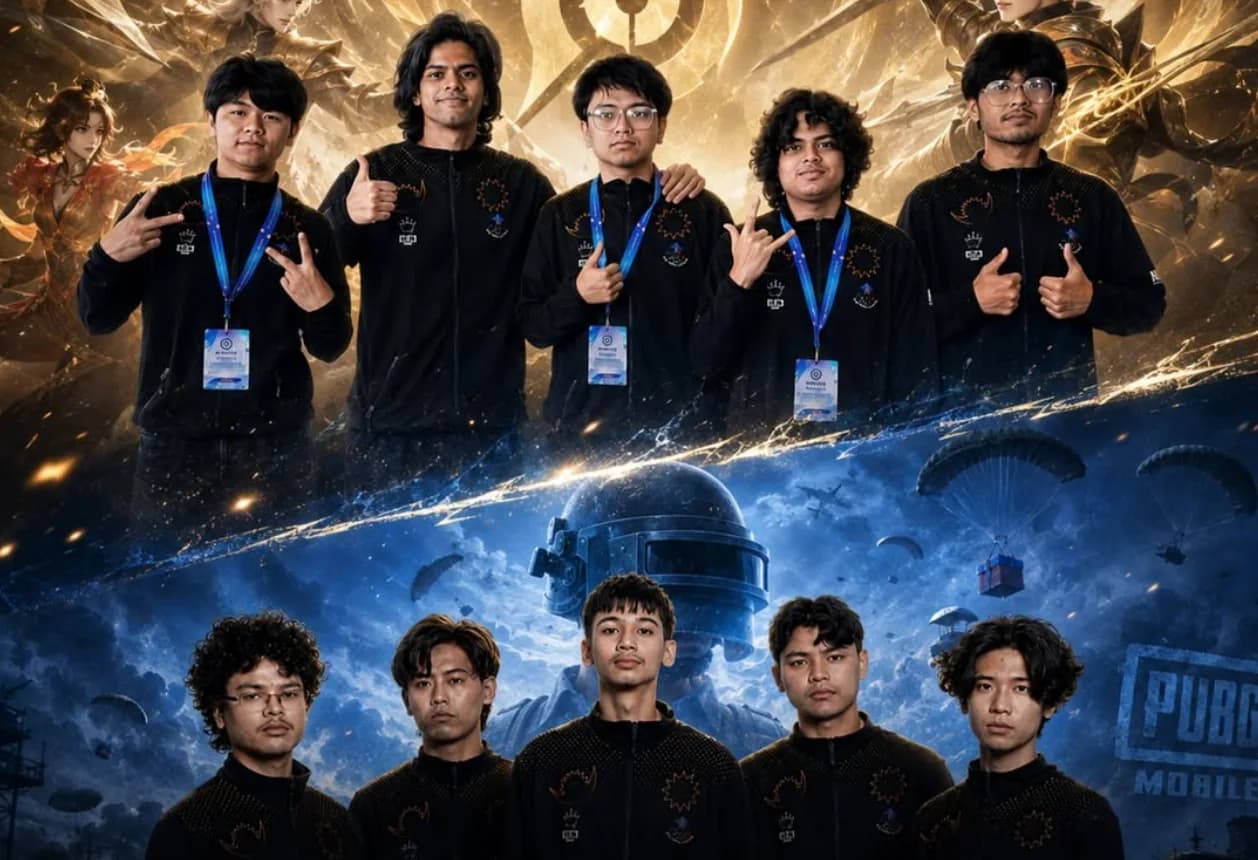
Nepal’s qualified esports teams in Honor of Kings, PUBG Mobile and Mobile Legends: Bang Bang face the risk of missing the 20th Asian Games in Aichi Nagoya, Japan, as a dispute between esports associations creates serious registration problems.
· 5 min read
Kathmandu, 10 August 2026
Nepal’s esports players are facing the possibility of missing the 20th Asian Games in Aichi Nagoya, Japan, despite earning qualification in three major esports titles through international qualifying competitions.
Nepal qualified for the Asian Games in Honor of Kings, PUBG Mobile and Mobile Legends: Bang Bang. However, a long running dispute between two esports associations in Nepal has created problems with the official registration process, putting the players’ participation at risk.

The situation has become particularly frustrating for the players because their places were earned through competition against international teams rather than through direct selection.
Nepal Qualified In Three Esports Titles
Nepali esports teams delivered strong performances during international Asian Games qualifiers held in different Asian countries.
In Honor of Kings, Nepal competed against 20 teams at the qualifier in Malaysia and finished sixth. Nine teams from the competition qualified, allowing Nepal to secure its place at the Asian Games.
Nepal also qualified in PUBG Mobile after finishing seventh at its qualifier in Vietnam.
The Mobile Legends: Bang Bang team produced another strong result, finishing among the top three at its qualifying competition in Singapore.
These performances meant Nepal had successfully earned Asian Games qualification in three esports titles.
However, qualification on the field has not guaranteed that the players will actually reach Japan.
Dispute Between Two Esports Associations
At the centre of the problem is a dispute involving two organizations representing esports in Nepal.
The Esports Association of Nepal, known as ESAN, has recognition from Nepal’s National Sports Council.
Meanwhile, the Nepal Esports Association, known as NESA, has recognition from international esports organizations, including the Asian Electronic Sports Federation.
This difference between national and international recognition has created a difficult situation for Nepal’s esports players.
Nepal’s sports law provides for one association for each sport, but the existence of two organizations claiming authority over esports has created questions over which body has the right to manage and represent Nepali esports.
The disagreement has now directly affected players who qualified for the Asian Games.
Registration Problems Put Asian Games Places At Risk
According to reporting by The Kathmandu Post, Nepal’s National Sports Council did not recommend the qualified esports contingent for registration.
Without the recommendation, the Nepal Olympic Committee was unable to complete the players’ registration with the Olympic Council of Asia.
The report said the Olympic Council of Asia had initially shown some flexibility even after the official registration deadline because Nepal had qualified in three esports titles.
However, continued delays have created the risk that Nepal’s available places could eventually be given to other countries.
This means players who successfully earned qualification through international competition could miss the Asian Games because of administrative problems outside their control.
Honor Of Kings Players Also Face List Dispute
The Honor of Kings team has faced another complication involving the names of players submitted for the Asian Games process.
Honor of Kings team manager Arun Mishra told The Kathmandu Post that ESAN had submitted names of players connected to an earlier domestic competition.
According to Mishra, those were not the same players who represented Nepal at the international qualifying competition and earned the Asian Games place.
This difference between the submitted list and the players who actually competed internationally added another problem to the registration process.
For the qualified players, the issue is particularly serious because they had already completed the sporting requirement needed to reach the Asian Games.
Players Take Dispute To Court
With their Asian Games participation under threat, players and representatives have also turned to Nepal’s legal system.
According to The Kathmandu Post, 13 players and representatives filed a case at the Patan High Court on July 15.
The case named the National Sports Council, Nepal Olympic Committee, Nepal Esports Association and the Ministry responsible for sports among the defendants.
Players and team representatives have also approached government and sports authorities seeking a solution that would allow the qualified teams to participate.
The legal action shows how serious the situation has become as the players try to protect the Asian Games places they earned through competition.
More Than One Nepali Team Is Affected
The issue is not limited to Honor of Kings.
Nepal’s qualification in PUBG Mobile and Mobile Legends: Bang Bang is also part of the wider dispute surrounding the country’s esports participation.
This means Nepal could potentially lose representation across three esports titles despite successfully qualifying.
For the players, the Asian Games represents one of the biggest opportunities available in competitive esports.
Esports has become an official medal sport at the Asian Games, putting professional esports players on the same major continental sporting platform as athletes competing in traditional sports.
Esports At Aichi Nagoya 2026
The 20th Asian Games will be held in Aichi Nagoya, Japan, in 2026, with esports once again included in the official programme.
The Asian Electronic Sports Federation has been appointed as the technical delegate for esports at the Games.
Honor of Kings is among the esports titles included in the competition, giving Nepal’s qualified players an opportunity to compete against some of Asia’s strongest esports nations.
Nepal’s performances during the qualifiers showed that its teams were capable of competing successfully at the regional level.
The current challenge is no longer qualification. It is whether the country can complete the required administrative process and send the players who earned those places.
Players Wait For A Solution
The dispute has turned what should have been a major achievement for Nepali esports into a period of uncertainty.
Nepal’s teams qualified in three separate titles after travelling abroad and competing against international opponents. Their results secured places at one of Asia’s biggest sporting events.
But unless the disagreement between the concerned organizations and the registration issues are resolved, those achievements may not result in an appearance at the Asian Games.
For Nepal’s esports community, the case has also raised a larger question about how competitive gaming should be governed in the country as esports continues to grow.
The qualified players are now waiting for a solution that will allow their performances in international qualifiers to be recognized with the opportunity they earned: representing Nepal at the 20th Asian Games in Japan.
Published Aug 10 in Sports