
Nepal’s Decision Key To Restart Gorkha Recruitment Into Indian Army Under Agnipath Scheme
Former Indian Chief of Defence Staff General Anil Chauhan has said recruitment of Nepali Gorkhas into the Indian Army can only happen under the Agnipath scheme and that the decision now rests with Nepal. The recruitment process has remained suspended since 2022 after disagreements over the new four-year military service system.
· 4 min read
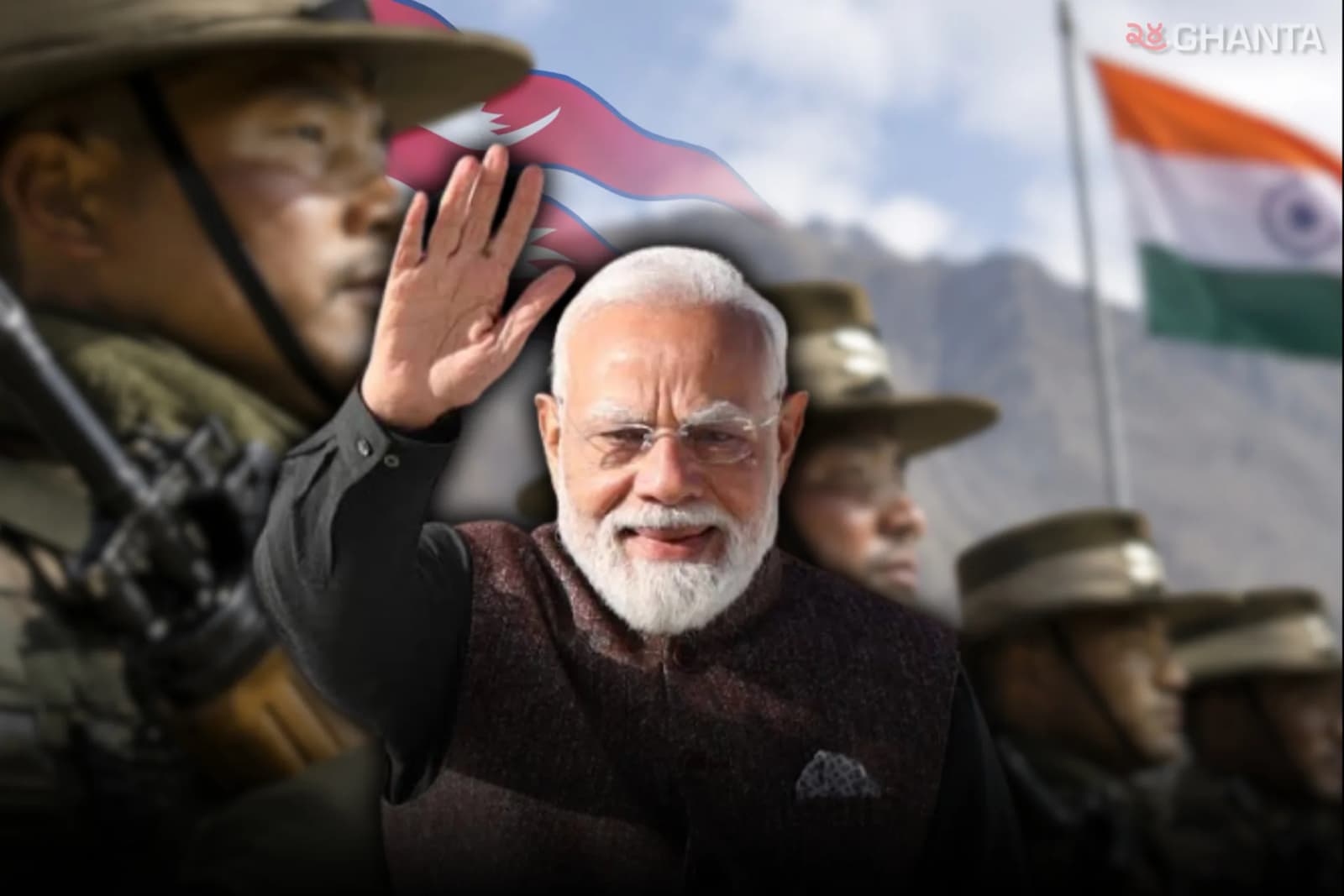
A Two-Century Military Tradition Faces Uncertainty
For more than 200 years, Nepali Gorkhas have served in foreign armies, particularly in the Indian Army, under a historic military relationship between Nepal, India and Britain.
However, this long-standing tradition now faces uncertainty after India introduced the Agnipath recruitment scheme, which changed the way soldiers are recruited and served.
Recruitment of Nepali citizens into the Indian Army has remained effectively suspended since 2022, with Nepal raising concerns over whether the new system aligns with the existing framework governing Gorkha recruitment.

India Says Nepal Must Decide On Future Recruitment
Former Indian Chief of Defence Staff (CDS) General Anil Chauhan (Retired) has said that future recruitment of Nepali Gorkhas into the Indian Army will have to take place under the Agnipath system.
Speaking at an event organised by ThePrint, Chauhan said there cannot be separate recruitment rules for Nepali citizens and Indian citizens serving in the Indian Army.
According to him:
India has changed its recruitment system through Agnipath.
Nepali recruits cannot have a separate arrangement from Indian recruits.
The decision on whether Nepali citizens will join under this system rests with Nepal.
He said the existing Nepal-India-UK arrangement required Nepali soldiers to receive conditions similar to those applicable to Indian and British soldiers.
What Is The 1947 Tripartite Agreement?
The recruitment of Nepali Gorkhas into the Indian Army is linked to the India-UK-Nepal Tripartite Agreement signed in 1947.
The agreement was reached after India gained independence and the British Gorkha regiments were divided.
Under the arrangement:
Six Gorkha regiments became part of the Indian Army.
Four regiments went to the British Army.
Nepali soldiers were promised equal treatment regarding service conditions.
The agreement became the foundation for decades of Nepali citizens joining the Indian Army.
Why Did Recruitment Stop?
The dispute began after India introduced the Agnipath scheme in 2022.
Before Agnipath, soldiers below commissioned officer rank generally served long-term careers with pension and retirement benefits after completing required service periods.
Under the new system:
Soldiers are recruited for four years.
Around 25 percent of recruits can continue in regular military service.
Around 75 percent leave after four years with a financial package.
Traditional pension benefits are not available to most recruits.
Nepal objected to the new system, arguing that it was introduced without consultation and could affect the historical framework of Gorkha recruitment.
Nepal’s Position On The Issue
Nepal has maintained that it remains committed to the 1947 agreement.
Nepal has argued that any change to the traditional recruitment arrangement should involve discussion between both sides.
Nepal’s position has been that India has not formally presented a proposal regarding the continuation of Gorkha recruitment under Agnipath.
The issue remains unresolved, with:
India saying Nepal must decide whether to accept Agnipath.
Nepal saying it is waiting for formal discussions and clarification.
Former Indian Officials Call For Political Discussion
Apart from General Chauhan, retired Indian Major General Ashok Mehta has also commented on the issue.
Mehta suggested that India may no longer take the first step in restarting recruitment discussions.
He argued that:
India believes it has not technically violated the existing agreement.
Nepal should take the initiative if it wants recruitment to resume.
The matter should be handled politically rather than only through military channels.
However, he also said India should continue communication with Nepal due to the importance of bilateral relations.
Economic Importance Of Gorkha Service
The Gorkha connection is not only military but also economic.
According to available estimates:
More than 1.22 lakh Nepali citizens receive pensions from the Indian government due to their military service.
Pension and salary payments from retired soldiers contribute significantly to Nepal’s economy.
For decades, military service in the Indian Army has remained an important career opportunity for many Nepali youths.
Impact On Nepali Youth
The recruitment suspension has affected thousands of young Nepalis who traditionally prepared for Indian Army recruitment.
The uncertainty has also pushed some youths to explore other foreign military opportunities.
Nepal has estimated that more than 200 Nepalis have travelled to Russia to join its military amid the Russia-Ukraine conflict, raising concerns over alternative pathways for foreign military employment.
A Historic Relationship Waiting For A Political Solution
The Gorkha recruitment issue is now at a sensitive stage.
India says the Agnipath system is the only available route, while Nepal continues to question whether the new arrangement fits within the historic agreement.
After decades of cooperation, the future of Nepali Gorkha recruitment depends on whether Kathmandu and New Delhi can find common ground through political dialogue.
For now, both sides appear to be waiting for the other to make the next formal move.
Published Aug 10 in World