
Private Healthcare To Become 3% More Expensive From Friday As Nepal Imposes ‘Health Equity Fee’
Treatment at private health institutions across Nepal will become more expensive from Friday after the government imposes a 3 percent Health Equity Fee on all service charges collected from patients. The fee will apply to private hospitals, laboratories, nursing homes, polyclinics, medical colleges and other private healthcare providers.
· 5 min read
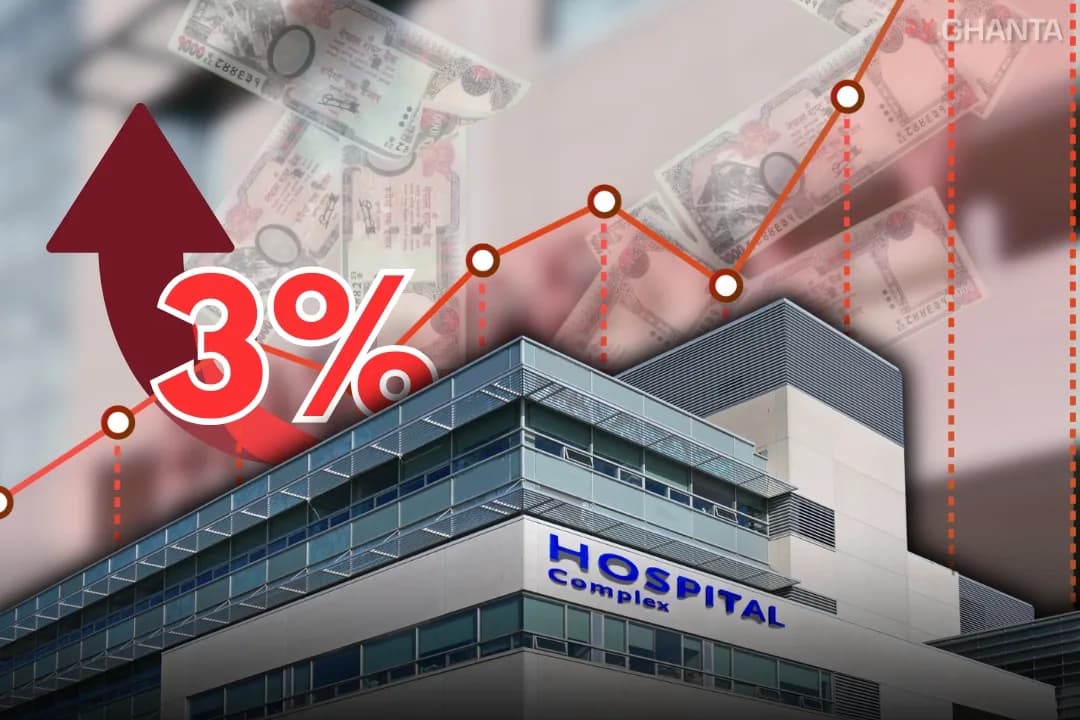
Treatment at private hospitals and healthcare institutions across Nepal will become more expensive from Friday, July 17, 2026, after the government starts collecting a 3 percent Health Equity Fee from patients.
The fee, introduced through the Economic Bill 2083, will apply to all service charges collected by private hospitals, laboratories, nursing homes, polyclinics, private medical colleges and other privately operated healthcare providers.
Although healthcare institutions will collect and deposit the fee, the direct financial burden will fall on patients.

How Much More Will Patients Pay?
Private healthcare providers will add a 3 percent fee to the total service charge listed on a patient’s bill.
For example:
A treatment bill of Rs 1,000 will carry an additional Rs 30
A treatment bill of Rs 10,000 will carry an additional Rs 300
A treatment bill of Rs 50,000 will carry an additional Rs 1,500
A treatment bill of Rs 100,000 will carry an additional Rs 3,000
The fee will be charged on all services covered under the new legal provision.
Which Health Institutions Will Collect The Fee?
The 3 percent Health Equity Fee will apply to services provided by:
Private hospitals
Private laboratories
Nursing homes
Polyclinics
Private medical colleges
Clinics and diagnostic centres
Other privately operated healthcare providers
Each institution will be required to issue an official bill clearly showing the additional fee collected from the patient.
Government Says Revenue Will Support Health Infrastructure
According to Section 17 of the Economic Bill 2083, the money collected through the Health Equity Fee will be used to expand access to quality healthcare and develop health-related infrastructure.
Private healthcare providers will have to deposit the collected amount, along with detailed transaction records, at the concerned Inland Revenue Office.
The payment and records will have to be submitted within 25 days after the end of every four-month reporting period.
Penalties For Failing To Collect Or Deposit The Fee
Private health institutions that fail to collect, report or deposit the fee will face penalties under the new law.
The key penalties will include:
15 percent annual interest for delayed payment
Rs 1,000 fine per statement for late submission of records
An additional penalty of 25 percent of the assessed amount if fee evasion is confirmed
Possible reassessment of the payable amount by tax officials
Before making a final assessment, tax authorities will give the concerned institution 15 days to submit an explanation.
Health Institutions Will Be Allowed To Appeal
A person or institution dissatisfied with the fee assessment will be allowed to request an administrative review from the Director General of the Inland Revenue Department within 30 days of receiving the notice.
To file the review, the applicant will have to:
Pay all undisputed fees and penalties
Deposit cash equal to 25 percent of the disputed amount
Submit the application within the legal deadline
The Director General will be required to make a decision within 60 days. If no decision is made or the applicant remains dissatisfied, the case can be appealed to the Revenue Tribunal within 35 days.
Private Hospitals Say Patients Will Bear The Cost
The Association of Private Health Institutions of Nepal has said private hospitals will collect the fee directly from patients from Shrawan 1.
Association President Dr Padam Khadka said hospitals will only act as collection agents for the government.
Under the new arrangement, hospitals will add Rs 3 to every Rs 100 charged for healthcare services and deposit the collected amount with the government.
Private hospitals argue that the policy will not reduce their income directly because the additional cost will be passed on to patients.
Consumer Rights Groups Oppose The New Fee
Consumer rights advocates have criticised the government for adding a new financial burden to healthcare services that are already expensive for many families.
They argue that government hospitals are currently unable to provide timely and high-quality treatment to all citizens, forcing many patients to seek care at private institutions.
Critics say imposing an additional fee on private healthcare without first strengthening public hospitals will make essential treatment less affordable.
Questions Raised Over The Constitutional Right To Healthcare
Article 35 of Nepal’s Constitution guarantees citizens the right to free basic health services from the state and equal access to healthcare.
Stakeholders have questioned whether imposing a new charge on healthcare services is consistent with the broader constitutional promise of accessible treatment.
They have also raised concerns about whether the government has sufficient systems to ensure that the money collected through the fee will actually be used to improve healthcare services and infrastructure.
Government Policy Could Push Patients Toward Public Hospitals
Private healthcare representatives believe the government may be trying to discourage people from using private hospitals while strengthening and promoting public healthcare institutions.
However, they argue that the policy could create serious difficulties for patients unless public hospitals are first equipped to provide reliable, timely and quality services.
For patients who depend on private hospitals due to limited services, long queues or lack of specialised treatment in government facilities, the new fee will become an unavoidable additional expense.
Key Points
Private healthcare services will become 3 percent more expensive from July 17, 2026
The fee will apply to hospitals, labs, nursing homes, polyclinics and private medical colleges
A Rs 10,000 treatment bill will carry an additional Rs 300
Healthcare providers will collect the fee directly from patients
The government says the money will support quality healthcare and infrastructure
Institutions that fail to deposit the fee will face interest and penalties
Consumer groups say the policy will make already expensive healthcare less affordable
Private hospitals say the direct financial burden will fall entirely on patients
The new Health Equity Fee will mark a major change in Nepal’s private healthcare billing system. While the government says the revenue will help improve health infrastructure, patients and rights advocates remain concerned that the policy will further increase the cost of essential medical treatment.
Published Jul 16 in Health