
Supreme Court Orders Audio-Video Recording Of Suspect Statements In Serious Criminal Cases
The Supreme Court has directed the government to make audio-video recording mandatory while taking statements from suspects in serious criminal cases to protect detainees’ rights and strengthen investigation transparency.
· 3 min read
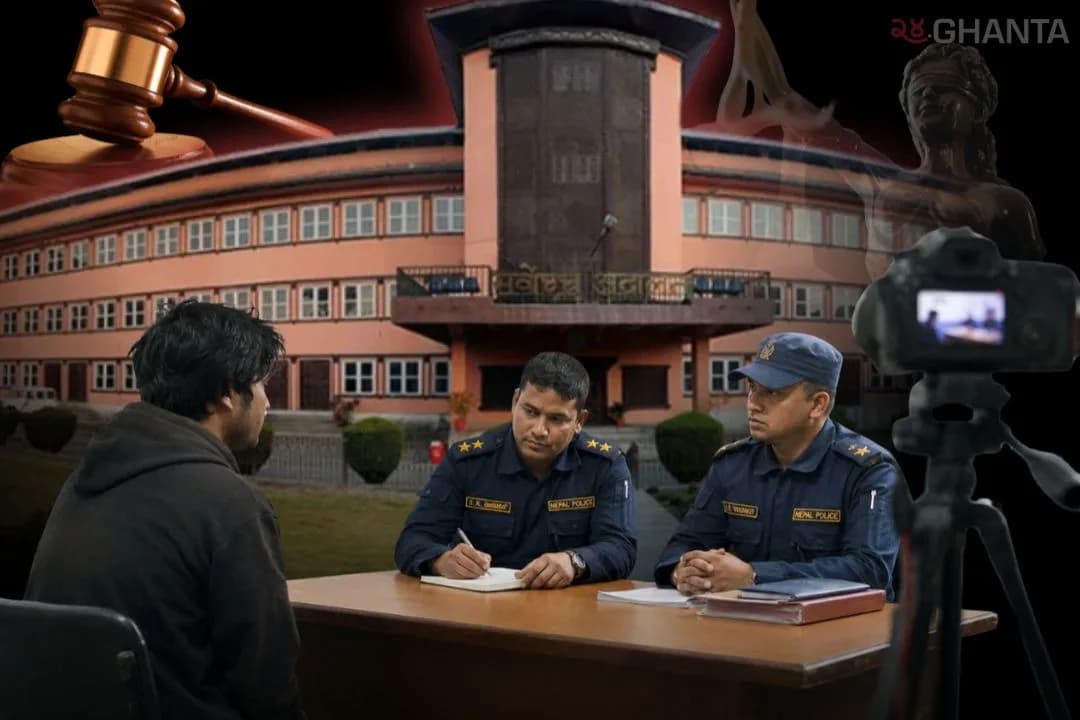
KATHMANDU, July 9 — The Supreme Court has directed the government to make audio-visual recording mandatory while recording statements of suspects in serious criminal cases, aiming to make criminal investigations more transparent, protect detainees from possible torture and strengthen the credibility of the justice process.
The order was issued to the Government of Nepal, the Home Ministry, Nepal Police Headquarters, and the Office of the Attorney General by a joint bench of Justices Hari Prasad Phuyal and Bal Krishna Dhakal. The full text of the verdict was made public this week.
Court Pushes For Transparent Investigation
The Supreme Court said audio-video recording of statements would help reduce disputes over whether a suspect’s statement was given voluntarily or under pressure.

The court observed that a transparent statement-recording process is important to protect the constitutional and legal rights of people in custody. It also said the measure would help prevent allegations of custodial torture and forced confession.
Lawyer Access During Statements
The court also directed authorities to make arrangements for the physical presence of a lawyer if a detained suspect requests legal assistance during the statement process.
The court did not accept the demand to make a defense lawyer’s full-time presence mandatory during every statement. However, it said that if a suspect asks for a lawyer during the statement, the process should be made practical without affecting the investigation's privacy.
Key Directions From The Court
The Supreme Court’s order includes several important directions:
Mandatory recording in serious cases
Audio-video recording must be arranged when suspects give statements in serious criminal cases.
Technology and budget support
The government must ensure the required technology, infrastructure, and budget for statement recording.
Lawyer access if requested
Authorities must facilitate the presence of a lawyer when a suspect in custody requests it, as long as it does not disturb the investigation.
Clear working procedure
Relevant rules, procedures, or guidelines must be revised to make the system practical and enforceable.
Code of conduct
The Office of the Attorney General and Nepal Bar Association should coordinate to prepare practical guidelines on the role and conduct of investigators, suspects, and lawyers during the early stage of investigation.
Rights protection in custody
The order aims to make sure that the legal and constitutional rights of suspects are protected while they are in police custody.
Case Filed By Law Students
The verdict came in response to a writ petition filed by law students Subas Chandra Jha and Chakra Bahadur Rasaili. The petitioners had argued that taking statements from suspects in police custody without legal safeguards could increase the risk of fear, pressure, and forced confession.
The petition had asked the court to ensure stronger legal protection during the statement process, including access to a defense lawyer.
Major Step For Criminal Justice
The order is being seen as an important step toward improving Nepal’s criminal investigation system. If properly implemented, it could help reduce custodial abuse claims, protect the rights of suspects, and make evidence collected during an investigation more reliable.
The government will now need to prepare the necessary legal, technical, and administrative arrangements to implement the court’s directive.
Full text of the order: https://supremecourt.gov.np/web/assets/uploads/078-wo-1226.pdf
Published Jul 9 in Politics