
World’s Largest Battery-Electric Aircraft Flies For 27 Minutes Using Just $5 Of Electricity
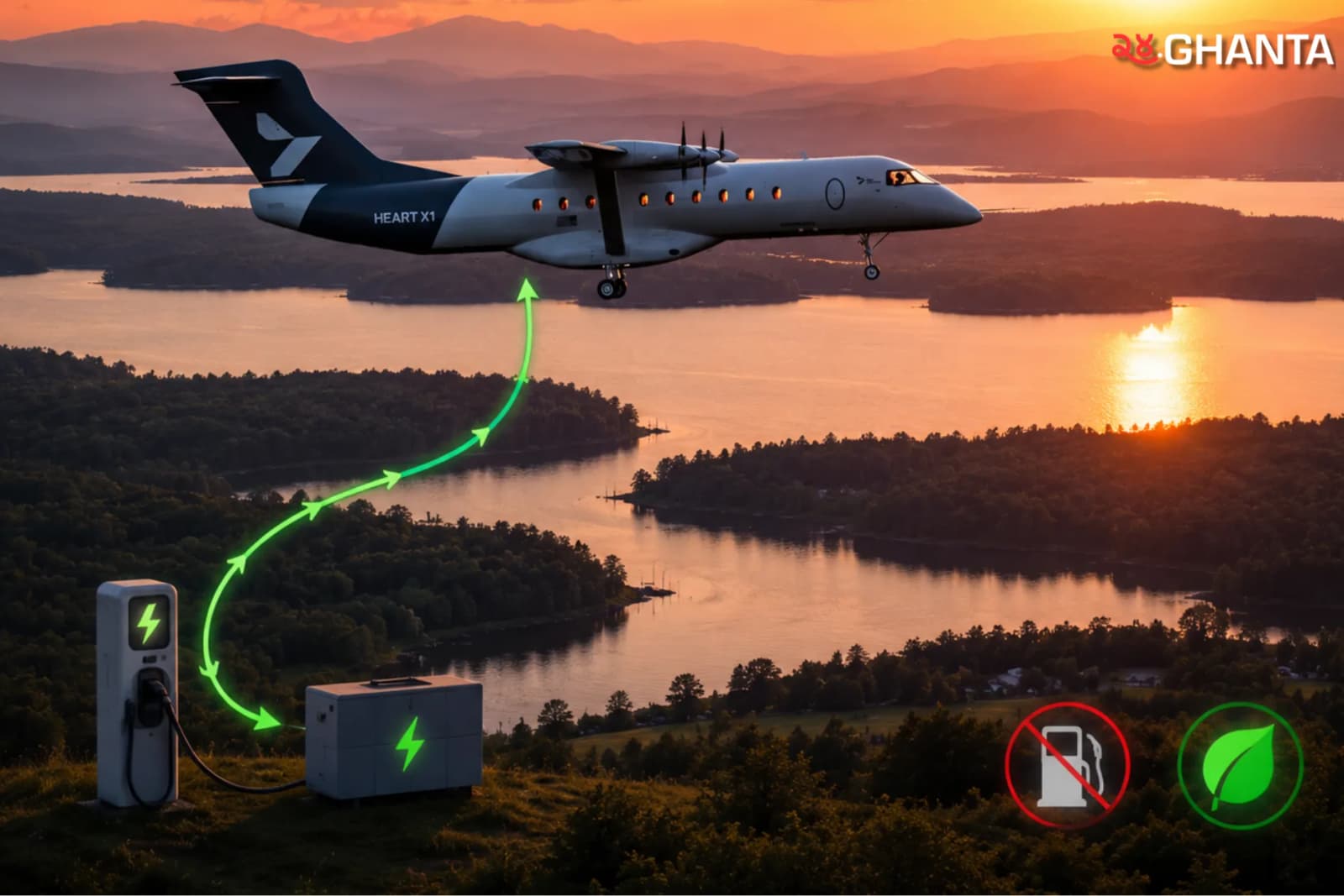
Heart Aerospace's full-scale X1 demonstrator has completed its first flight, staying airborne for 27 minutes and reaching 1,100 feet while using approximately $5 worth of electricity, according to the company. The battery-electric aircraft is a technology demonstrator for Heart's planned 30-seat ES-30 hybrid-electric regional airliner, which is currently targeted to enter commercial service in 2031.
· 5 min read
PLATTSBURGH, NEW YORK, AUGUST 21, 2026
When Was The X1 Built?
The X1's journey to its first flight began years before it finally left the ground.
Heart Aerospace publicly unveiled the full-scale Heart Experimental 1, or X1, in September 2024 as a demonstrator for technologies being developed for the company's future ES-30 regional aircraft.

At the time, the aircraft was primarily intended for ground-based testing, including charging operations, taxiing and airport turnaround procedures. Heart initially planned to fly the X1 much earlier, but the programme evolved as engineers continued developing and testing the aircraft.
The X1 was eventually converted from a full-scale ground demonstrator into a piloted flying testbed, allowing Heart to take the technologies it had been testing on the ground into actual flight.
Why Heart Built A Full-Size Aircraft
Rather than demonstrating its electric technology using a much smaller prototype, Heart chose to build the X1 at a scale representative of the aircraft it ultimately wants to manufacture.
The X1 has a 106-foot (32.3-metre) wingspan, is around 76 feet (23.2 metres) long, and has a T-tail rising approximately 23.5 feet.
Its all-electric propulsion system uses four wing-mounted electric motors, with batteries and power electronics integrated into the aircraft.
At takeoff during its maiden flight, X1 weighed more than 25,000 pounds, or 11,340 kg.
Building at this scale allowed Heart to test not only electric motors but also aircraft structures, aerodynamics, batteries, avionics, flight controls and the integration of these systems into one functioning aircraft.
From Ground Demonstrator To Flying Aircraft
Before flying the X1, Heart spent considerable time testing the aircraft on the ground.
Engineers carried out structural testing, propulsion testing, ground handling exercises and taxi tests. The company also tested how different aircraft systems worked together before allowing the demonstrator to leave the runway.
Heart established its X1 flight-test base at Plattsburgh International Airport in New York in January 2025, preparing the site for the aircraft's eventual flight campaign.
The X1 subsequently underwent taxi testing at Plattsburgh as Heart moved closer to its first flight.
FAA Cleared X1 For Flight Testing
A major regulatory milestone arrived in July 2026, when the US Federal Aviation Administration issued Heart Aerospace a Special Airworthiness Certificate in the Experimental Category for the X1.
The certificate authorised Heart to begin experimental flight testing.
Less than three weeks later, the aircraft was ready for the milestone the programme had been working toward.
When Did The X1 Actually Fly?
The X1 made its historic maiden flight on Wednesday, August 12, 2026, from Plattsburgh International Airport in upstate New York.
The aircraft lined up on Runway 35 before taking off around sunrise.
During the flight, the X1 travelled over the area surrounding Plattsburgh and the Champlain Valley, with Heart's images showing the aircraft flying with Lake Champlain, the Adirondacks and Vermont's Green Mountains in the surrounding landscape.
The aircraft remained in the air for 27 minutes.
What Happened During Those 27 Minutes?
The first flight was deliberately controlled rather than designed to test maximum speed, altitude or range.
The mission included taxiing, takeoff, climbing, manoeuvring and landing, allowing engineers to observe the aircraft through the fundamental phases of flight.
X1 climbed to approximately 1,100 feet (335 metres) above ground level, while its four-motor all-electric propulsion system delivered more than one megawatt of power.
After completing the planned manoeuvres, the aircraft returned to Plattsburgh International Airport and landed safely.
How Fast And High Can The X1 Fly?
Heart has established a restricted flight envelope for the experimental aircraft while testing continues.
According to the company, X1's current test envelope allows a maximum altitude of 2,000 feet (610 metres) above ground level and a never-exceed speed of 140 knots, or around 259 km/h.
The aircraft is operated by one pilot during flight testing and is currently focused entirely on low-altitude, battery-electric experimental operations.
These figures represent its controlled testing limits rather than specifications for a future commercial passenger aircraft.
Why Did The First Flight Take So Long?
Heart originally announced plans for the X1's first fully electric experimental flight much earlier in the programme.
However, developing an entirely new full-scale electric aircraft requires more than installing electric motors on an existing airframe.
Heart had to design and integrate the aircraft's battery system, electric propulsion, power electronics, avionics, flight controls and structural systems, conduct ground and structural testing, establish flight-test operations and secure experimental airworthiness approval from the FAA.
The eventual August 2026 flight therefore represented the culmination of a broader aircraft-development programme rather than simply a test of electric motors.
X1 Is The Test Aircraft, ES-30 Is The Real Product
The X1 itself is not intended to enter airline service.
Heart describes the relationship simply: X1 is the proof, while ES-30 is the product.
The experience gained from designing, building and flying X1 is being transferred into development of the ES-30, Heart's planned 30-seat hybrid-electric regional passenger aircraft.
Unlike the X1, which is entirely battery-powered, the ES-30 is designed to combine battery-electric propulsion with a hybrid system to provide greater range.
How Far Is The ES-30 Expected To Fly?
Heart's current specifications envision an all-electric range of around 125 miles, or 200 kilometres, for the ES-30.
Using its hybrid system, the aircraft is being designed for routes of up to approximately 500 miles, or 800 kilometres.
Heart also targets a charging time of around 30 minutes.
These remain development targets rather than the demonstrated performance of a certified commercial aircraft.
The Next Aircraft Is Already Being Built
While X1 begins its flight-test programme in New York, Heart has already moved on to the next stage.
The company says it is developing its first pre-production ES-30 at its pilot manufacturing facility in Los Angeles.
Flight testing of that aircraft is currently scheduled to start in 2028.
Heart is targeting 2031 for type certification, after which the ES-30 could move toward commercial airline operations if it successfully completes development and receives the required regulatory approvals.
The X1's August 12 flight therefore represents the beginning rather than the end of Heart's flight-testing journey.
Published Aug 21 in World