
A 22-Foot Shaligram Now Stands Beside the Kali Gandaki in Mustang
A 22-foot-tall Shaligram sculpture now stands on the bank of the Kali Gandaki River in Jomsom, Mustang, after being unveiled in May as part of an initiative to strengthen the area's religious and cultural tourism. Created from a large Kali Gandaki stone during a sculpture initiative involving dozens of artists, the monument connects Jomsom's growing tourism identity with the centuries-old spiritual importance of Shaligram stones, which Hindus revere as manifestations of Lord Vishnu.
· 5 min read
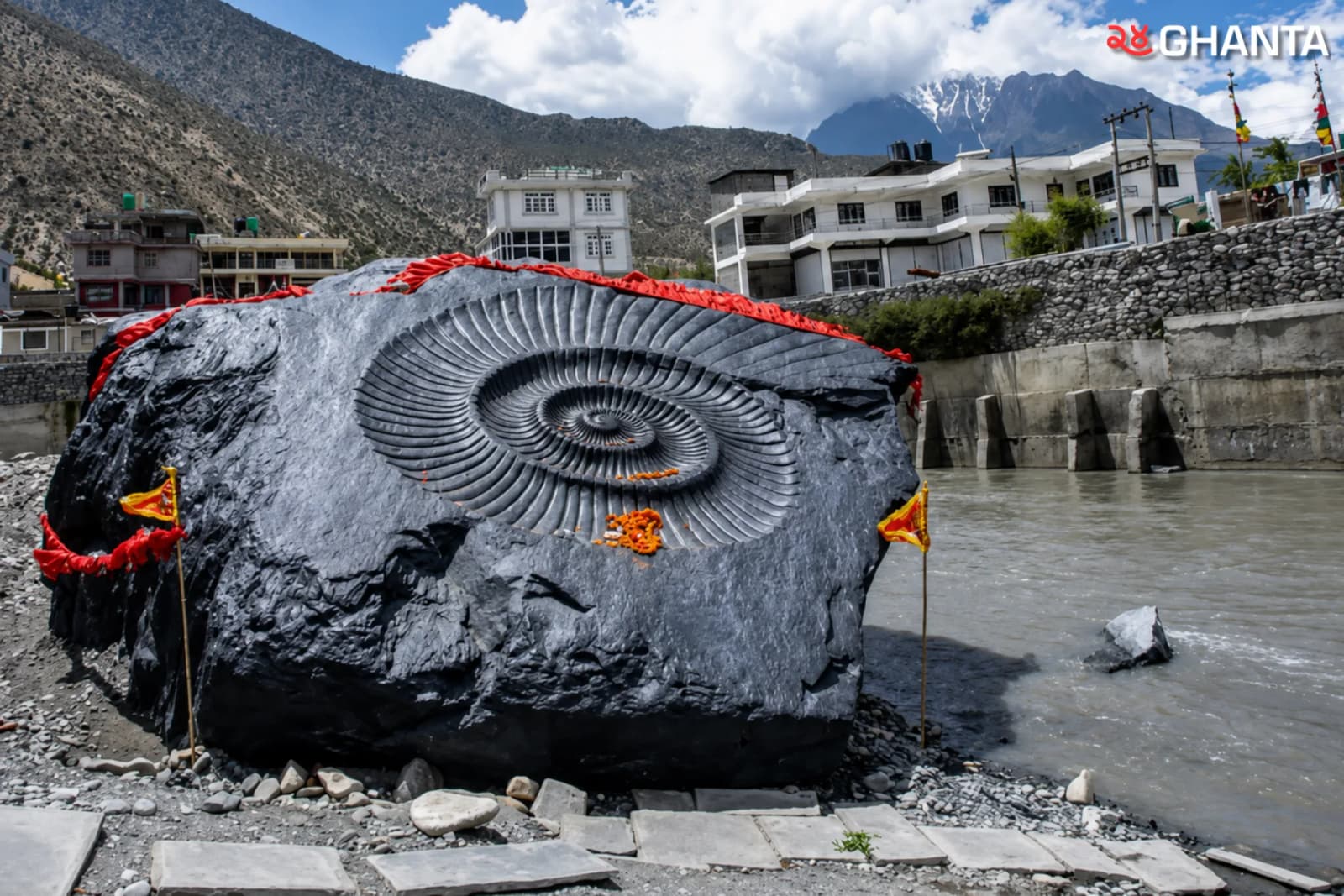
JOMSOM, MUSTANG — A monumental 22-foot Shaligram sculpture has become a new spiritual landmark on the bank of the Kali Gandaki River in Jomsom, Gharapjhong Rural Municipality-4, after being formally unveiled in May 2026. Developed through a local sculpture initiative involving Gharapjhong Rural Municipality, the Nepal Academy of Fine Arts and other partners, the giant stone artwork was created to showcase Mustang's religious and cultural heritage and strengthen Jomsom's appeal as a destination for pilgrims and other visitors.
A Giant Shaligram Beside the Sacred River
The enormous sculpture stands beside the Kali Gandaki, the river inseparably connected with the Shaligram tradition.
At 22 feet tall, the monument has quickly become one of the most noticeable attractions along the Jomsom riverbank. Recent reports have described it as the world's largest Shaligram, while visitors have been stopping at the site to observe the sculpture alongside the dramatic landscape of Mustang.

Its location is particularly significant because the Kali Gandaki is famous for the sacred black fossil stones known as Shaligrams.
Created From a Kali Gandaki Boulder
The giant Shaligram did not arrive in Jomsom as a finished religious object.
It was shaped by artists from a massive stone collected from the Kali Gandaki area as part of a sculpture workshop organized in Mustang.
More than three dozen sculptors participated in the wider initiative, transforming large river stones into different works of art and helping create an open-air cultural attraction beside the river.
Fifteen Days of Work Behind the Monument
The wider sculpture workshop ran for around 15 days, from April 20 to May 4, bringing artists together in Mustang to work directly with stones associated with the local landscape.
The project was organized by Gharapjhong Rural Municipality in coordination with the Nepal Academy of Fine Arts, with support from the Integrated Social Development Office in Mustang.
Rather than creating an isolated monument, the initiative helped turn part of the Kali Gandaki riverbank into a space combining art, local identity, religion and tourism.
Formally Inaugurated by a Major Religious Figure
The 22-foot Shaligram sculpture was formally inaugurated on May 28, 2026, following religious rituals at the site in Jomsom.
The monument was unveiled by Jagadguru Shankaracharya Mahaswami Vidushekhara Bharati Maharaj of the Sringeri Sharada Peeth in Karnataka, India, during his visit to the Muktinath region.
His involvement added further religious significance to the monument and strengthened its connection with Mustang’s long-established importance as a pilgrimage destination.
Why Shaligram Is Sacred
To understand why the monument matters, it is necessary to understand what a Shaligram represents.
Shaligrams are naturally occurring fossil stones closely associated with the Kali Gandaki region. Scientifically, they are connected with ancient ammonite fossils formed from marine organisms that lived millions of years ago.
For Hindu devotees, however, their importance extends far beyond geology. Shaligram stones are revered as manifestations of Lord Vishnu and have been collected, worshipped and carried on pilgrimages for generations.
Where Religion Meets Ancient Geology
The Shaligram tradition gives Mustang an unusual connection between faith and Earth's ancient history.
The Himalayas were formed through enormous geological forces that lifted former marine environments high above sea level. Fossils preserved within those ancient rocks can now be encountered in the Kali Gandaki region.
What geology identifies as evidence of prehistoric marine life has, over centuries, acquired profound religious meaning for devotees.
Muktinath Strengthens the Spiritual Connection
The wider Mustang region already attracts large numbers of pilgrims because of Muktinath, one of Nepal's best-known sacred destinations.
Shaligrams have long been associated with the Muktinath and Kali Gandaki landscape, making the new Jomsom monument part of an existing religious journey rather than a completely separate attraction.
Visitors travelling through Jomsom towards Kagbeni and Muktinath can now encounter another site highlighting that spiritual connection.
Monsoon Gives the Monument a Different Look
The sculpture attracted renewed attention during the rainy season as the level of the Kali Gandaki increased.
With river water flowing close to and around the giant Shaligram, the site created a striking combination of rushing water, stone and Mustang's mountain landscape.
The seasonal scene has helped attract the attention of visitors and photographers, giving the relatively new monument greater visibility.
A New Tourism Identity for Jomsom
Local efforts surrounding the sculpture are ultimately about more than constructing a large religious monument.
By combining sculpture, landscape, pilgrimage and local culture, Jomsom is attempting to give travellers another reason to spend time in the area rather than treating the town only as a transit point on the journey towards Muktinath and Upper Mustang.
The giant Shaligram could therefore serve both as a religious landmark and as part of a broader effort to expand Mustang's cultural tourism.
One Important Distinction About the 31-Tonne Shaligram
The 22-foot Jomsom sculpture should not be confused with the famous 31-tonne Shaligram stone reported internationally in 2023.
That enormous natural stone, together with another weighing around 15 tonnes, was transported from Nepal to Ayodhya in India. It is a separate story from the newly created monument standing beside the Kali Gandaki in Jomsom.
Keeping the two separate is important: Jomsom's attraction is the 22-foot monumental sculpture unveiled in 2026, while the widely reported 31-tonne sacred stone was transported to India several years earlier.
A Landmark Built Around Mustang's Identity
The new Shaligram brings together several things Mustang is already known for: its dramatic landscape, the Kali Gandaki, ancient fossils, pilgrimage traditions and growing tourism industry.
For visitors, it is an imposing new sight beside one of Nepal's most culturally significant rivers. For the region, it represents an attempt to transform an ancient spiritual tradition into a new landmark without separating it from the landscape where that tradition originated.
Published Aug 10 in Nepal