
The 102-Year-Old Everest Mystery That Could Rewrite History Forever
Did George Mallory and Andrew Irvine reach Mount Everest's summit nearly 30 years before Hillary and Tenzing? More than a century later, new DNA evidence and a missing camera continue to fuel one of history's greatest unsolved mountaineering mysteries.
· 18 min read
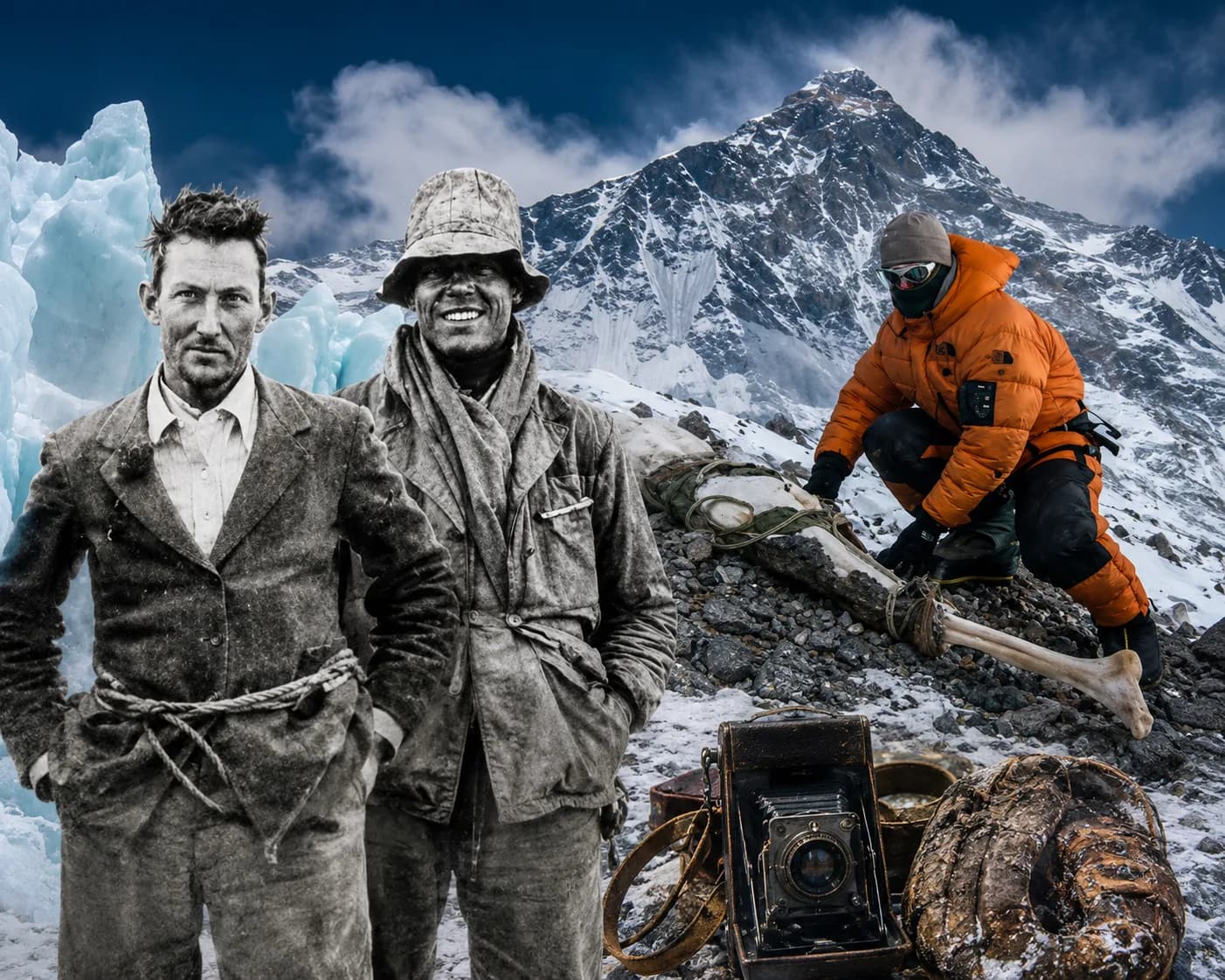
Could History Be Wrong?
What if the first people to conquer Mount Everest weren't Sir Edmund Hillary and Tenzing Norgay?
It is a question that has fascinated historians, climbers and adventurers for more than a century.
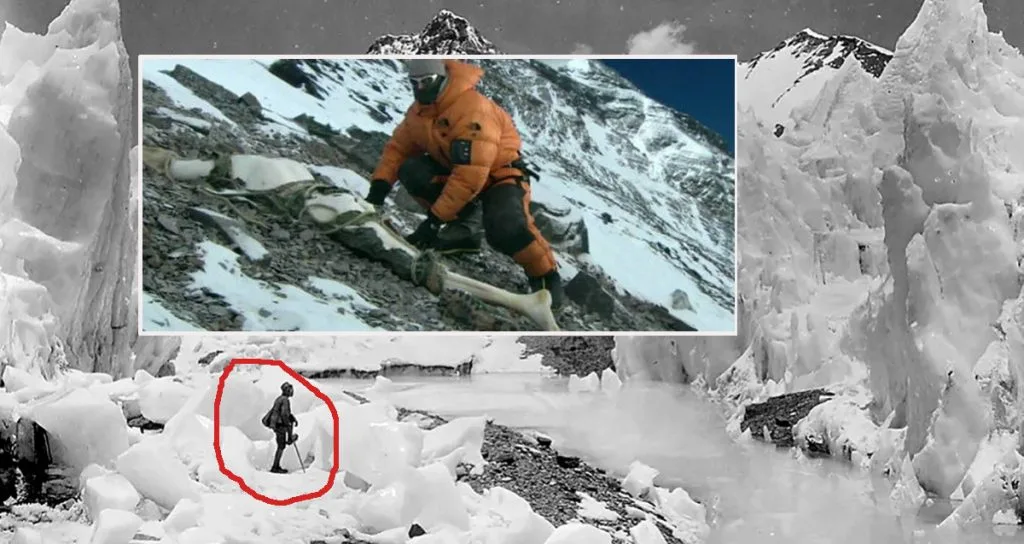
On 29 May 1953, Sir Edmund Hillary of New Zealand and Tenzing Norgay Sherpa etched their names into history by officially becoming the first people to reach the summit of Mount Everest. Their achievement remains one of humanity's greatest accomplishments.

But nearly 29 years before their historic climb, two British mountaineers set out to achieve the impossible.
They never returned.
Their disappearance created one of the greatest mysteries in exploration—a mystery that refuses to die even after 102 years.
Today, thanks to remarkable discoveries and decades of painstaking research, the world is once again asking the same question:
Did George Mallory and Andrew "Sandy" Irvine become the first people to stand on the roof of the world in 1924?
If the answer is ever proven to be yes, the history of Mount Everest—and mountaineering itself—would have to be rewritten forever.
The World's Greatest Mystery
For more than a century, the disappearance of George Mallory and Andrew Irvine has remained one of history's greatest mountaineering mysteries.
Unlike many historical mysteries that have faded with time, this one continues to grow stronger.
Why?
Because unlike legends based only on rumours, the Everest mystery continues to produce new evidence.
In September 2024, a remarkable discovery beneath Everest's northern face shocked the mountaineering world.
Explorers working in the Central Rongbuk Glacier recovered a boot containing a preserved human foot.
Inside the boot was a sock bearing the initials "A.C. Irvine."
DNA testing later confirmed what researchers had hoped—and feared.
The remains belonged to Andrew Irvine, the young British climber who vanished alongside George Mallory during their summit attempt on 8 June 1924.
The discovery solved one mystery.
But it reopened an even bigger one.
Did Mallory and Irvine reach the summit before disappearing forever?
A Mountain Unlike Any Other
Long before climbers dreamed of standing on its summit, Mount Everest was already a mountain surrounded by mystery.
In 1852, surveyor Radhanath Sikdar confirmed it was the highest mountain on Earth.
Initially known simply as Peak XV, the mountain was officially named Everest in 1865 after former Surveyor General George Everest.
Nearly a century later, in 1956, Nepali historian Baburam Acharya gave it the name by which millions know it today—Sagarmatha.
Today, the mountain stands at an officially recognised height of 8,848.86 metres (29,031.69 feet).
But during the late nineteenth century, even reaching its summit seemed impossible.
Many believed no human could survive at such altitude.
Everything changed when British scientists and explorers began arguing that Everest could indeed be climbed.
That belief would spark one of the greatest adventures in human history.
The Man Obsessed With Everest
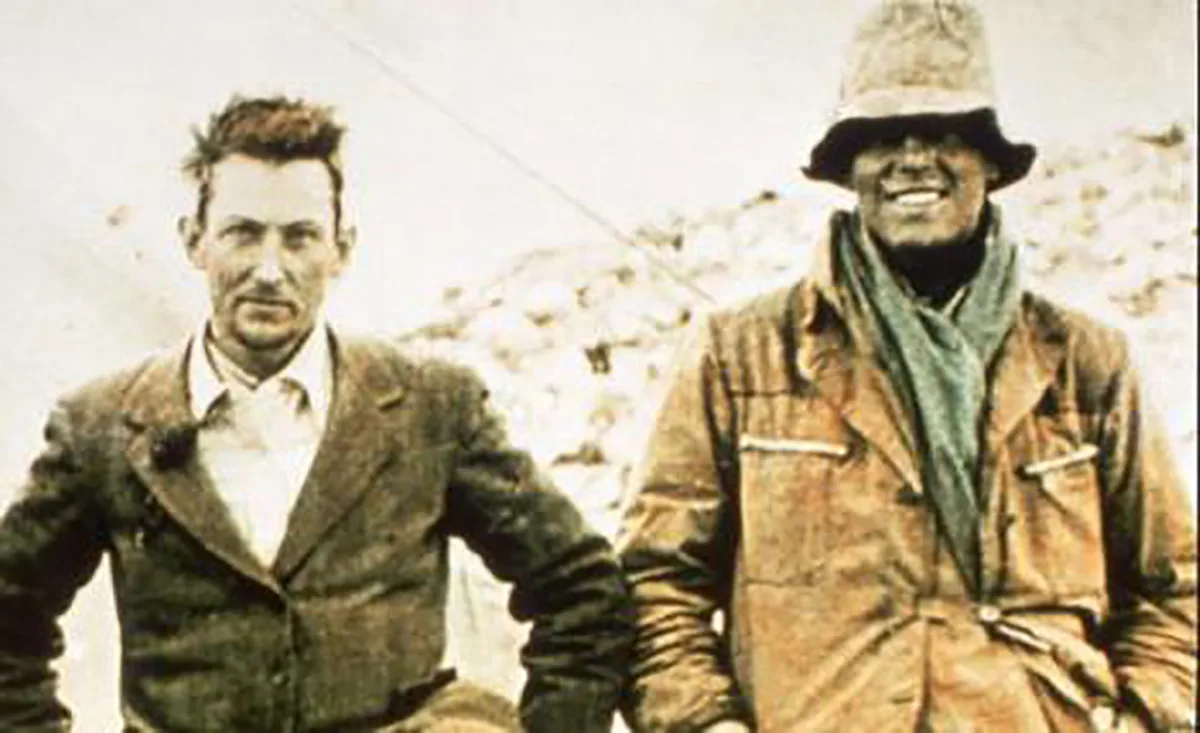
Among those inspired by Everest was George Herbert Leigh Mallory.
Born on 18 June 1886 in Cheshire, England, Mallory grew up in a religious family.
After studying at Winchester College and later Cambridge University, he developed a deep passion for climbing mountains.
He climbed throughout Europe while teaching history, but his life changed dramatically during the First World War.
Mallory served as a lieutenant in the British Army before returning to mountaineering after the war.
By then, Britain had become determined to achieve something no nation had ever done.
The British wanted to be the first to stand on Earth's highest point.
For Mallory, Everest became more than a mountain.
It became his life's purpose.
Britain's Race To The Summit
In 1921, Britain launched its first major Everest reconnaissance expedition.
At the time, Nepal had not yet opened its southern route to climbers.
The expedition therefore approached Everest from Tibet after receiving permission from the Dalai Lama.
Beginning in May 1921, Mallory and his team spent months exploring the mountain's northern approaches.
Although they did not reach the summit, they accomplished something never achieved before.
They became the first expedition to reach the North Col, identifying the northern ridge as a possible route to the summit.
Their mission wasn't to conquer Everest.
It was to discover whether conquering Everest was even possible.
They returned to Britain convinced that one day someone would stand on the summit.
Mallory intended to make sure that person would be him.
Failure Didn't Stop Him
Britain returned in 1922, this time determined to reach the summit.
Mallory again joined the expedition.
The climbers reached an altitude of 8,168 metres, setting a new world record.
Victory appeared close.
Then disaster struck.
An avalanche swept through the mountain, killing seven porters.
The tragedy forced the expedition to abandon its attempt.
Mallory returned home devastated.
But he wasn't finished.
He would try again.
"Because It's There"
During a visit to the United States in 1923, Mallory was asked a question that would become one of the most famous quotes in sporting history.
A journalist asked:
"Why do you want to climb Mount Everest?"
Mallory's answer contained just three words.
"Because it's there."
The reply captured the spirit of exploration better than perhaps any sentence ever spoken.
To Mallory, Everest wasn't simply another mountain.
It represented humanity's greatest challenge.
And he intended to conquer it.
The Young Engineer
For Britain's third Everest expedition in 1924, Mallory selected an unexpected climbing partner.
Twenty-two-year-old Andrew "Sandy" Irvine.
Unlike Mallory, Irvine was not famous for his climbing experience.
Instead, he was chosen because of something equally valuable.
He was an engineering genius.
At Everest's extreme altitude, oxygen equipment often failed.
Irvine possessed exceptional mechanical skills and became responsible for maintaining the expedition's oxygen systems.
Many questioned Mallory's decision.
But Mallory believed Irvine's technical expertise could make the difference between success and failure.
Neither man realised they were beginning a journey that would become one of history's greatest mysteries.
The Final Ascent
By the summer of 1924, George Mallory had already devoted years of his life to Mount Everest.
He had explored its dangerous northern routes.
He had survived failed expeditions.
He had witnessed deadly avalanches.
Now, he believed the moment had finally arrived.
His partner would be Andrew "Sandy" Irvine, a brilliant 22-year-old engineer whose expertise with oxygen equipment made him an invaluable teammate.
The entire British expedition knew this was their best chance to make history.
If successful, they would become the first humans ever to stand atop the world's highest mountain.
A Calm Before History
Early June brought something Everest rarely offers—hope.
After weeks of harsh weather and failed attempts, conditions finally began to improve.
Mallory and Irvine had already made two unsuccessful attempts to climb higher before being forced back by poor weather.
This time, however, the mountain appeared to be giving them one last opportunity.
They established Camp VI, the highest camp of the expedition, approximately 8,230 metres above sea level.
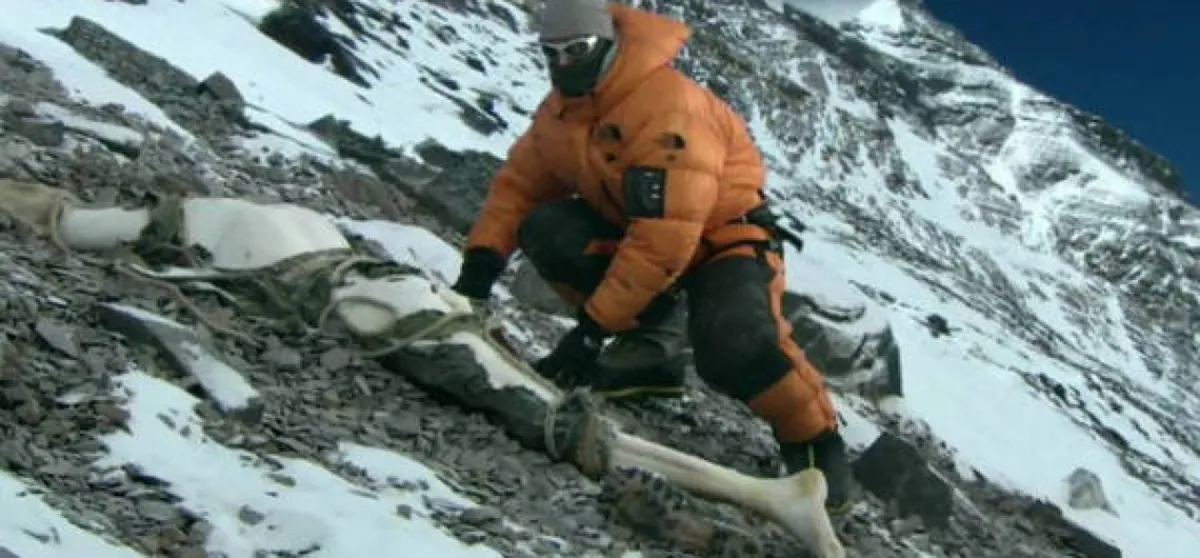
From there, the summit stood only around 2,000 feet above them.
No human had ever climbed higher.
The mountain seemed within reach.
Morning Of Destiny
The morning of 6 June was spent preparing equipment, while support climbers assisted Mallory and Irvine with supplies and oxygen.
The decisive summit push would begin after final preparations.
Mallory remained optimistic.
He even sent letters back down the mountain.
One message reported encouraging conditions.
"There is no wind here and everything looks promising."
Those simple words would become among the last messages he ever wrote.
Letters From The Mountain
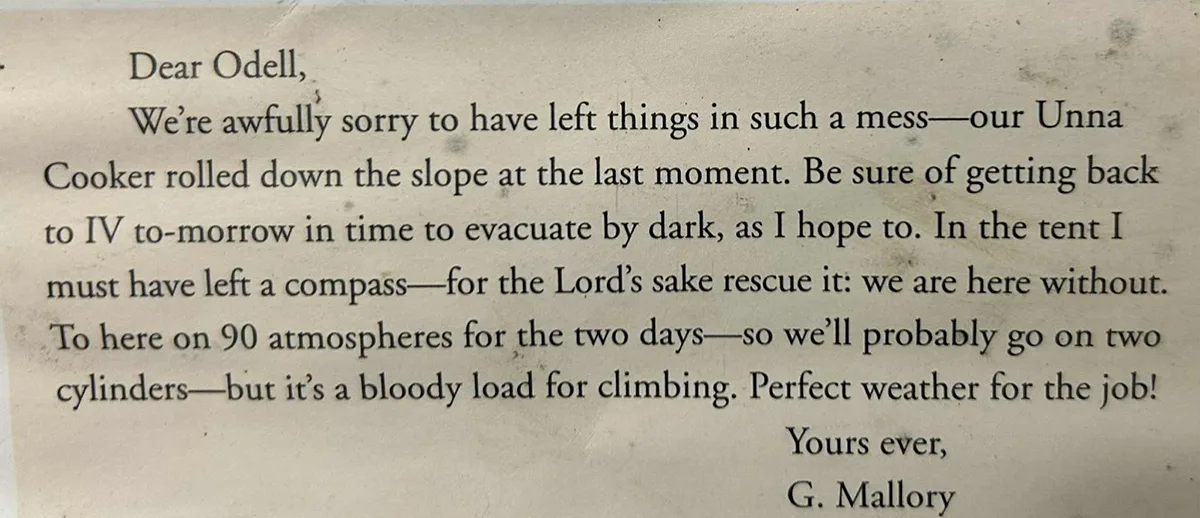
Before leaving Camp VI, Mallory wrote two important letters.
One was addressed to expedition filmmaker Captain Noel.
In it he predicted where they expected to be the following morning.
He believed they would be climbing the famous Second Step, one of Everest's most difficult obstacles.
Another letter was written to fellow climber Noel Odell.
Mallory discussed their remaining oxygen supply, explaining they still had enough gas for two cylinders but admitted carrying them higher would be extremely demanding.
He also requested that Odell bring his forgotten compass to Camp VI and leave space for them when they returned.
These were not the words of someone expecting disaster.
They were the words of climbers planning to come home.
The Summit Push
On the morning of 8 June 1924, Everest stood silent.
The weather appeared favourable.
Mallory and Irvine left Camp VI and began climbing toward the summit.
Below them, geologist Noel Odell followed later with additional supplies, hoping to assist them during their return.
The route ahead was unlike anything climbers had previously attempted.
To reach the summit, they first needed to overcome the First Step, followed by the far more dangerous Second Step—a steep rock barrier nearly 100 feet high that remains one of Everest's most technically difficult sections even today.
Beyond that lay snow-covered ridges leading directly toward the summit.
Every step carried enormous risk.
One mistake meant certain death.
The Last Sighting
Shortly before 12:50 p.m., Noel Odell looked toward the summit through a break in the clouds.
Then he saw something extraordinary.
Two tiny black figures.
Mallory and Irvine.
According to Odell, they were climbing upward, moving across a rocky step just below the summit.
For a few moments he watched the two climbers continue higher.
Then clouds suddenly swept across the mountain.
The figures disappeared.
They were never seen again.
Odell later believed the pair were only a few hours away from reaching the summit.
Whether they actually reached it remains unknown.
Waiting In Vain
Believing Mallory and Irvine would soon return, Odell climbed to Camp VI.
Inside the small tent he found their food, spare equipment, clothing and oxygen cylinders exactly where they had been left.
Nothing suggested disaster.
Expecting the pair to descend before evening, Odell climbed roughly 200 feet above the camp, repeatedly blowing his whistle and shouting to help guide them back through the worsening weather.
No answer came.
As darkness approached, he reluctantly descended to Camp IV, leaving behind food and Mallory's compass.
He remained convinced they might spend the night higher on the mountain before returning the next morning.
An Empty Mountain
The following morning, expedition members searched Camp V and Camp VI through binoculars.
There was no movement.
No smoke.
No sign of life.
Still hoping the climbers had survived, Odell organised a search party.
On 9 June, he climbed back into Everest's deadly "Death Zone" with Sherpa porters.
Camp V was completely empty.
The following day he pushed higher toward Camp VI.
Again, no one was there.
The tent remained standing, although damaged by violent storms.
Odell climbed another 200 feet beyond the camp, following the exact route Mallory and Irvine had taken toward the summit.
Despite searching in brutal weather for two hours, he found absolutely nothing.
No footprints.
No equipment.
No bodies.
Only endless snow and silence.
Declared Dead
After several days of desperate searching, hope faded.
The British expedition reluctantly accepted the inevitable.
George Mallory and Andrew Irvine were declared dead.
On 21 June 1924, British newspaper The Times published the heartbreaking headline announcing that the pair had died during their final attempt to climb Everest.
Britain mourned the loss of two national heroes.
King George V and Queen Mary sent their condolences.
For the climbing world, however, the greatest mystery had only just begun.
No one knew how they died.
No one knew where they fell.
Most importantly—
No one knew whether they had already reached the summit before tragedy struck.
A Heavy Price
The 1924 expedition came at an enormous human cost.
Including Mallory and Irvine, four members of the expedition lost their lives.
Two of them were Nepalis.
Earlier Everest expeditions had also claimed numerous lives, including seven Nepali porters who died in an avalanche during the 1922 expedition.
Long before Everest became a symbol of triumph, it had already become a place of sacrifice.
A Mystery Is Born
With no bodies, no camera and no eyewitnesses beyond Odell's final sighting, the world was left with one haunting question.
Did George Mallory and Andrew Irvine become the first humans to stand on the summit of Mount Everest?
Or did they perish only moments before achieving history?
For decades, nobody had the answer.
Then, seventy-five years later, Everest began revealing its secrets.
The Search Continues
Although George Mallory and Andrew Irvine disappeared in June 1924, the mountain refused to give up its secrets.
For years, Everest remained untouched.
Following the tragic expedition, climbing on Everest was suspended for nearly a decade.
Yet the mystery refused to disappear.
Every generation of climbers returned with one dream—not simply to reach the summit, but to discover what had happened to the two British explorers who vanished near the top of the world.
The First Clues
The first significant clue appeared in 1933.
British climber Percy Wyn-Harris discovered an ice axe high on Everest's northern route.
Many believed it belonged to Andrew Irvine, although this has never been conclusively proven.
Three years later, another climber, Frank Smythe, reported seeing what appeared to be two bodies through a telescope at approximately 8,100 metres.
No expedition could safely investigate.
The mountain once again kept its secrets.
A Body Appears
Everything changed on 1 May 1999.
An American-led expedition searching specifically for Mallory and Irvine made one of the greatest discoveries in mountaineering history.
After 75 years, they found George Mallory's body lying approximately 26,700 feet (around 8,140 metres) above sea level.
His body had remained remarkably preserved by Everest's freezing temperatures.
The discovery instantly became one of the biggest archaeological finds in climbing history.
Frozen In Time
Investigators carefully examined everything found with Mallory.
Among the items recovered were:
His climbing equipment
Personal letters
A pocket knife
Food tins
A handkerchief bearing his initials
Zinc oxide cream
Extra socks
Sunglasses
Gloves
Matchbox
His watch
Clothing carrying a tag with his name
Every object was carefully documented.
Together, they created a remarkable snapshot of a climber frozen in time since 1924.
The Missing Photograph
One discovery fascinated researchers more than anything else.
Mallory's wife, Ruth, had given him a photograph before he left England.
According to family members and expedition accounts, Mallory intended to leave that photograph on Everest's summit if he successfully reached the top.
When researchers searched his clothing, they found many personal belongings.
But Ruth's photograph was missing.
Some investigators believe this could indicate Mallory fulfilled his promise and left it on the summit.
Others caution that the photograph may simply have been lost during the accident.
Although not proof, its absence remains one of the strongest pieces of circumstantial evidence supporting the theory that Mallory reached the summit before his death.
The Rope Tells A Story
Mallory's body also revealed disturbing clues about his final moments.
His right leg was broken.
A deep rope injury circled his waist.
Researchers believe Mallory and Irvine were roped together when one of them slipped.
The sudden fall would have tightened the rope violently, causing the severe injuries found on Mallory's body.
Whether the rope eventually snapped or became detached remains unknown.
The evidence suggested a catastrophic fall—but not exactly where it happened.
Did it occur while climbing upward?
Or after successfully reaching the summit?
The mountain offered no answer.
One Man Still Missing
Although Mallory had finally been found, one enormous mystery remained.
Andrew Irvine was still missing.
More importantly—
So was the Kodak Vest Pocket Camera he had been carrying during the summit attempt.
Researchers believe that if Mallory and Irvine reached the summit, Irvine almost certainly photographed the achievement.
Because Everest's freezing temperatures can preserve photographic film for decades, experts believe the film might still be recoverable if the camera is ever found.
One small camera could answer a question that has divided historians for over a century.
The Hunt For Irvine
The search did not stop in 1999.
In 2001, another expedition returned specifically to locate Irvine's body and the missing camera.
Experienced Sherpa climbers joined foreign mountaineers in searching the dangerous northern slopes.
Fragments of old tents and climbing ropes were discovered around 8,600 metres, suggesting the climbers had reached extremely high on the mountain.
Again, however, Irvine remained missing.
Another expedition followed in 2004, but despite extensive searches, the mystery remained unsolved.
Sherpas Believe They Succeeded
Several Sherpas involved in these expeditions reached a remarkable conclusion.
Veteran Everest climber Danuru Sherpa, who participated in multiple search missions, believes Mallory and Irvine almost certainly reached the summit.
His reasoning is simple.
Evidence indicates the pair had already climbed as far as the Second Step, one of the final major obstacles before Everest's summit.
According to Danuru, climbers who successfully reach the Second Step almost never turn back voluntarily because the summit is only another one-and-a-half to two hours away under favourable conditions.
He believes they likely reached the summit before suffering a fatal accident during their descent.
Not everyone agrees.
Other researchers argue the available evidence remains insufficient to prove such a claim.
Without Irvine's camera, the debate continues.
A Stunning Discovery
Just when many believed the mystery might never be solved, Everest revealed another clue.
In September 2024, explorers working beneath Everest's northern face discovered a boot containing a preserved human foot.
Inside the boot was a sock marked with the initials:
"A.C. Irvine."
DNA testing confirmed the remains belonged to Andrew Irvine.
The public announcement came in October 2024, nearly 100 years after his disappearance.
For researchers, it was the biggest breakthrough in decades.
Yet the discovery still did not answer the ultimate question.
The body had been found.
But the camera was still missing.
The Camera That Could Rewrite History
Today, almost every expert agrees on one point.
If Irvine's Kodak camera is ever recovered—and if the film survives—it may contain the photographs capable of rewriting mountaineering history.
A single image could prove whether George Mallory and Andrew Irvine stood on Everest's summit 29 years before Sir Edmund Hillary and Tenzing Norgay.
Until that camera is found, historians can only speculate.
The greatest mystery in mountaineering remains unsolved.
History Waits
More than 102 years have passed since two tiny figures disappeared into Everest's clouds.
The mountain has surrendered bodies.
It has revealed equipment.
It has uncovered human remains.
But it has never revealed its greatest secret.
Did George Mallory and Andrew Irvine become the first humans to conquer Mount Everest?
Only one missing camera may still hold the answer.
How Did They Die?
More than a century after George Mallory and Andrew Irvine disappeared high on Mount Everest, nobody knows exactly what happened during their final hours.
What should have become one of humanity's greatest achievements instead became one of history's greatest unsolved mysteries.
With no surviving witnesses, no recovered camera and no definitive evidence, countless theories have emerged over the years.
Researchers, historians and mountaineers continue to debate the same question.
Did they die before reaching the summit, or after making history?
The Leading Theories
Several explanations have been proposed over the past century.
One theory suggests the pair slipped from the steep cliffs near the summit while climbing upward.
Another believes they reached the summit but fell while descending in darkness.
Some researchers argue that they simply ran out of oxygen before reaching the top.
Others believe severe hypoxia, caused by the extreme altitude, affected their judgement and ultimately led to tragedy.
Despite decades of investigation, none of these theories has ever been conclusively proven.
Experts Remain Divided
British author and Everest researcher Graham Hoyland, who has spent years studying the expedition, believes a lack of oxygen may have played a crucial role in the climbers' deaths.
Other historians point to the evidence found with Mallory's body, arguing that the injuries suggest a fatal fall while descending from high on the mountain.
Meanwhile, experienced Sherpa climbers who later searched the route believe the evidence tells a different story.
Veteran climber Danuru Sherpa concluded that Mallory and Irvine almost certainly reached the summit before suffering a fatal accident during their descent.
His reasoning is based on where they were last seen and the evidence later discovered around the Second Step, one of the final obstacles before the summit.
Still, not everyone agrees.
Without Irvine's camera, every conclusion remains an educated theory rather than proven history.
The Letters Home
Long before becoming one of history's greatest mysteries, George Mallory was simply a husband longing to return home.
Throughout the expedition, he wrote heartfelt letters to his wife, Ruth.
Those letters reveal not only the dangers of Everest but also the emotions of a man torn between love and ambition.
Writing from high on the mountain, Mallory admitted the odds were against them.
Yet he remained determined to make one final attempt.
In one letter, he expressed hope that success would soon end Ruth's worries.
He acknowledged the risks but insisted they would give everything they had.
A Husband's Promise
As the expedition became increasingly difficult, Mallory's letters grew more emotional.
He described endless snowfields, exhaustion and fading hope.
Yet through every hardship, one person remained constantly in his thoughts.
Ruth.
In one of his final messages, Mallory imagined two possible futures.
If he returned safely, he would embrace her once again.
If the mountain claimed his life, he wrote that he would breathe his last while thinking of her.
His words remain among the most moving ever written by a mountaineer, reminding readers that behind every legendary expedition is a deeply human story of love, sacrifice and hope.
The Legacy They Left Behind
Although Mallory and Irvine never returned, their expedition transformed the future of Everest climbing.
Their pioneering route proved that the summit was within human reach.
The lessons learned during the British expeditions of the 1920s laid the foundation for every successful Everest climb that followed.
When Sir Edmund Hillary and Tenzing Norgay Sherpa finally reached the summit on 29 May 1953, they achieved a dream that had inspired climbers for decades.
Hillary himself later acknowledged the courage and determination of George Mallory, recognising that the earlier British expeditions had paved the way for future success.
One Camera, One Answer
Today, more than 102 years after their disappearance, only one object may still hold the truth.
Andrew Irvine's missing Kodak camera.
If it is ever recovered from Everest's icy slopes and its film survives, historians believe it could contain photographs that answer the greatest question in mountaineering history.
Did Mallory and Irvine reach the summit nearly three decades before Hillary and Tenzing?
A single photograph could rewrite textbooks, redefine one of humanity's greatest achievements and forever change the story of Mount Everest.
Everest Still Holds Its Secret
For more than a century, Mount Everest has revealed only fragments of the truth.
It returned Mallory's body.
It revealed Irvine's remains through DNA testing.
It surrendered climbing equipment, letters and clues.
But it has never given up the one piece of evidence the world wants most.
The camera.
Until that day comes, the world's highest mountain will continue to guard one of history's greatest mysteries.
And the question first asked more than a century ago will continue to echo across Everest's frozen slopes:
Were George Mallory and Andrew Irvine the first humans to stand on the roof of the world?
Only Everest knows the answer.
Published Jul 28 in Nepal