
A Forest Without Books, But Full Of Stories: QR Codes Reveal Gatlang’s Journey Of Revival
Gatlang, Rasuwa has transformed a wildfire-damaged forest into an open-air digital library where visitors can scan QR codes to learn about forest restoration, biodiversity, and local heritage. The innovative project led by Tribhuvan University’s Institute of Forestry aims to preserve knowledge and inspire future generations through technology and nature.
· 3 min read
GATLANG, RASUWA, August 12, 2026
A Forest Reborn Through Technology
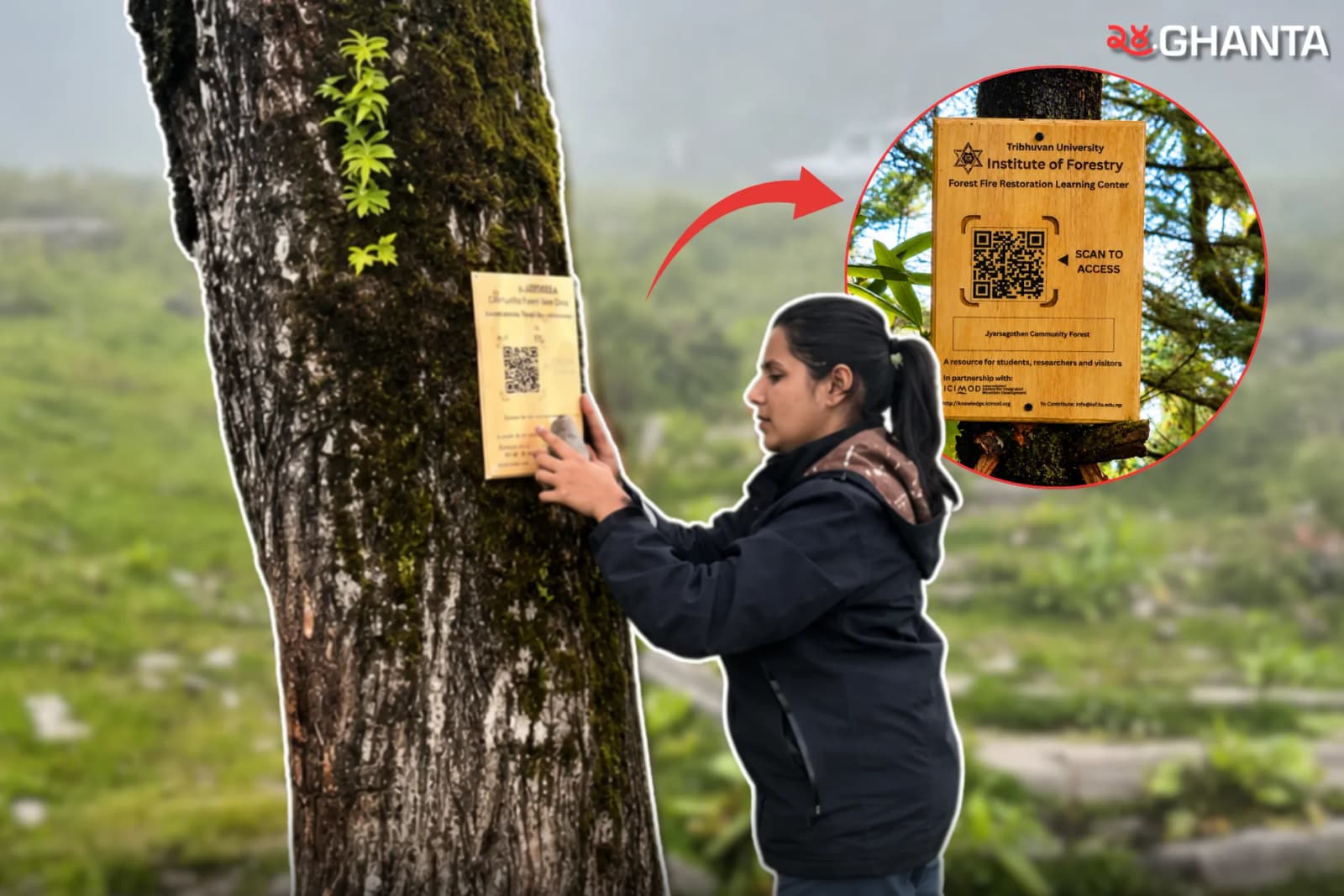
A forest once destroyed by one of Nepal’s largest wildfire incidents has now become an innovative learning center. Tribhuvan University’s Institute of Forestry, in collaboration with the International Centre for Integrated Mountain Development (ICIMOD), has introduced an open-air digital library in Gatlang, Rasuwa, where visitors can scan QR codes to explore stories about forest recovery, biodiversity, and community heritage.
The initiative was created to document the journey of a damaged forest and share restoration knowledge with students, researchers, locals, and tourists visiting the region.

From Devastating Fire To Forest Revival
In 2008, a massive wildfire swept through nearly 500 hectares of forest area in Gatlang, destroying around 273 hectares completely. The fire continued for nearly three months due to limited resources and knowledge available for controlling the disaster.
The wildfire caused severe damage to the ecosystem, including the destruction of soil conditions that prevented natural regeneration. The loss was estimated at around Rs 198 million, making it one of Nepal’s most destructive forest fire incidents.
Who Created The Forest Library?
The concept was developed by Tribhuvan University’s Institute of Forestry, led by Professor Rajesh Kumar Rai, with support from forestry students, researchers, and local communities.
For several years, forestry and mountain environment students have been visiting the area for field studies. Later, through the Himalayan Resilience Enabling Action program supported by the British Government, restoration activities began to bring the forest back to life.
How QR Codes Became The Books Of The Forest
Unlike a traditional library, this forest has no shelves or printed books. Instead, 50 QR codes placed throughout the area act as digital pages, connecting visitors to online information.
Among these, 47 QR codes are located inside the forest while three are placed at the rural municipality office. By scanning them, visitors can access educational materials hosted digitally, including:
History of the devastating wildfire
Forest restoration techniques
Biodiversity recovery
Local community contributions
Traditional culture of Gatlang
Tourism and heritage information
Yak farming and community forest practices
Why Was This Unique Idea Created?
The project aims to make forest restoration knowledge accessible while keeping the revived forest protected for future generations.
According to reports, researchers believed QR technology would make learning more interactive and affordable compared to building a physical library. Visitors resting during their forest walks can simply scan a code and discover a new story about the environment around them.
Restoring Nature Through Community Efforts
The restoration process involved multiple steps, including soil testing, removing damaged trees, planting local species, and protecting young plants from grazing animals.
The Division Forest Office, Rasuwa, established nurseries for native plants, while fencing was installed to protect the recovering forest ecosystem.
A Digital Archive For Future Generations
The QR-based library connects nature, technology, and education by allowing people from anywhere in the world to explore Gatlang’s restoration journey.
The available content is currently in English, while preparations are underway to make it available in Nepali. Researchers also plan to update the information regularly as the forest continues its recovery.
Gatlang’s forest shows how a place once destroyed by disaster can become a symbol of hope. What was once a burned landscape has now become a living classroom where every QR code tells a story of survival, restoration, and the relationship between people and nature.
Published Aug 12 in Nepal