
A World Record, Years of Training, But No Visa to Compete
Nepali calisthenics athlete and Guinness World Record holder Sunil Khadka missed the 2026 Calisthenics World Championship in Riga, Latvia, after his visa was rejected, despite being prepared to represent Nepal in the Endurance category. The setback has renewed concerns over whether Nepali athletes receive enough institutional support for visas and international travel when opportunities depend on reaching competitions on time.
· 4 min read
KATHMANDU, August 13, 2026
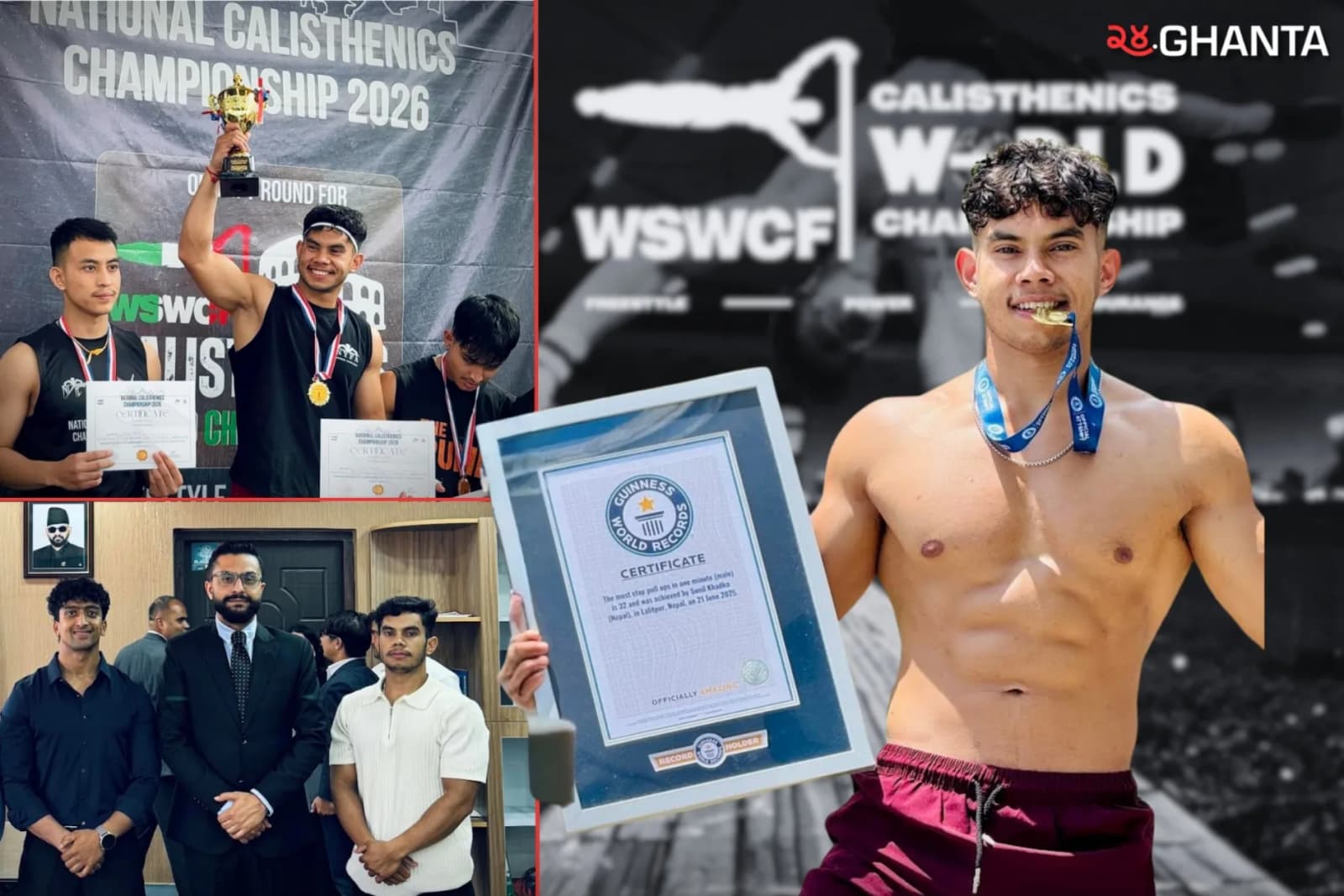
Nepali calisthenics athlete Sunil Khadka, who had been preparing to represent Nepal in the Endurance category at the 2026 Calisthenics World Championship in Riga, Latvia, has missed the competition after his visa was rejected shortly before the event. The World Street Workout and Calisthenics Federation is holding the championship at Riga's Fantadroms Exhibition Center from August 12–15, bringing athletes from around the world together in Freestyle, Endurance, and Power events. Khadka's inability to travel has turned what was supposed to be another international appearance for Nepal into a wider discussion about the visa and administrative barriers athletes can face when competing abroad.
Who Is Sunil Khadka?
Khadka is one of Nepal's notable emerging names in calisthenics and holds the Guinness World Record for the most clap pull-ups completed in one minute. He officially recorded 32 successful repetitions, breaking the previous record of 30 set by American athlete Blake Austin in 2015.

The record attempt took place in Nepal in June 2025, and the achievement was officially recognised afterward. At the time, Khadka said one of his ambitions was to win a Calisthenics World Championship and raise Nepal's flag on the international stage.
What Competition Was He Supposed To Attend?
The World Street Workout and Calisthenics Federation (WSWCF) scheduled its 2026 World Championship in Riga, Latvia, from August 12 to 15. The official championship programme includes men's and women's competitions across Freestyle, Endurance and Power, including veteran divisions.
Khadka had publicly announced that he would represent Nepal at the championship, while reports ahead of the event identified him as Nepal's representative in the Endurance category.
Visa Rejection Stops The Journey
Despite qualifying and preparing for the international competition, Khadka indicated through his social media that his visa had been rejected, preventing him from travelling to Latvia.
His team said efforts were made to help him participate, but the visa issue could not be resolved before the championship. Team Manager Jack Joshi described the situation as disappointing while stressing that Nepal's calisthenics community intends to continue competing internationally and return stronger.
Because detailed official documentation explaining the visa decision has not been publicly released, the specific reason for Khadka's rejection remains unclear.
The Championship Requires Athletes To Secure Visas
The WSWCF's official information for the championship explicitly tells international participants that they must obtain a valid travel visa before departure where one is required.
That means qualification for a world championship does not by itself guarantee an athlete can actually reach the competition. Athletes from countries requiring visas for the host destination must successfully complete immigration procedures separately and within the competition timeline.
Why The Case Matters Beyond One Athlete
Khadka's case highlights a difficult reality for international athletes: years of preparation can still end without competition if travel permission does not arrive in time.
For Nepali athletes in less commercially established sports, the challenge can be even more serious because they may have smaller federations, fewer financial resources and less institutional support to coordinate documentation, invitations and visa procedures.
Calls For Better Athlete Support
The situation also raises questions over whether Nepal needs a stronger system to support athletes selected for recognised international competitions.
Such support could include early verification of competition invitations, assistance with official documents, coordination between sports bodies and government agencies, and timely communication with relevant diplomatic missions. These measures would not guarantee a visa—since the final decision belongs to the destination country's authorities—but they could reduce avoidable administrative problems.
There have already been calls within Nepal's calisthenics community for procedures to be simplified for athletes representing the country abroad, showing that concerns around international travel are not limited to this single championship.
A Bigger Question For Nepali Sports
Khadka had already achieved something few athletes ever do: a Guinness World Record. Yet even that sporting achievement could not ensure he would be able to reach his next international stage.
The incident therefore leaves an important question for Nepal's sports system: When athletes earn the opportunity to represent the country internationally, how much responsibility should sports bodies and the government take in helping them successfully reach that stage?
For Khadka, the 2026 World Championship opportunity has been lost. For Nepal, the larger challenge is ensuring that future athletes do not see years of preparation end because of administrative obstacles outside the competition itself.
Published Aug 13 in Nepal