
After Floods Destroy Classrooms, UNICEF and EU Bring Learning Back to Nepal’s Children
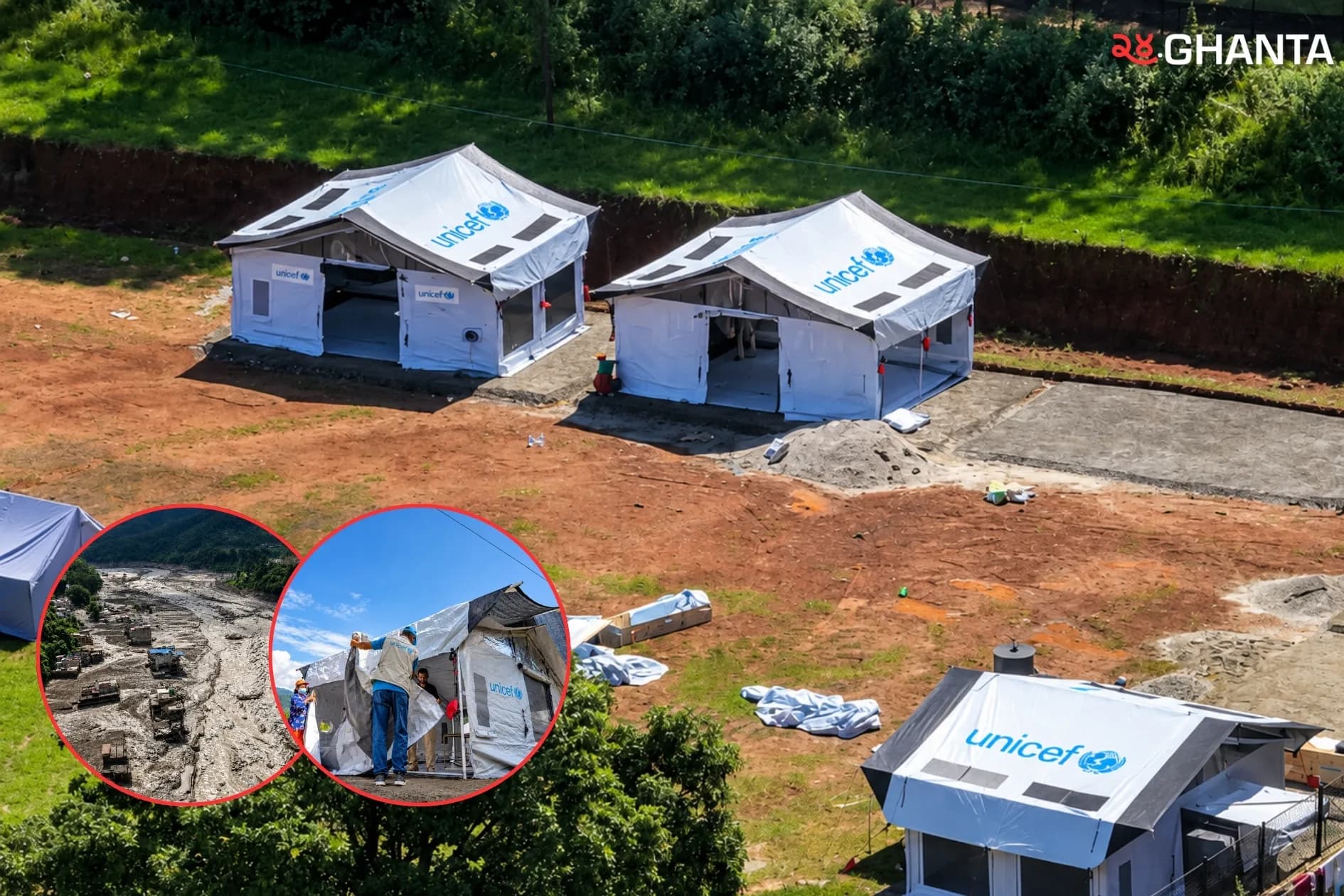
UNICEF, with financial support from the European Union, is helping establish temporary learning centres for children whose education has been disrupted by Nepal’s devastating August floods, giving them safe places to learn while damaged schools and communities recover. The initiative is part of a wider emergency response as thousands of children face damaged classrooms, displacement and emotional distress following the disaster.
· 5 min read
KATHMANDU, NEPAL, September 16, 2026
Classrooms Lost, Learning Must Continue
UNICEF, with support from the European Union, is setting up temporary learning centres in Nepal’s flood-affected communities following the devastating August 26 floods, particularly as children in areas including Rasuwa, Nuwakot and Dhading remain unable to return safely to normal classrooms. The centres are intended to keep education going while recovery and reconstruction continue, while also giving children a safer environment where they can learn, play, reconnect with friends and begin recovering emotionally from the disaster.

Floods Took Away Schools Too
The destruction did not stop at homes, roads and bridges.
UNICEF initially reported that 18 schools had been completely destroyed and another 20 damaged, leaving thousands of children without normal places to study. At the time, the agency estimated that around 10,000 school-age children urgently needed education support, including temporary learning centres, replacement learning materials and psychosocial assistance.
Later assessments have continued to show serious disruption. In one of UNICEF Nepal's latest field reports, at least 20 schools were reported damaged, affecting around 7,000 children, while another 80 schools near riverbanks were being assessed for flood-related damage. Eight schools were also being used as temporary shelters for displaced families, disrupting education for another 1,300 children.
More Than Just Temporary Classrooms
These temporary spaces are important for more than continuing lessons.
After a disaster, children can suddenly lose their homes, classrooms, daily routines and even contact with friends and teachers. UNICEF says restoring safe places where children can learn and play can help bring back some structure and stability while families deal with displacement and loss.
The EU's humanitarian aid service has said that the floods may have taken away many things, but children should not lose their right to learn, confirming that EU funding is supporting UNICEF teams establishing the temporary learning centres.
Helping Children Feel Safe Again
Education is only one part of the recovery.
UNICEF-supported teams have also been establishing child-friendly spaces where affected children can play, interact with others, express their feelings and receive support from trained facilitators. In Nuwakot, these spaces have been equipped with recreation materials, games and activities designed to help children gradually regain a familiar routine.
For children who have witnessed homes and communities disappear within minutes, returning to a familiar routine can be an important part of recovery.
Flood Trauma Goes Beyond Physical Damage
The emotional impact of the disaster has become another major concern.
UNICEF-supported counsellors working in affected communities have reported children and adults struggling with fear, grief, sleep problems and anxiety over the possibility of another flood. Some families are also still waiting for information about missing relatives.
UNICEF is working with government counsellors and specialist teams, including psychologists and psychosocial counsellors, to provide group and individual support. For children, activities involving play, interaction and learning can help them process difficult experiences without forcing them to communicate only through words.
A Teacher Who Lost Her Home and School
The scale of the education crisis can be seen through the story of Shobha Adhikari, an early-childhood teacher from Bhaise in Nuwakot.
Her home and the nearby Chetana Basic School were swept away. She told UNICEF that young children who once came to school to study, eat, play and meet friends were now dealing with the reality that both their homes and school had disappeared.
For teachers like Shobha, reopening education is therefore not simply about completing the curriculum.
It is also about giving children somewhere familiar to return to.
Thousands of Learning Kits Being Sent
UNICEF has already begun supplying educational materials to affected areas.
According to the agency, it has dispatched 148 teacher kits, 2,694 student kits and 43 early-childhood development kits to support learning in flood-hit communities. UNICEF is also supporting rapid assessments to determine which students, teachers and schools need assistance most urgently.
These supplies will help bridge the gap while damaged schools are assessed, repaired or eventually rebuilt.
A Disaster Affecting Thousands of Children
The education response forms part of a much larger humanitarian effort.
UNICEF said shortly after the disaster that at least 17,000 children had been affected in Rasuwa, Nuwakot and Dhading alone. As assessments expanded, UNICEF reported that the floods had affected an estimated 84,270 people across six districts, including 32,021 children.
Families have been displaced, water systems damaged and health services disrupted, meaning children face challenges extending far beyond their interrupted schooling.
UNICEF’s Wider Flood Response
Alongside education, UNICEF is working with the Government of Nepal, local authorities and humanitarian partners on water, sanitation and hygiene, health, nutrition, child protection, social protection and mental health support.
UNICEF initially appealed for $17.2 million to support its emergency response and early recovery work following the floods. The agency warned that additional resources would be needed to ensure vulnerable children and families could continue receiving essential services.
Building Back Safer
Temporary classrooms are not intended to replace permanent schools forever.
They are a bridge between disaster and recovery—allowing children to continue learning while authorities determine where and how permanent schools can safely be rebuilt.
That question is particularly important because dozens of schools in affected areas are located close to riverbanks or other disaster-prone locations. Teachers in affected communities have called for reconstructed schools to be placed in safer locations and designed to better withstand future floods, landslides and earthquakes.
A Classroom Can Be Part of Recovery
For a child who has lost a home, school or loved one, recovery cannot be measured only by how quickly a road is reopened or a building reconstructed.
Returning to a place where they can sit with classmates, open a book, play a game and see a familiar teacher can restore something equally important: routine.
As Nepal rebuilds after one of its most destructive recent floods, the UNICEF and EU-supported temporary learning centres are helping make sure that while permanent classrooms may have disappeared, children’s education does not have to disappear with them.
Published 21 hours ago in Nepal