
Before Plastic, Nepal Had Its Own Natural Way Of Serving Food
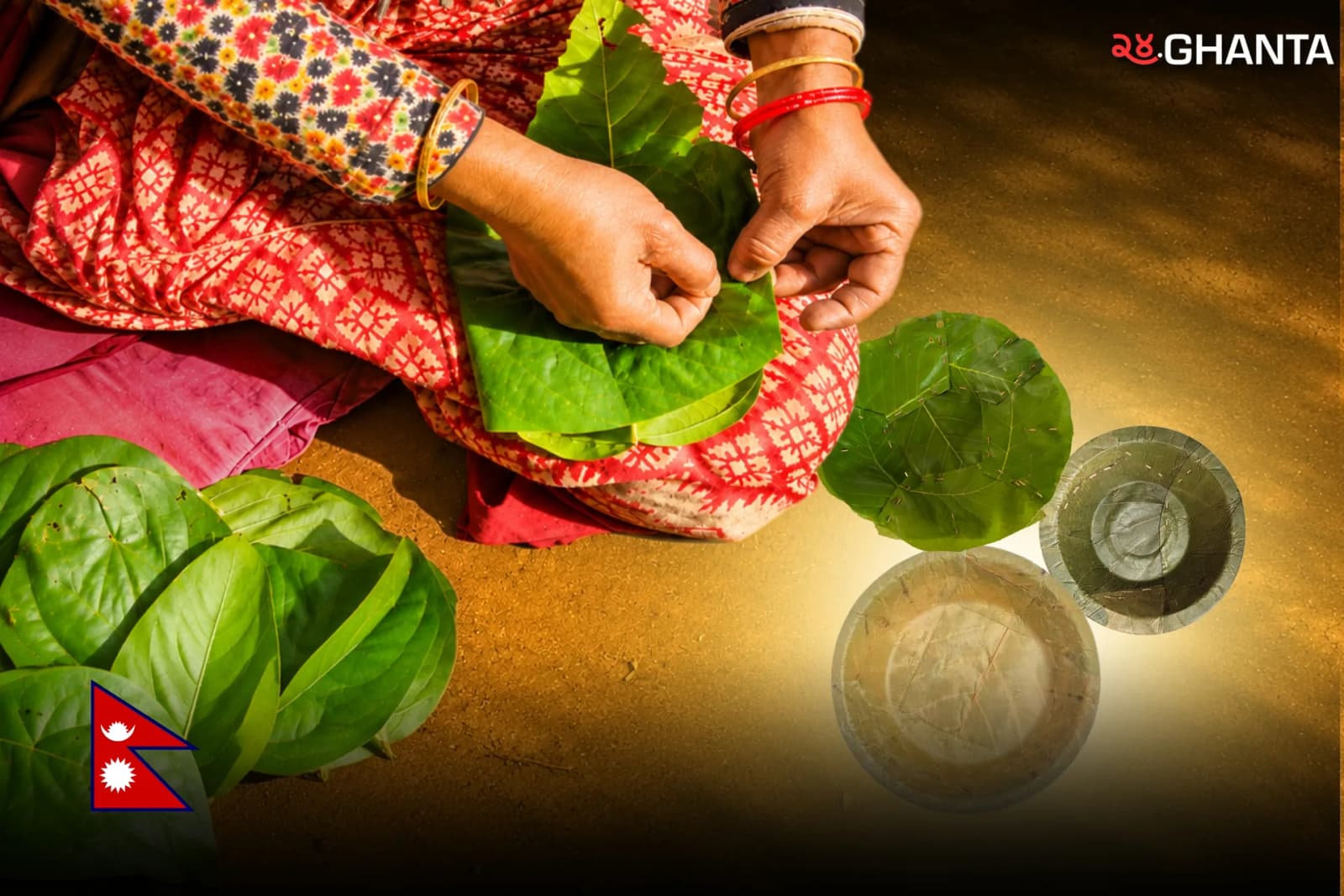
Nepal’s Traditional Tapari, Duna And Bota Are Handmade Leaf Plates And Bowls, Mainly Made From Sal Leaves And Stitched With Thin Bamboo Strips Called Sinka. Used For Food, Rituals, Festivals And Traditional Feasts Such As Newa Lapte Bhoye, These Biodegradable Leaf Dishes Remain An Important Part Of Nepal’s Cultural Heritage And Offer A Natural Alternative To Plastic.
· 3 min read
Kathmandu, November 26, 2026
A Tradition Made From Leaves
For generations, people across Nepal have used handmade leaf plates and bowls made mainly from Sal (Shorea robusta) leaves to serve food, make offerings and mark special occasions. Known by names including Tapari, Duna and Bota, these natural dishes remain part of Nepal’s food and cultural traditions, particularly during religious ceremonies, festivals, weddings and community feasts.
Tapari, Duna And Bota
Although the names and shapes can differ between communities, Tapari generally refers to a larger leaf plate, while Duna and Bota are used for smaller bowl-like forms. Cultural research from Nepal describes Tapari as a large dish, Bota as a bowl and Duna as a smaller or differently shaped bowl.

Made By Hand
Making these plates requires patience and skill. Broad leaves are carefully arranged and stitched together using thin bamboo strips called sinka. Research from the Central Siwalik region documents the use of bamboo splits to stitch Sal leaves into Duna and Tapari, while traditional craft practices are often passed from older generations to younger ones.
More Than Just A Plate
These leaf dishes have long been connected to religious rituals, festivals, weddings and offerings. FAO notes that Sal-leaf plates have been used in Nepal for centuries, while cultural research records their use for serving guests during religious ceremonies and festivals.
The Newa Connection
In Newa food culture, a traditional feast known as Lapte Bhoye is closely associated with the leaf plate called lapte. Guests traditionally sit in rows while food is served on the leaf plate, making the plate itself part of the experience and identity of the feast. Lalitpur Metropolitan City has also documented Lapte Bhoye as part of the valley’s intangible cultural heritage.
Chokho And Auspicious
Sal-leaf dishes have also carried cultural and ritual meaning. Research on Nepal’s leaf-weaving traditions records their use as receptacles for offerings to deities and ancestors and for serving guests during religious ceremonies and festivals.
A Natural Alternative
Unlike plastic tableware, Sal-leaf plates are biodegradable. FAO describes traditional leaf-plate production as an alternative to single-use plastics, while current Nepali enterprises continue producing Duna and Tapari as natural alternatives to plastic products.
Still Supporting Livelihoods
This tradition is not only about the past. In western Nepal, women continue producing traditional leaf plates as a source of income. FAO reported in 2025 that a women’s group in Dangisharan Rural Municipality had expanded its Duna-Tapari production, showing how an old craft can also support modern rural livelihoods.
A Tradition Worth Remembering
Tapari, Duna and Bota show how everyday objects can carry food, culture, faith and environmental knowledge at the same time. As Nepal looks for alternatives to single-use plastics, this old tradition offers a reminder that sustainability is not always a new idea, sometimes, it has been part of life for generations.
Published Yesterday in Nepal