
Death Roads of Karnali: Why Nepal's Highways Keep Turning Into Mass Graves
A devastating vehicle crash in Dailekh has once again exposed the deadly reality of Karnali's highways. As rescue teams continue searching for missing passengers, decades of fatal accidents reveal a painful truth: for thousands of residents, Karnali's highways have become roads of death rather than roads of development.
· 5 min read
Death Roads of Karnali: Why Nepal's Highways Keep Turning Into Mass Graves
Eight Days After the Crash, Rescue Operations Continue
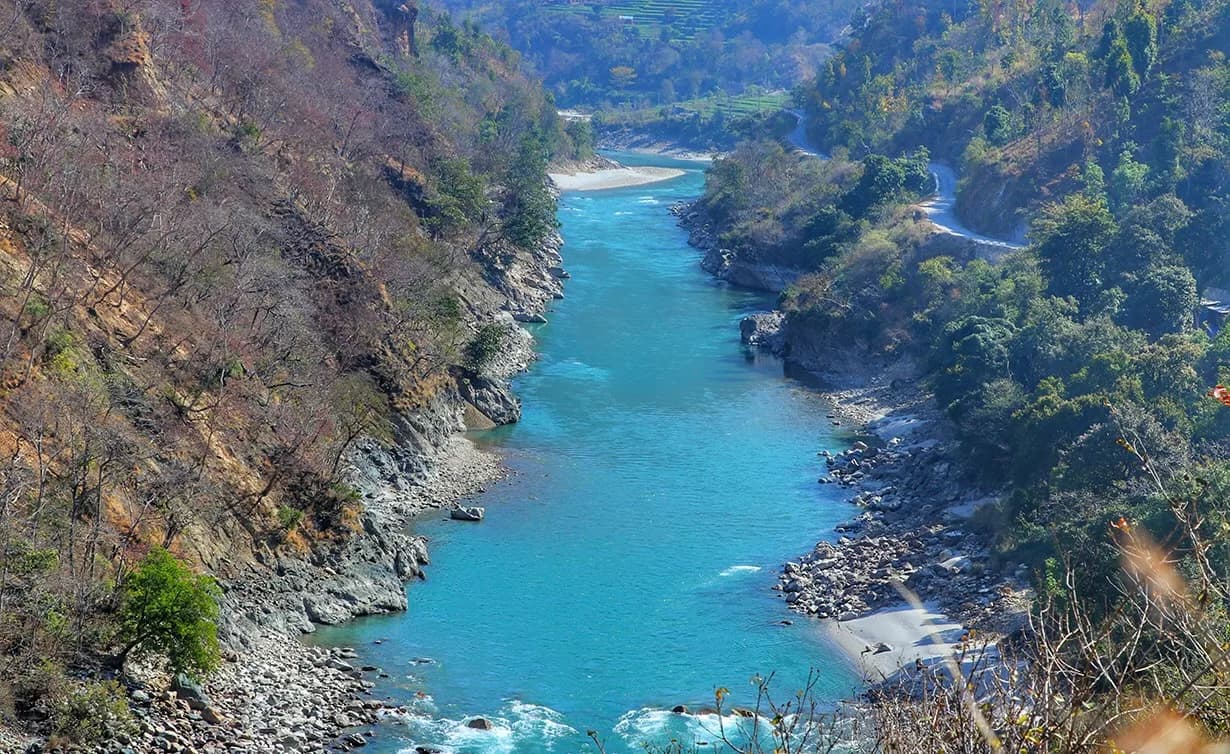
SURKHET, Nepal — Eight days after a Force vehicle plunged nearly 400 metres into the Karnali River in Dailekh district, rescue teams are still searching for the missing passengers and the submerged vehicle.
The Force vehicle (registration Karnali Province 02-001 Kha 1055) was travelling from Surkhet to Kalikot when it veered off the Sangetada road section in Chamunda Bindrasaini Municipality-7 on Ashar 18.

Authorities have confirmed that five people were travelling in the vehicle.
So far, three victims have been identified.
Jokhe Tiruwa of Pachaljharana Rural Municipality-1, Kalikot, was found dead on the cliff shortly after the accident.
Srijana Khadka, 18, of Raskot Municipality-2, Kalikot, was recovered from the Karnali River nearly a week later.
Driver Tularam Subedi of Panchapuri Municipality, Surkhet, was found on Saturday.
Two passengers remain missing.
Massive Search Operation Faces Difficult Terrain
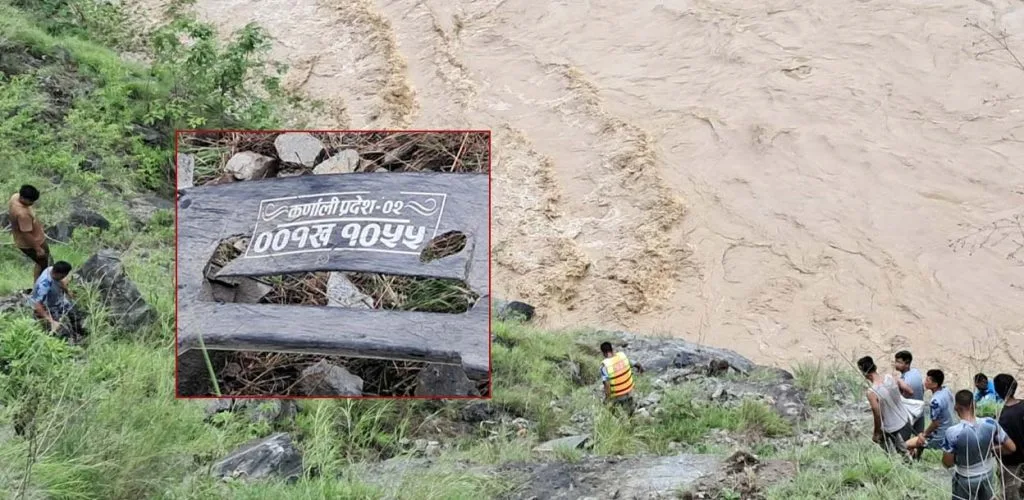
The accident occurred at around 11:30 am.
On the day of the incident, rescue teams lacked the specialised equipment needed for underwater recovery.
Strong river currents, muddy water, and the rugged geography have made rescue efforts extremely difficult.
According to Karnali Province Police Chief DIG Jayaraj Sapkota, rescue teams have expanded searches downstream while coordinating with neighbouring districts.
A total of 176 personnel have been mobilised, including:
Nepal Army
Nepal Police
Armed Police Force
Divers
Drone teams
Helicopter-supported rescue units
The Nepal Army alone has deployed around 70 soldiers along the Karnali River corridor extending towards Bardiya.
Despite continuous operations, neither the submerged vehicle nor the remaining missing passengers have been found.
A Tragedy That Mirrors Karnali's Long History of Deadly Roads
The latest accident is not an isolated incident.
It has revived painful memories of some of Nepal's deadliest road disasters.
Among them was the horrific Kitu cliff bus accident in Dailekh on 5 Chait 2066 BS, when a passenger bus carrying around 50 people crashed into the Karnali River after brake failure.
Forty-one people lost their lives.
The accident remains one of the worst disasters in the history of the Karnali Highway.
The Mugu Bus Disaster That Shocked Nepal
Another unforgettable tragedy occurred during Dashain on 27 Ashoj 2078 BS.
A bus carrying students and families returning home plunged about 200 metres into a stream at Chhayanath Rara Municipality in Mugu.
Thirty-three people were killed, many of them students travelling home for the festival.
The accident left not only Mugu but the entire nation in mourning.
A Region Marked by Repeated Mass Casualties
Several other major road accidents have devastated Karnali over the years.
These include:
28 deaths in Kalikot's Serabada.
47 deaths after a bus plunged into the Bheri River in Jajarkot.
43 deaths in a Surkhet–Salyan bus accident.
18 deaths, including an infant, in Jumla after a bus fell into the Tila River.
Almost every major highway connecting Karnali has witnessed large-scale fatal accidents.
Roads Built for Development Have Become Roads of Death
When road tracks first reached remote villages after the peace process began in 2063 BS, residents celebrated what they believed would be the beginning of development.
Instead, many communities say the roads have delivered repeated tragedy.
Residents now commonly refer to Karnali Highway as a "Death Highway."
Many families have lost multiple relatives in separate road accidents over the past two decades.
Poor Infrastructure Remains the Biggest Challenge
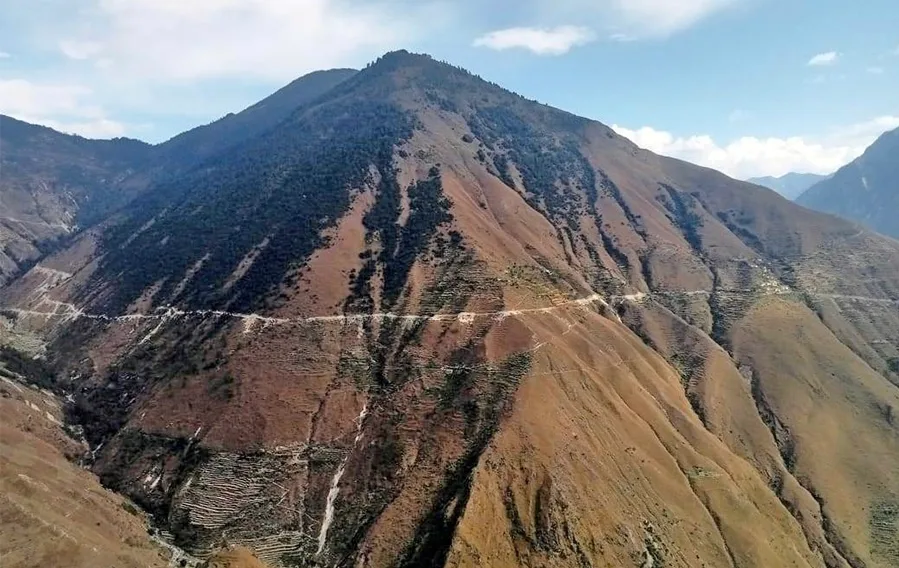
Although the Karnali Highway has been operational for nearly two decades with World Bank support, much of its 232-kilometre stretch still lacks basic highway standards.
The road continues to suffer from:
Narrow mountain bends
Weak road structures
Poor maintenance
Missing traffic signs
Dangerous cliff sections
Lack of safety barriers
Experts argue that many sections resemble temporary mountain tracks rather than national highways.
More Than 1,374 Lives Lost in 12 Years
According to Karnali Province Police records, the province has recorded:
6,062 road accidents
1,374 deaths
7,839 serious injuries
during the past 12 years.
The trend has worsened in recent years.
Between Fiscal Years 2080/81 and 2082/83 alone:
4,241 accidents
383 deaths
6,377 serious injuries
were recorded.
Traffic experts warn that the number continues to rise despite repeated tragedies.
Why Are So Many Accidents Happening?
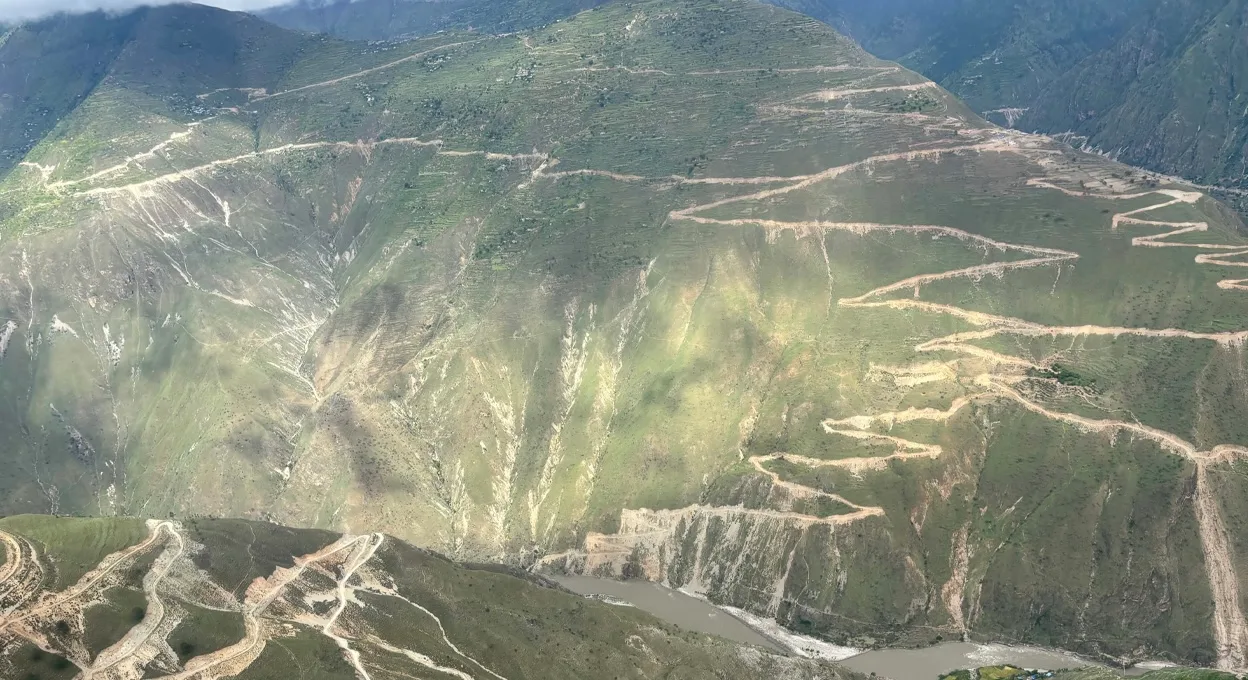
Engineers and police officials identify several major causes:
Dangerous mountain geography
Narrow roads
Lack of warning signs
Overloaded public vehicles
Old and poorly maintained buses
Overspeeding
Mechanical failures
Human error
Drunk driving
Mobile phone use while driving
Unsafe overtaking
Officials say delayed rescue operations due to difficult terrain also contribute to higher death rates, as victims often cannot receive timely emergency treatment.
Road Safety Plans Were Announced But Never Fully Implemented
In 2074 BS, the Karnali Provincial Government launched a Road Safety Programme aimed at reducing accidents.
The programme proposed:
GPS tracking on public buses
Increased highway patrols
Improved monitoring
Better emergency response
However, officials acknowledge that most of these measures were never fully implemented.
As a result, many of the same safety problems continue today.
Development Without Safety Comes at a Heavy Price
For the people of Karnali, roads were expected to bring prosperity, better healthcare, education, and economic opportunities.
Instead, repeated fatal crashes have turned every journey into a risk.
As rescue teams continue searching the Karnali River for the missing passengers from the latest accident, the disaster has once again highlighted the urgent need for safer roads, stronger infrastructure, stricter traffic enforcement, and effective emergency response systems.
Until meaningful improvements are made, many residents fear that Karnali's highways will continue to claim lives, earning the tragic reputation they carry today: roads of death rather than roads of development.
Published Jul 12 in Researched Article