
Dor Bahadur Bista: The Anthropologist Who Challenged Nepal’s Social Order — Then Disappeared
Dor Bahadur Bista, a pioneer of Nepali anthropology and outspoken critic of caste hierarchy, helped reshape the study of Nepal’s diverse society. His mysterious disappearance in January 1995 remains unresolved, leaving behind an influential intellectual legacy and unanswered questions about his fate.
· 8 min read
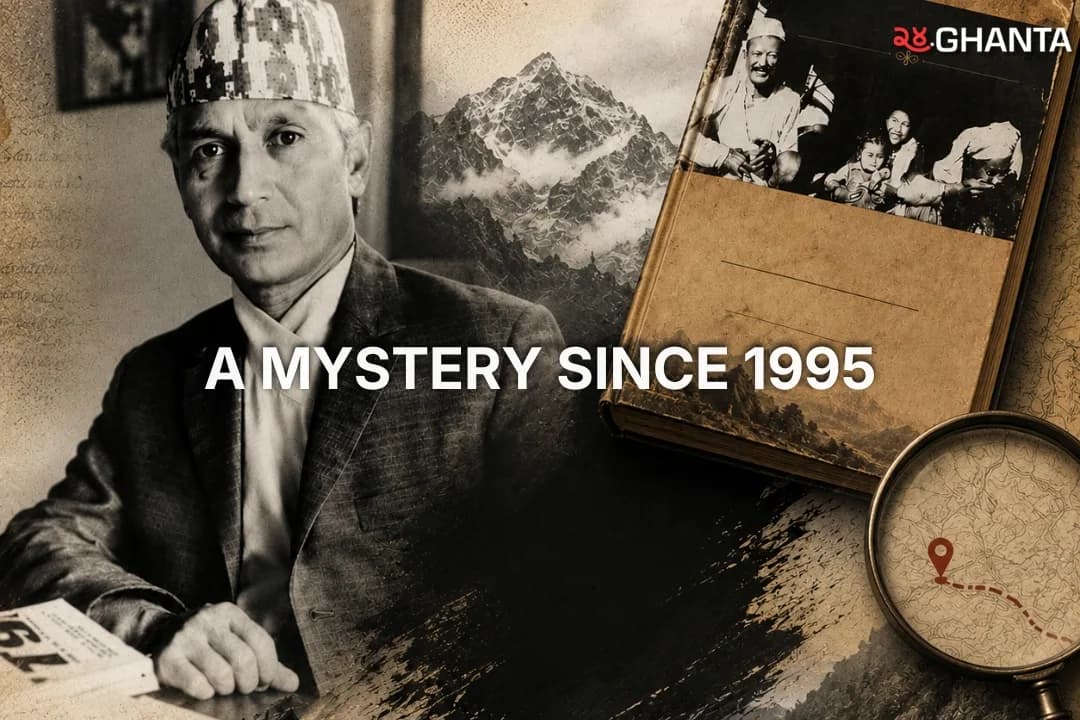
Dor Bahadur Bista occupies a distinctive place in Nepal’s intellectual history. Widely regarded as one of the central figures in the development of anthropology in Nepal, he was a field researcher, writer, social critic and development thinker who studied Nepali society through its communities, cultures and social structures.
His work documented Nepal’s ethnic and cultural diversity, while his later writing questioned caste hierarchy, social inequality, fatalism and the way power operated through Nepal’s institutions. His ideas, particularly those presented in Fatalism and Development, became influential but also controversial. Then, in 1995, Bista disappeared while travelling in western Nepal. More than 30 years later, no publicly verified evidence has established what happened to him.
From Teacher to Anthropologist
Published accounts differ over Bista’s exact year of birth, so a precise date is best treated cautiously. What is better established is the unusual route through which he entered anthropology.

Bista began his professional career in education and worked as a school headmaster. His career changed after he became associated with Austrian-born anthropologist Christoph von Fürer-Haimendorf, who was conducting field research in Nepal. Bista worked as a research assistant and gained practical experience through fieldwork among Nepal’s communities. He later pursued studies in Indian ethnography in London, although he did not complete an advanced university degree.
This field-based experience became central to Bista’s career. Rather than studying Nepal only from a distance, he spent years travelling, observing communities and documenting their social and cultural practices.
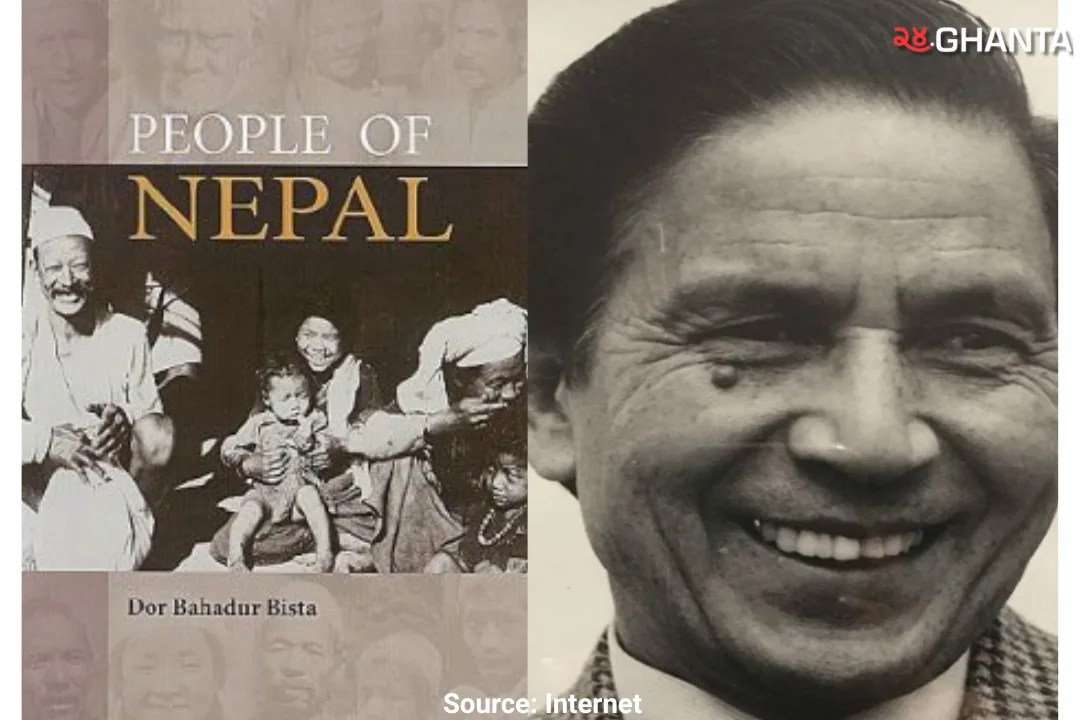
People of Nepal: Documenting a Diverse Country
One of Bista’s most important early works was People of Nepal, first published in 1967 by Nepal’s Department of Publicity, Ministry of Information and Broadcasting. The first edition was 176 pages and covered a wide range of communities, including Brahmans, Chhetris, Newars, Kiranti groups and numerous other ethnic and social communities.
The book was significant because it attempted to provide a broad ethnographic picture of Nepal at a time when the country remained relatively under-documented in social science.
Bista described communities across Nepal’s different regions, recording aspects of their social organisation, customs, religion, marriage practices, occupations and everyday life. Later editions of the book continued to circulate, reflecting its lasting importance in the study of Nepali society.
Bista also became an important figure in the emergence of anthropology as a discipline practised by Nepali scholars themselves. His work helped give anthropology in Nepal a strongly local and applied orientation.
Building Anthropology and Development Work in Nepal
Bista’s career extended well beyond academic research.
He worked in government and development-related positions and was involved in efforts to apply social science to Nepal’s development problems. In 1972, he was appointed Nepal’s Consul General in Lhasa, a position he held for three years. He later worked with the Nepal Resettlement Company, gaining further experience with social and economic issues in the country.
In 1977-78, Bista spent a year at Columbia University in New York as a visiting professor under the Fulbright programme. In 1978, he became Executive Director of the newly established Centre for Nepal and Asian Studies at Tribhuvan University. He later served as Professor and Head of the university’s Central Department of Humanities and Social Sciences from 1982 to 1989.
Through these positions, Bista played a major role in the institutional development of sociology and anthropology in Nepal and promoted an approach that connected research with practical questions of development.
Fatalism and Development: His Most Controversial Argument
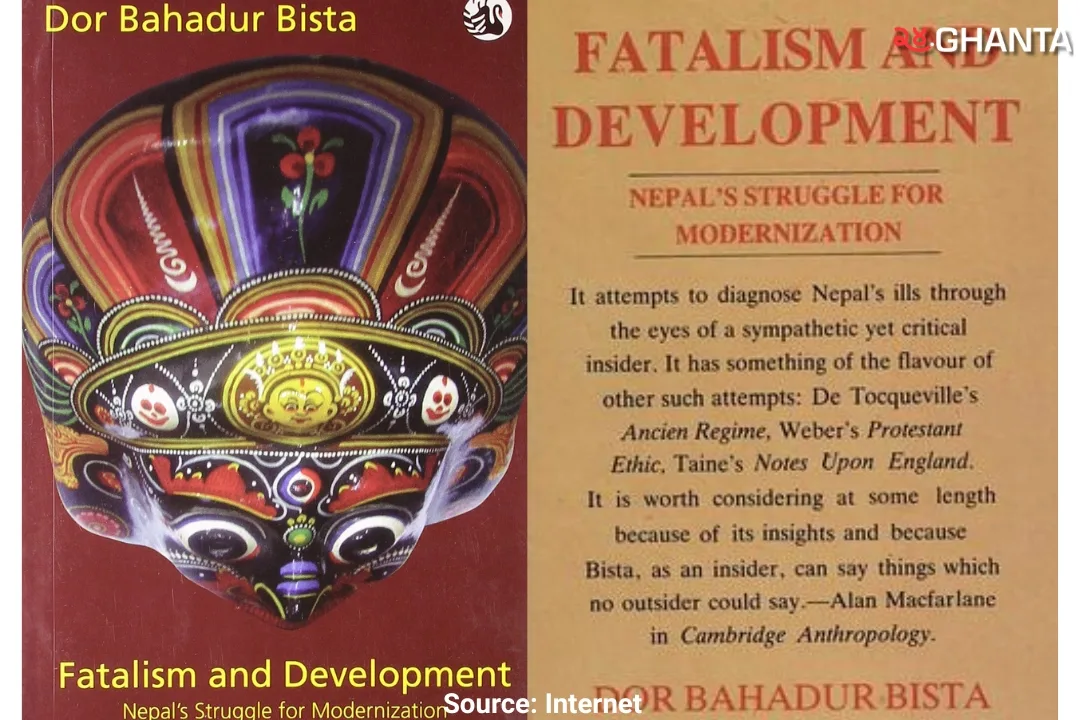
Bista’s most famous and controversial work was Fatalism and Development: Nepal’s Struggle for Modernization, published in 1991.
The book examined Nepal’s caste system, family structure, education, politics, government, foreign aid and development. Bista argued that social and cultural patterns, particularly hierarchical relationships and what he described as fatalistic attitudes, were important obstacles to Nepal’s development.
He also criticised practices such as chakari (flattery) and afno manche (nepotism), which he associated with patronage, favouritism and hierarchical social relationships. His analysis placed particular emphasis on the role of high-caste groups and power structures in reproducing these patterns.
The argument attracted considerable attention but was never an uncontested explanation of Nepal’s underdevelopment. Later scholars have described the book as both influential and controversial, while critics have questioned some of Bista’s generalisations and the way he connected particular cultural practices with development outcomes.
That distinction is important. Bista’s explanation should be understood as his social theory and interpretation of Nepal, not as an established scientific explanation for why Nepal remained underdeveloped.
Taking His Ideas to Jumla
Bista eventually tried to put some of his ideas into practice.
He established the Karnali Institute in the Chaudabisa Valley of Jumla. In a 1995 article for Himal Southasian, Bista wrote that he had spent three years conducting what he called "applied research" among the Khas people of Jumla.
He described the institute’s goal as applying theories from the social sciences and development studies to improve the social and economic conditions of the Khas community.
This work reflected an important feature of Bista’s thinking: he wanted anthropology to do more than document society. He wanted social research to contribute to changing the conditions of communities he believed had been marginalised.
Accounts of his work in Jumla also describe tensions with some local powerful figures. However, there is no reliable evidence establishing that these tensions caused his later disappearance.
1995: The Disappearance
In 1995, Bista disappeared while travelling in western Nepal.
Nepali Times reconstruction describes Bista’s final journey in January 1995. He had been working in Jumla and travelled through the western region before disappearing. The precise details of his final movements vary among published accounts, so claims about his exact final destination should be treated cautiously.
What is established is that he was not reliably seen again after his final journey.
No publicly verified evidence has established whether Bista died, was killed, took his own life, or deliberately withdrew from public life.
Over the years, different theories emerged. One suggested that he may have been killed by people opposed to his work in Jumla. Another suggested suicide. A further theory held that he had voluntarily abandoned his previous life and travelled to India.
None of these explanations has been established as fact.
The Haridwar Sighting
One of the most persistent stories surrounding Bista involved a possible sighting in Haridwar, India.
In 2000, Nepali Times reported that a Nepali pilgrim, Jitendra Bahadur Karki, believed he had encountered an elderly Nepali man in Haridwar two years earlier. Karki later thought the man resembled Bista after seeing photographs of the missing anthropologist.
The report generated renewed hope that Bista might still be alive.
But the sighting was never independently confirmed.
There is therefore no verified evidence that Bista lived in Haridwar, entered an ashram, became a sannyasi or deliberately disappeared into religious life. Those remain theories based on an unconfirmed sighting.
Castaway Man and the Search for Answers
Two decades after Bista disappeared, filmmaker Kesang Tseten revisited his life and disappearance in the documentary Castaway Man.
The film retraced Bista’s career, his work in Jumla and the final known stages of his journey. It also used archival material and interviews with family members, friends and people who had known him.
The documentary brought renewed public attention to the disappearance, but it did not establish what happened to Bista.
The mystery therefore remains unresolved.
What Bista Left Behind
Bista’s importance to Nepal extends far beyond the mystery surrounding his disappearance.
His first major legacy is ethnographic. People of Nepal documented a wide range of Nepal’s communities, customs, and social structures and remains an important historical source for understanding Nepali society in the mid-20th century.
His second legacy is institutional. Through his work at Tribhuvan University and elsewhere, Bista helped develop anthropology and sociology as fields of study and research in Nepal.
His third legacy is intellectual controversy. Fatalism and Development challenged readers to think about caste, hierarchy, patronage, responsibility, and development. Its arguments have been criticised and reassessed, but the debate surrounding the book has continued for decades.
His fourth legacy is his attempt to connect research with action. His work among the Khas of Jumla and through the Karnali Institute showed his effort to apply social science to real social and economic problems. His 1995 article Khas of Chaudabisa provides direct evidence of this approach.
The Mystery Remains
Dor Bahadur Bista spent much of his career trying to understand Nepal: its communities, caste structures, social relationships and obstacles to development.
He documented people who were often overlooked by mainstream scholarship. He challenged established ideas about hierarchy and fatalism. He helped build anthropology as a field of study in Nepal. And late in his career, he attempted to apply his ideas directly through development work in Jumla.
Then he disappeared.
More than 30 years later, there is still no publicly verified evidence that conclusively explains what happened to him. The theories surrounding his disappearance, from murder to suicide to voluntary withdrawal, remain unproven. The reported Haridwar sighting was never confirmed.
What is not uncertain is his intellectual legacy.
People of Nepal helped document the country’s extraordinary social and cultural diversity. Fatalism and Development challenged Nepal to examine uncomfortable questions about caste, hierarchy and development. His institutional work helped create space for Nepali scholars to study Nepali society through anthropology and sociology.
Dor Bahadur Bista disappeared without leaving a verified explanation of where he went.
But he left behind a body of work that continues to make Nepal examine itself.
Sources:
Martin Chautari- Bibliography of Social Scientific Writings by Dor Bahadur Bista: Gaurab KC and Pratyoush Onta.
ECS Nepal- Dor Bahadur Bista: The “Father of Nepalese Anthropology”
Nepali Times- Looking for Dor Bahadur Bista
Nepali Times- Dor Bahadur Alive
Himal Southasian- Dor Bahadur Bista, Khas of Chaudabisa
Nepal Journals Online- Dor Bahadur Bista, Nepal School of Sociology/Anthropology
Nepal Journals Online- The Dynamics of Representing Nepal’s Struggle for Modernization: From Nepalization to Fatalism
Dor Bahadur Bista- People of Nepal (1967)
Dor Bahadur Bista- Fatalism and Development: Nepal’s Struggle for Modernization (1991)
Published Aug 24 in Nepal