
From a Sacred Tree to Kathmandu’s Streets: The Journey That Begins Indra Jatra
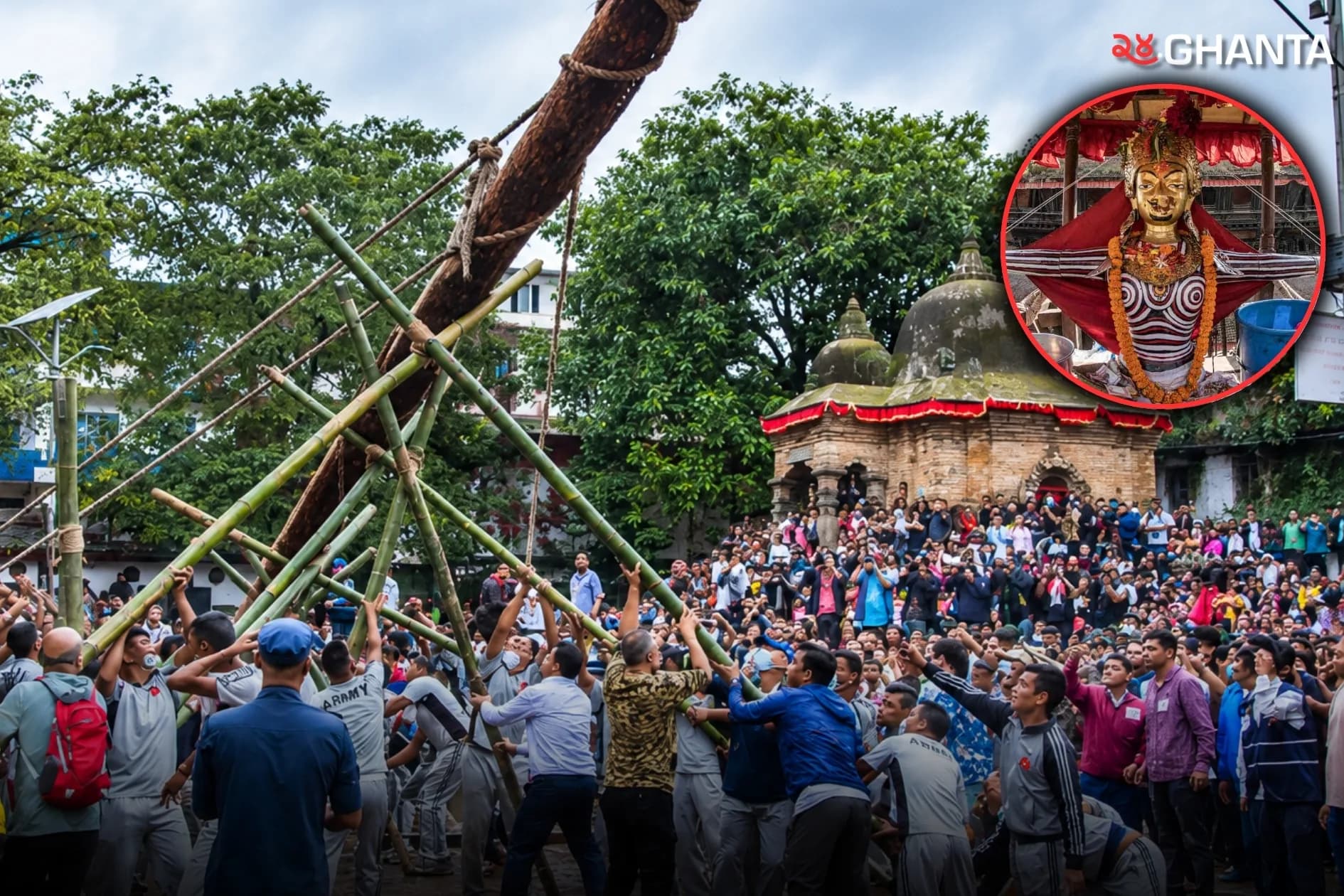
The sacred Yosin, or Yoh Sim, was brought from Nala forest in Kavrepalanchok to Kathmandu on September 15 as preparations began for Indra Jatra 2026, one of Kathmandu Valley’s most important traditional festivals. The wooden pole will be ceremonially raised at Hanuman Dhoka with Indra’s flag and ritual symbols, continuing a centuries-old tradition connected with the legend of Indra’s capture and release, as well as rain, fertility and the Valley’s historic farming culture.
· 7 min read
KATHMANDU, NEPAL, September 16, 2026
A Sacred Journey Begins Indra Jatra
The sacred wooden Yosin, also called Yoh Sim or Lingo, was brought from Nala forest in Kavrepalanchok to Kathmandu on September 15, beginning an important sequence of rituals ahead of Indra Jatra 2026. The pole will be ceremonially raised at Hanuman Dhoka with Indra’s flag and other ritual symbols as Kathmandu prepares for the eight-day festival, continuing a tradition linked to the legend of Indra’s capture and release and to the Valley’s historic prayers for rain, fertility and a good harvest.

From Nala Forest to Kathmandu
The journey begins far from the crowds of Basantapur.
A suitable tree is traditionally selected from the Nala forest area of Kavrepalanchok following religious and Tantric rituals. The selected tree is cut and prepared before beginning its journey toward Kathmandu.
According to traditional accounts, the selection process historically involved releasing a worshipped goat into the forest after rituals were performed, with the tree it first touched being chosen for the sacred purpose.
The pole is then transported toward the capital, continuing a ritual journey that connects the forest with the heart of old Kathmandu.
Why the Yosin Is Raised
The Yosin carries a much deeper meaning than its physical appearance suggests.
During Indra Jatra, the tall wooden pole is ceremonially erected in the Hanuman Dhoka-Basantapur area, with Indra’s flag and ritual symbols placed on it. The raising ceremony is traditionally known as Yosin Thanegu and marks one of the defining rituals at the beginning of the festival.
The pole and the symbols associated with it are linked to traditional interpretations of Indra being captured and bound after coming down to the Valley in human form.
Once the Yosin is raised and Indra’s banner is displayed, the festival formally enters its main ceremonial period.
Why Was Indra Captured?
One of the best-known legends behind Indra Jatra explains how the god of rain himself ended up being held by people on Earth.
According to tradition, Indra came down from heaven disguised as an ordinary person in search of a special flower for his mother. One widely told version identifies the flower as Parijat.
Local people did not recognise him.
When they saw him taking the flower, they believed he was a thief and captured him. Indra was bound and held until his true identity was eventually revealed.
His mother then came looking for him, and after people discovered whom they had captured, Indra was released.
Different communities and historical accounts preserve variations of this story, but Indra’s arrival, capture and eventual release remain among the most widely told legends associated with the festival.
The Meaning Behind Indra’s Flag
The flag placed on the Yosin adds another layer of symbolism.
The tradition is also associated with Indradhwaja, or Indra’s banner. In Hindu tradition, the victory banner is connected with Indra and divine triumph.
Over generations, the raising of the Yosin and Indra’s flag became part of Kathmandu’s annual festival tradition, combining religious symbolism with the local story of Indra’s visit to the Valley.
The pole is therefore not simply raised as decoration. Its erection and the display of Indra’s flag form a major religious ritual at the centre of Indra Jatra.
Why Rain Matters to the Festival
Indra is traditionally worshipped as the god associated with rain and storms, giving the festival particular significance in Kathmandu Valley’s agricultural history.
For generations, communities across the Valley depended heavily on seasonal rainfall for their crops. Timely rain could determine whether fields produced enough food, making the forces associated with rainfall central to everyday life.
Indra Jatra therefore became connected not only with religious devotion but also with rain, agricultural fertility and hopes for a successful harvest.
That connection helps explain why a festival celebrated today in the crowded streets of central Kathmandu still carries symbols rooted in the Valley’s farming past.
A Tradition More Than a Thousand Years Old
Indra Jatra has developed over many centuries.
Local tradition commonly credits King Gunakamadeva with establishing an early form of the festival roughly a thousand years ago, around the period associated with Kathmandu’s development as a city.
Historical research, however, suggests that the festival evolved over a long period rather than appearing in its present form at one particular moment. The earliest surviving documentary references are later, and different rulers and communities added traditions over the centuries.
What Kathmandu celebrates today is therefore the result of generations of cultural development.
When Kumari Became Part of Indra Jatra
One of the most recognisable parts of modern Indra Jatra is the procession of Kathmandu’s Living Goddess Kumari.
The Kumari chariot tradition developed separately before becoming closely connected with Indra Jatra during the Malla period.
Today, the Living Goddess leaves Kumari Ghar at Basantapur and travels through old Kathmandu on an elaborately constructed wooden chariot.
Smaller chariots representing Ganesh and Bhairav accompany her, while thousands of people gather along the historic streets to witness the procession.
Kathmandu’s Streets Become the Festival
Indra Jatra does not remain inside temples or palace courtyards.
For eight days, old Kathmandu itself becomes the festival ground.
Basantapur, Hanuman Dhoka, Indra Chowk and surrounding neighbourhoods fill with traditional music, religious ceremonies, processions and crowds.
Different deities and sacred images are displayed, while communities perform rituals that have been passed from one generation to another.
The Lakhey Comes to Life
Among the festival’s most recognisable sights is the Majipa Lakhey, whose dramatic masked dance moves through Kathmandu accompanied by traditional drums.
The enormous red mask, colourful costume and energetic movements make the Lakhey one of the most visible characters of Indra Jatra.
The Lakhey tradition has its own mythology and history, but over generations it has become inseparable from the atmosphere of the festival.
For many people today, the sound of drums and the appearance of the Lakhey through Kathmandu’s narrow streets immediately signal that Indra Jatra has arrived.
Hidden Deities Come Into Public View
Indra Jatra also provides rare opportunities to see sacred images that remain concealed for much of the year.
One of the most famous is Sweta Bhairav, whose enormous mask at Kathmandu Durbar Square is opened for public viewing during the festival.
Other forms of Bhairav and religious displays appear throughout old Kathmandu, turning streets, courtyards and squares into places of worship and celebration.
Remembering Family Members Who Have Died
Indra Jatra also carries a quieter and more emotional tradition.
Families participate in rituals remembering relatives who have passed away, including Mata Biye, during which butter lamps are offered along traditional routes and at religious sites.
These lights transform parts of Kathmandu into spaces of remembrance.
It means Indra Jatra brings together celebration and memory: crowds gather for chariots and masked dances while other rituals quietly honour family members who are no longer there.
Hindu and Buddhist Traditions Meet
One reason Indra Jatra is culturally distinctive is the way different traditions exist together within the same festival.
Its ceremonies reflect elements of Newa culture, Hinduism, Buddhism, royal history, community Guthi traditions, ancestor remembrance and Kathmandu Valley’s agricultural heritage.
The festival has changed and expanded over centuries, allowing different communities and rituals to become part of the larger celebration.
That layered history is why Indra Jatra cannot be explained through only one legend or one ceremony.
What Happens Next?
With the sacred Yosin now in Kathmandu, preparations will continue for its ceremonial raising at Hanuman Dhoka.
The major 2026 Indra Jatra celebrations are scheduled around September 25, when the Kumari chariot procession and other major ceremonies will bring thousands of people into old Kathmandu.
The festival will continue for eight days before the Yosin is eventually lowered, traditionally marking the conclusion of Indra Jatra.
One Pole, Centuries of Kathmandu’s Story
Before the Kumari’s chariot moves through the city, before the Lakhey dances to the sound of drums and before thousands fill Basantapur, one of Indra Jatra’s defining rituals begins with a tree.
It travels from a forest in Kavre to the heart of Kathmandu.
There, it becomes the sacred Yosin, carrying Indra’s flag and ritual symbols connected with an ancient story of a god who came searching for a flower, was captured by people who did not recognise him and was eventually released.
But the tradition also tells another story, the story of a Valley whose communities once depended deeply on rain and agriculture, and whose prayers for fertility, timely rainfall and a good harvest became woven into their festivals.
Centuries later, Kathmandu still raises the Yosin.
And with it, another Indra Jatra begins.
Published 16 hours ago in Nepal