
From Bullets to Drones: Nepal Plans a New Way to Control Crowds
Nepal is preparing to purchase drone-supported and other non-lethal crowd-control equipment after four people were killed by police gunfire during recent tensions involving communities in Koshi and Madhesh provinces. Home Minister Sudhan Gurung says the planned system could use drones for tear-gas deployment, surveillance and public announcements, while command centres monitor developing situations and authorities strengthen barricades to reduce risks to people and critical infrastructure.
· 5 min read
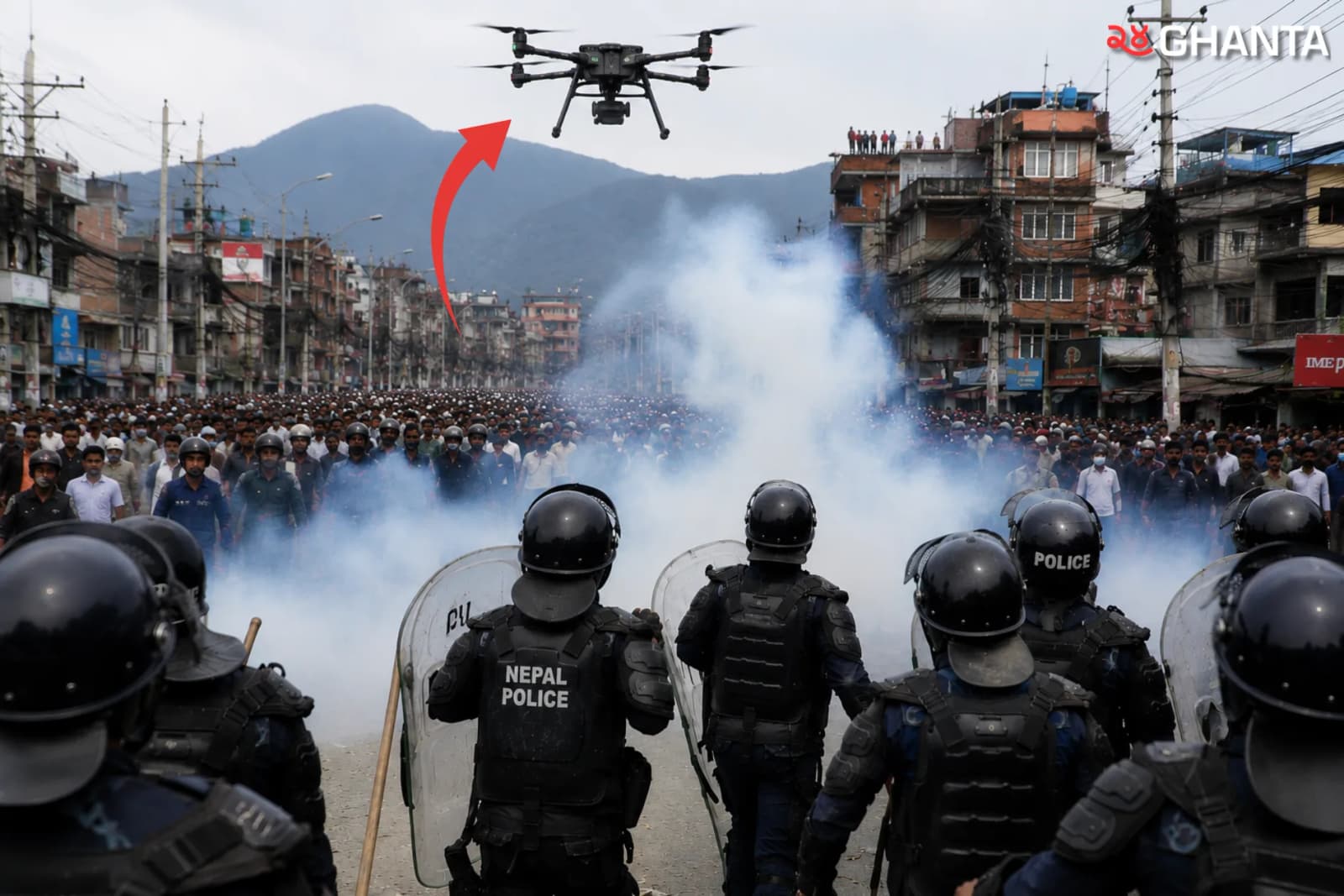
KATHMANDU, August 9, 2026 — The Government of Nepal is preparing to introduce a new generation of non-lethal crowd-control equipment, including drones capable of deploying tear gas, monitoring gatherings and broadcasting public announcements, Home Minister Sudhan Gurung has said. The procurement process is expected to move forward under the current fiscal year's budget following recent violence in Koshi and Madhesh provinces in which four people lost their lives to police gunfire, prompting the government to search for methods that could control dangerous situations while reducing the risk of deaths and protecting important public infrastructure.
Drones Could Take on Multiple Roles
The government's plan goes beyond using drones simply as surveillance cameras in the sky.
Under the proposed approach, drones could help security agencies observe crowds from above, deliver warnings or instructions through public-address systems and deploy tear gas when necessary.

Information gathered from the air could also be transmitted to command centres, giving officials a wider view of developing situations before deciding how security personnel should respond on the ground.
Four Deaths Put Crowd Control Under Scrutiny
The move comes after violent tensions in Koshi and Madhesh raised serious questions about how security agencies respond when public disorder escalates.
Four people were killed by gunfire from security personnel during the recent unrest. The deaths renewed concerns about the use of firearms in crowd-control situations and increased pressure on the government to provide police with alternatives capable of managing unrest without immediately turning to lethal force.
Government Wants Non-Lethal Options First
Gurung has indicated that the government wants security agencies to have a wider range of non-lethal options available when responding to dangerous crowds.
The planned procurement is expected to cover different forms of crowd-control equipment rather than drones alone.
The broader objective is to give officers tools that can create distance between security personnel and crowds, improve situational awareness and help prevent confrontations from reaching a stage where firearms are considered necessary.
Nepal Police Have Faced Equipment Shortages
The latest plan also addresses a problem that security agencies have raised for years: shortages of modern crowd-control equipment.
Nepal Police and the Armed Police Force have previously sought equipment such as riot-control gear, tear gas, rubber bullets, multi-gas launchers, water cannons and other protective and non-lethal systems.
Despite repeated proposals, procurement efforts have faced delays and controversy, leaving security personnel dependent in some cases on ageing or inadequate equipment.
Expired Tear Gas Has Also Raised Questions
The condition of Nepal's existing crowd-control equipment has previously drawn criticism.
Reports have documented security forces using expired tear-gas canisters during demonstrations. This has raised both operational and human-rights concerns, strengthening arguments that Nepal needs updated equipment rather than continuing to depend on outdated supplies.
The proposed procurement could therefore represent a broader modernization of crowd-control resources rather than simply the addition of drones.
Lessons From Previous Protests
The government is also looking at weaknesses exposed during previous large demonstrations.
During the September 2025 Gen-Z protests, demonstrators were able to break through weak police barricades near the federal parliament in New Baneshwar. The confrontation later escalated into the use of firearms.
Investigations into those events subsequently highlighted shortcomings in equipment, coordination and crowd-management capacity and recommended that security agencies be provided with sufficient non-lethal resources.
Command Centres Could Watch Situations From Above
Technology is expected to become a larger part of the government's future security strategy.
Gurung has said drones could allow command centres to observe developing situations remotely while authorities improve barricades and coordinate personnel based on real-time information.
Such monitoring could give commanders a broader understanding of crowd movement and pressure points instead of relying entirely on information from officers positioned inside tense areas.
Two Security Laws Could Be Changed
Equipment is not the only area being reviewed.
The government is also preparing possible amendments to the Local Administration Act, 2028 BS and the Essential Commodities Protection Act, 2012 BS, both of which are connected to the authority and procedures security personnel follow during serious public-order situations.
Gurung has indicated that the government wants detailed discussions before finalizing amendments rather than repeatedly changing the laws.
Investigations Previously Called for Reform
Calls for better non-lethal equipment are not new.
A commission formed to investigate previous protest-related violence had already highlighted shortages of shields, tear gas, body protection and other crowd-control resources.
The commission also raised questions about existing legal provisions governing the use of force and recommended clearer rules and improved equipment for security agencies.
Technology Will Not Replace Rules on Force
Introducing drones and modern non-lethal equipment does not remove the need for clear procedures governing how force is used.
Nepal's existing legal framework treats firearms as a measure for exceptional situations rather than the first response to an uncontrolled crowd. Effective crowd management therefore depends not only on what equipment police possess but also on training, command decisions, communication and proportional use of force.
A Shift in Nepal's Crowd-Control Strategy
If the procurement proceeds as planned, drones could become part of a wider attempt to modernize how Nepal responds to protests, riots and other high-risk gatherings.
The government's challenge will be ensuring that new technology is accompanied by clear operating rules, proper training and accountability.
The central goal behind the proposed change is straightforward: manage dangerous crowds without allowing crowd control itself to become the cause of further loss of life.
Published Aug 9 in Politics