
Inside Upper Mustang’s Centuries-Old Festival Where Horses, Royal Heritage and Himalayan Traditions Come Alive
Upper Mustang’s historic Yartung Festival filled Lo Manthang with horse racing, traditional processions, cultural performances and religious ceremonies from August 17–19, with Jigme Sigme Parawal Bista joining the opening celebrations. The centuries-old festival marks the seasonal transition after the rains while communities pray for a good harvest, a peaceful winter and the continuation of Mustang’s distinctive Himalayan traditions.
· 3 min read
LO MANTHANG, MUSTANG | AUGUST 19, 2026
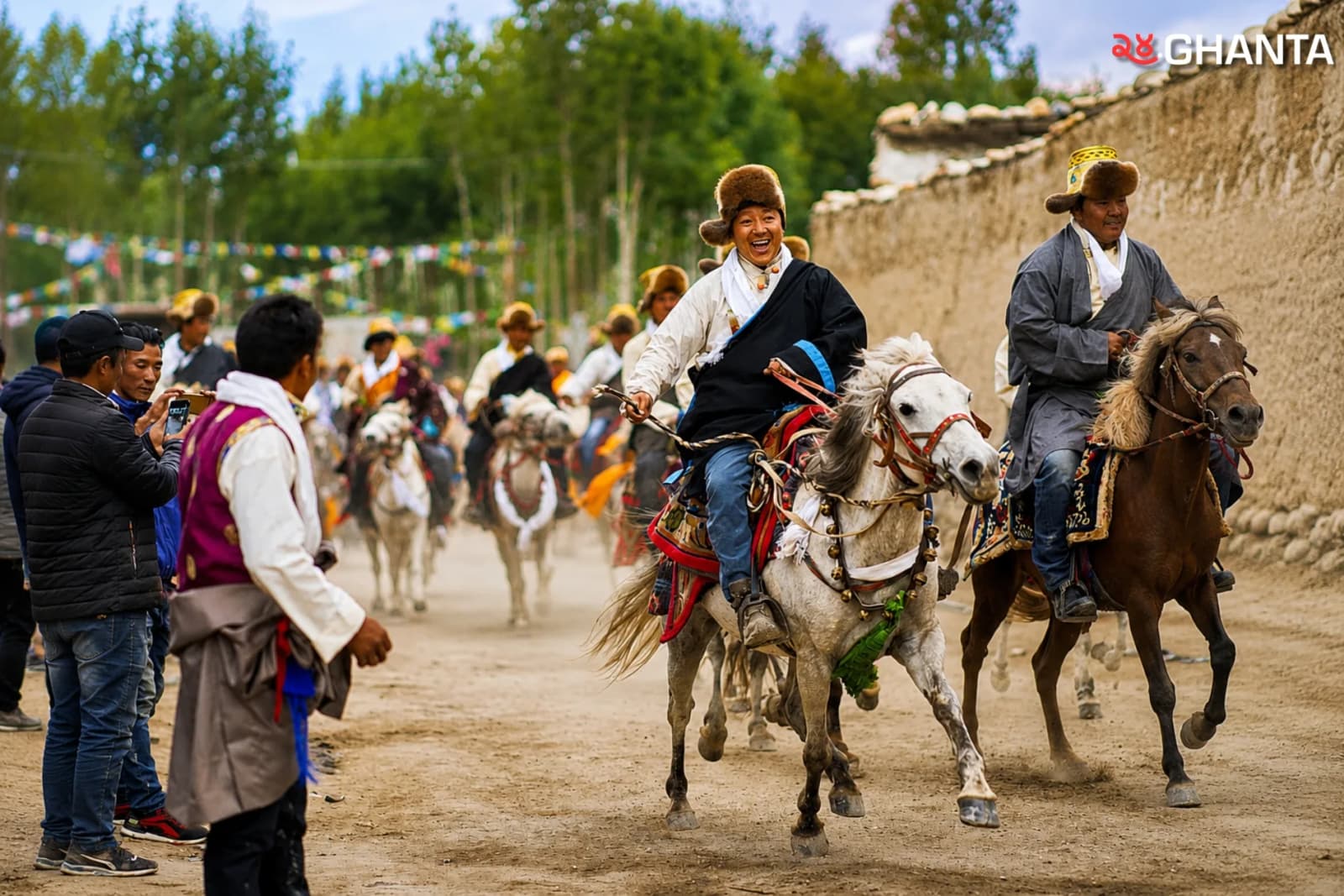
Communities in Upper Mustang are celebrating the historic Yartung Festival in Lo Manthang from August 17 to 19, bringing together traditional horse racing, religious ceremonies, cultural performances and community gatherings. Organised by Lo Manthang Rural Municipality with the Annapurna Conservation Area Project (ACAP) Office in Lo Manthang as co-organiser, the festival is held to preserve local traditions while offering prayers for a good harvest, community well-being and a peaceful winter.
A Centuries-Old Himalayan Celebration
Yartung is among the most important traditional celebrations associated with Upper Mustang and its Loba communities. According to current reporting, Yartung and the famous Tiji Festival are believed to have been celebrated in Lo Manthang for around 15 centuries, making them important parts of the region's cultural identity.

The timing of Yartung is traditionally determined by a Lama Guru in accordance with the seasonal cycle. The festival comes around the end of the rainy period, when communities have an opportunity to temporarily step away from agricultural work and gather for celebration.
Royal Heritage Joins the Celebration
The opening day featured a horse and foot parade through historic Lo Manthang Bazaar in the presence of Jigme Sigme Parawal Bista, described in current reports as the 26th successor to the Mustang throne and respected locally as the Cultural Prince.
His participation connects the celebration with the former Kingdom of Lo's royal heritage, which remains an important cultural presence in Upper Mustang despite the end of Nepal's officially recognised monarchy.
Horse Racing Takes Centre Stage
The festival's biggest attraction is its traditional horse racing. The Kadam horse racing competition was held on August 18, drawing riders and spectators for one of Yartung's most recognisable traditions.
Horse riding has deep historical significance in Mustang, where horses were once central to transportation, trade and everyday movement through the difficult Himalayan landscape. Yartung keeps that connection visible through racing and displays of horsemanship.
The 2026 competition also carries substantial prizes. First, second and third place in the Kadam race receive Rs 250,000, Rs 200,000 and Rs 100,000, respectively. The Bharka competition carries prizes of Rs 150,000, Rs 100,000 and Rs 50,000 for its top three finishers.
More Than Just Horse Racing
Yartung is not simply a sporting event. Communities gather for traditional performances, religious rituals, food and social celebrations while exchanging good wishes and supporting one another.
Traditional accounts of the festival also describe singing, dancing, gatherings in the fields and skilled horseback displays as important parts of Yartung. These activities have helped transform the festival into a living showcase of the cultural practices of Upper Mustang.
Prayers for Harvest and a Peaceful Winter
Religious and seasonal meaning remain central to the celebration. Various pujas are performed with hopes for healthy crops, community prosperity and a peaceful winter.
The festival's connection to agriculture also explains its traditional timing. It gives residents an opportunity to celebrate after important seasonal farming work while marking the transition toward the colder months ahead.
Keeping Upper Mustang's Heritage Alive
Beyond celebration, Yartung has become increasingly important for preserving Upper Mustang's cultural identity. Migration and changing livelihoods have transformed communities across Mustang, making festivals one of the most visible ways traditional practices continue to be passed between generations.
Lo Manthang Rural Municipality Chairperson Tassi Norbu Gurung has said the festival contributes to preserving Upper Mustang's cultural heritage, strengthening community unity and promoting tourism.
For visitors, Yartung provides an uncommon opportunity to see horse traditions, religious practices and community celebrations together within the historic landscape of Lo Manthang. For local communities, however, its significance runs deeper: it remains a tradition through which Upper Mustang continues to celebrate and preserve its identity.
Published Aug 19 in Nepal