
Kathmandu Restricts Hookah and Cigarette Smoking in Hotels and Restaurants, Warns of Strict Legal Action
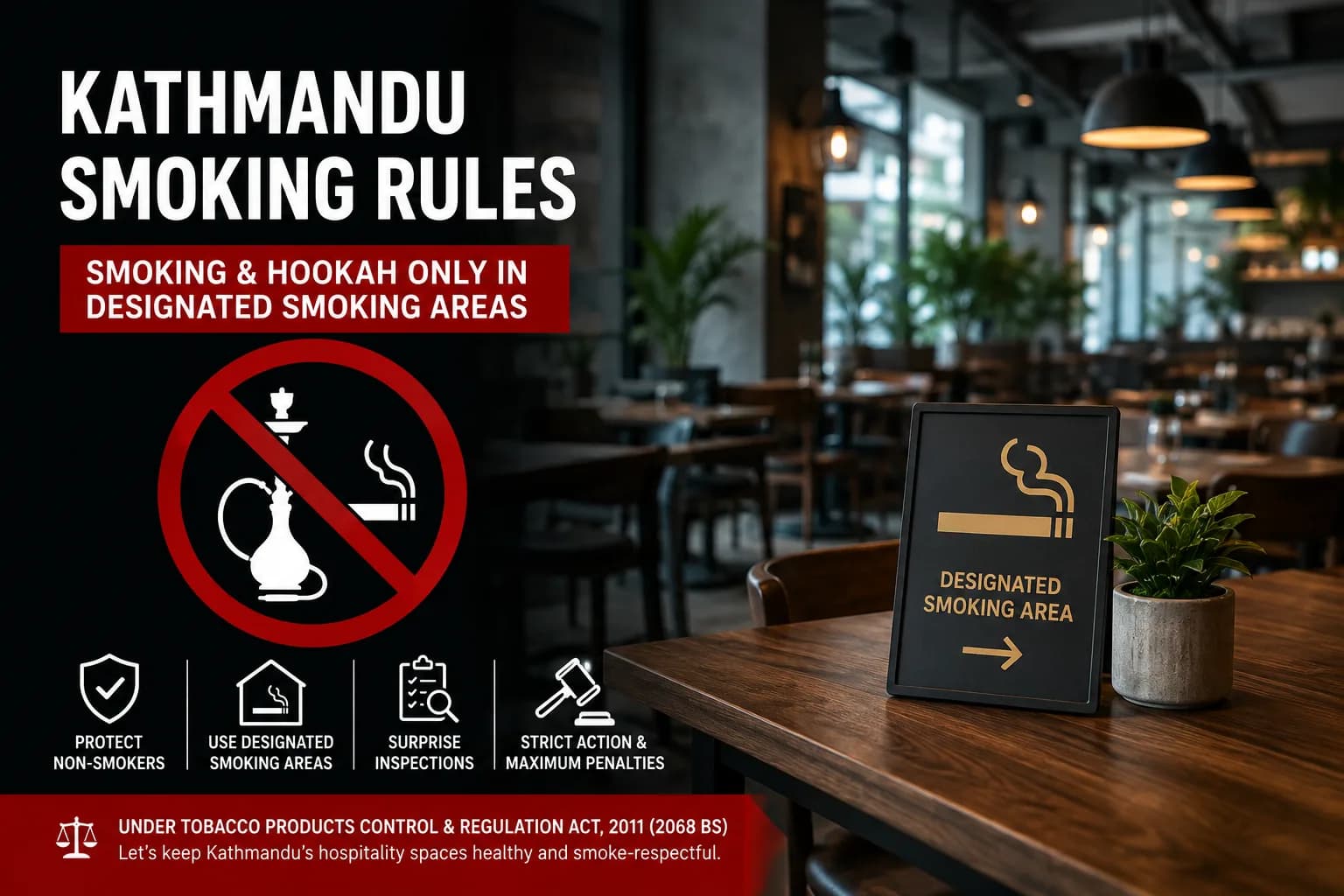
Kathmandu District Administration has ordered hotels and restaurants to allow smoking and hookah only in designated enclosed smoking areas. Surprise inspections and strict legal action await violators.
· 3 min read
New Directive Targets Smoking in Public Hospitality Venues
The Kathmandu District Administration Office has issued a new directive requiring all hotels and restaurants in the capital to prohibit cigarette and hookah smoking outside designated smoking areas. The decision follows a rise in public complaints that unrestricted smoking was exposing non-smokers to secondhand smoke and creating an unhealthy environment in public establishments.
Authorities said many businesses were also failing to comply with Nepal's tobacco control laws, prompting stricter enforcement across the district.

Smoking Allowed Only in Enclosed Designated Areas
Under the new directive, smoking will only be permitted in specially designated smoking areas. These areas must be fully enclosed and designed in a way that prevents smoke from entering non-smoking sections of the establishment.
Hotels and restaurants must clearly separate smoking and non-smoking spaces to ensure customers who choose not to smoke are protected from secondhand smoke.
Rules Based on Nepal's Tobacco Control Law
The directive is being enforced under the Tobacco Products Control and Regulation Act, 2011 (2068 BS). The law requires hotels, restaurants, and similar businesses to maintain separate smoking and non-smoking areas if they allow smoking on their premises.
Officials emphasized that designated smoking rooms must meet legal standards and should not allow smoke to spread to other parts of the building.
Surprise Inspections and Strict Legal Action
The District Administration Office warned that inspection teams may visit hotels and restaurants at any time to check whether businesses are following the law.
Businesses found violating the regulations will face strict legal action, including the maximum penalties allowed under Section 17 of the Tobacco Products Control and Regulation Act. Authorities have urged operators to review their facilities immediately and ensure full compliance before inspections begin.
Protecting Public Health
Officials say the primary goal of the directive is to protect the public from the harmful effects of secondhand smoke. Exposure to tobacco smoke has been linked to several health problems, especially among children, elderly people, pregnant women, and individuals with respiratory or heart conditions.
By enforcing stricter smoking regulations, the administration hopes to create cleaner and healthier public spaces while encouraging businesses to follow national public health standards.
Businesses Urged to Comply Immediately
The District Administration Office has called on all hotel and restaurant operators to cooperate with inspection teams and fully implement the legal requirements. Businesses are also encouraged to inform customers about the designated smoking rules to avoid violations.
With stricter monitoring now in place, authorities expect improved compliance and a safer environment for both customers and hospitality workers throughout Kathmandu.
Published Aug 5 in Nepal