
More Than a Festival: Thousands Gather in Kathmandu to Celebrate Indigenous Identity and Rights
Kathmandu turned into a vibrant showcase of Nepal’s Indigenous heritage on Sunday as communities gathered for the 32nd World Indigenous Peoples Day, bringing traditional clothing, music, dance, food and cultural displays to the capital. Beyond the celebration, NEFIN used the occasion to highlight continuing concerns involving identity, language, cultural preservation, land, natural resources, representation and constitutional rights.
· 4 min read
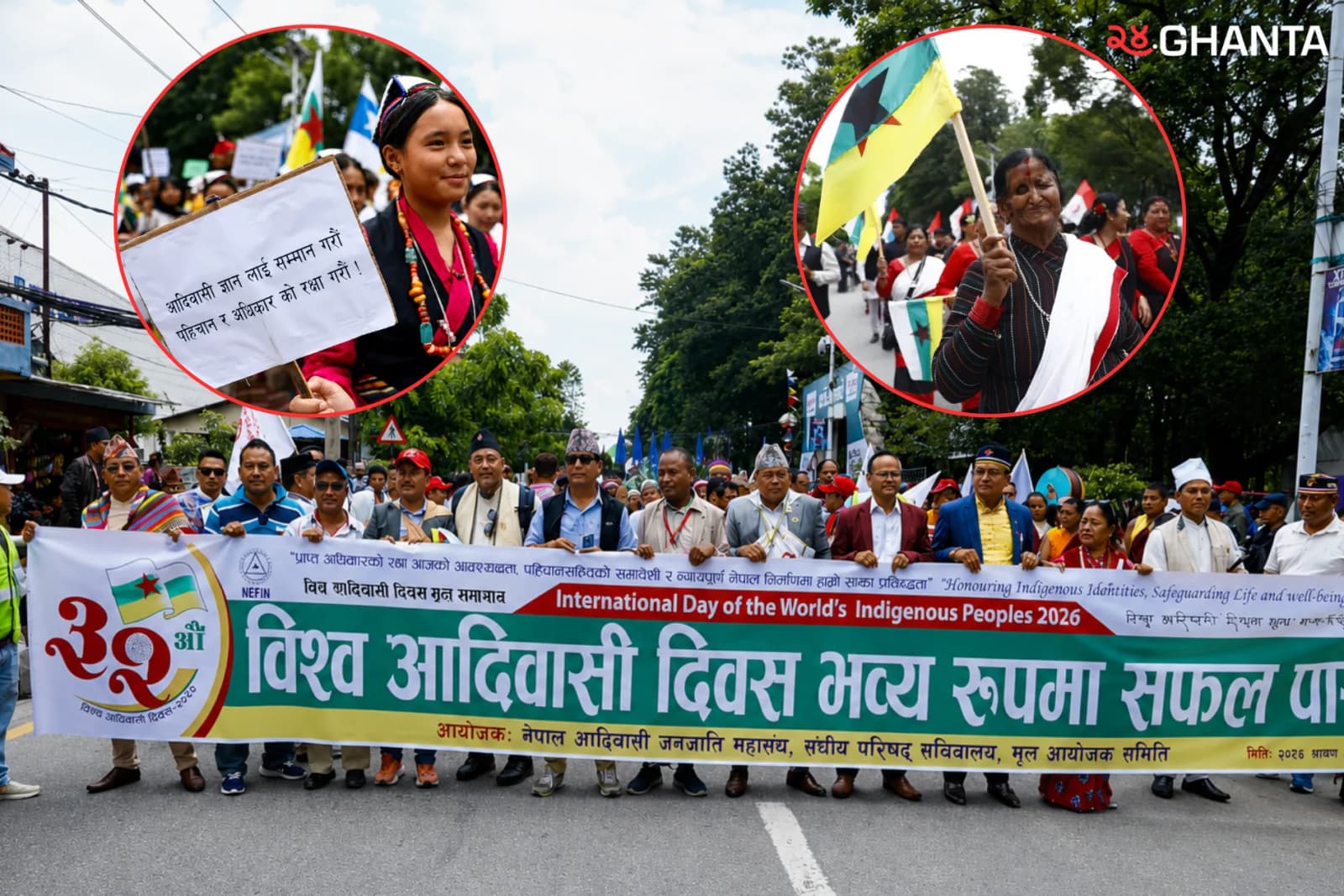
KATHMANDU, August 9, 2026 — Nepal’s Indigenous communities filled central Kathmandu with traditional attire, music, dance and cultural displays on Sunday as the country observed the 32nd World Indigenous Peoples Day. Organized by the Nepal Federation of Indigenous Nationalities (NEFIN), the gathering brought thousands of participants to the capital not only to celebrate their diverse heritage but also to draw attention to continuing concerns over identity, language, representation, cultural protection, land, natural resources and the practical implementation of Indigenous rights.
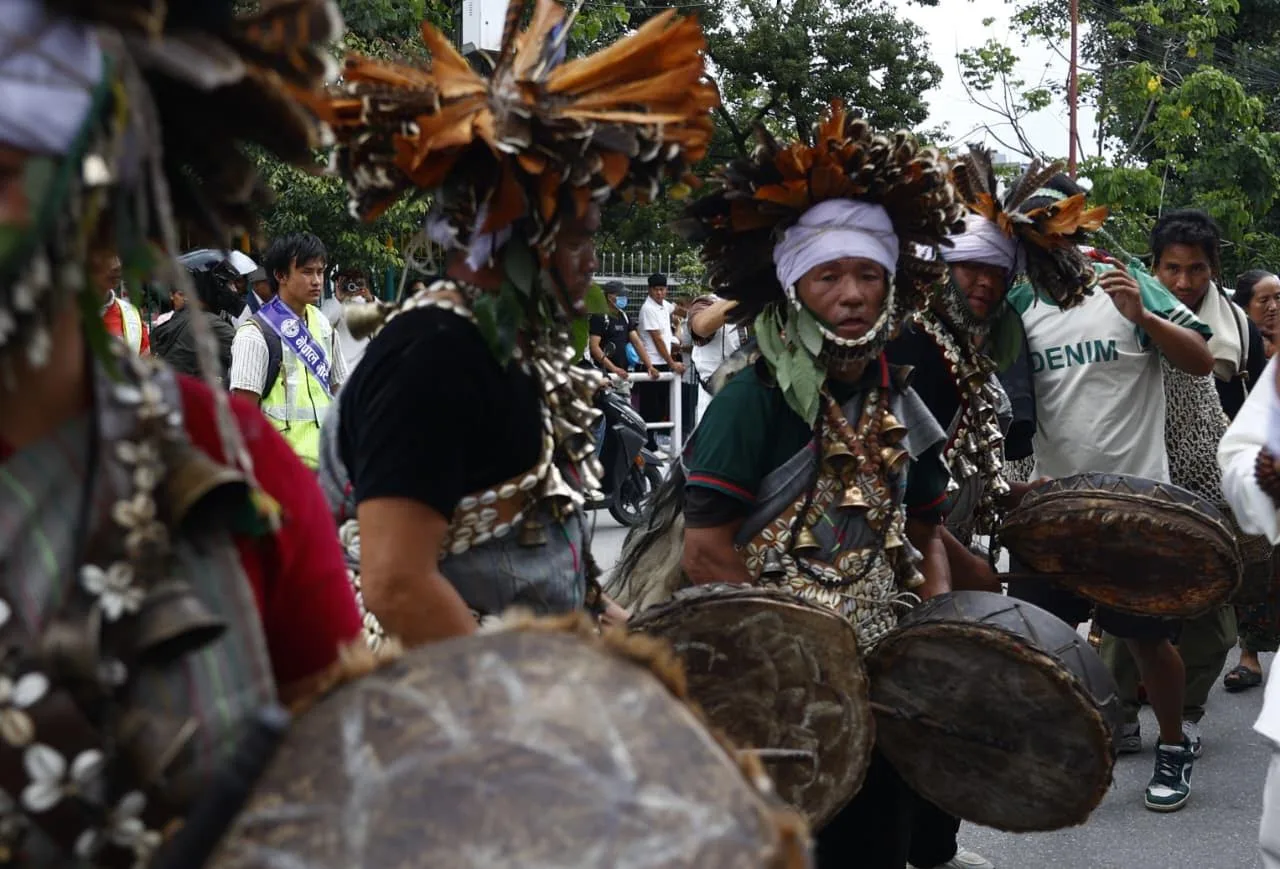
Nepal’s Cultural Diversity Takes to the Streets
Central Kathmandu became a meeting place for communities carrying distinct traditions from different parts of the country.
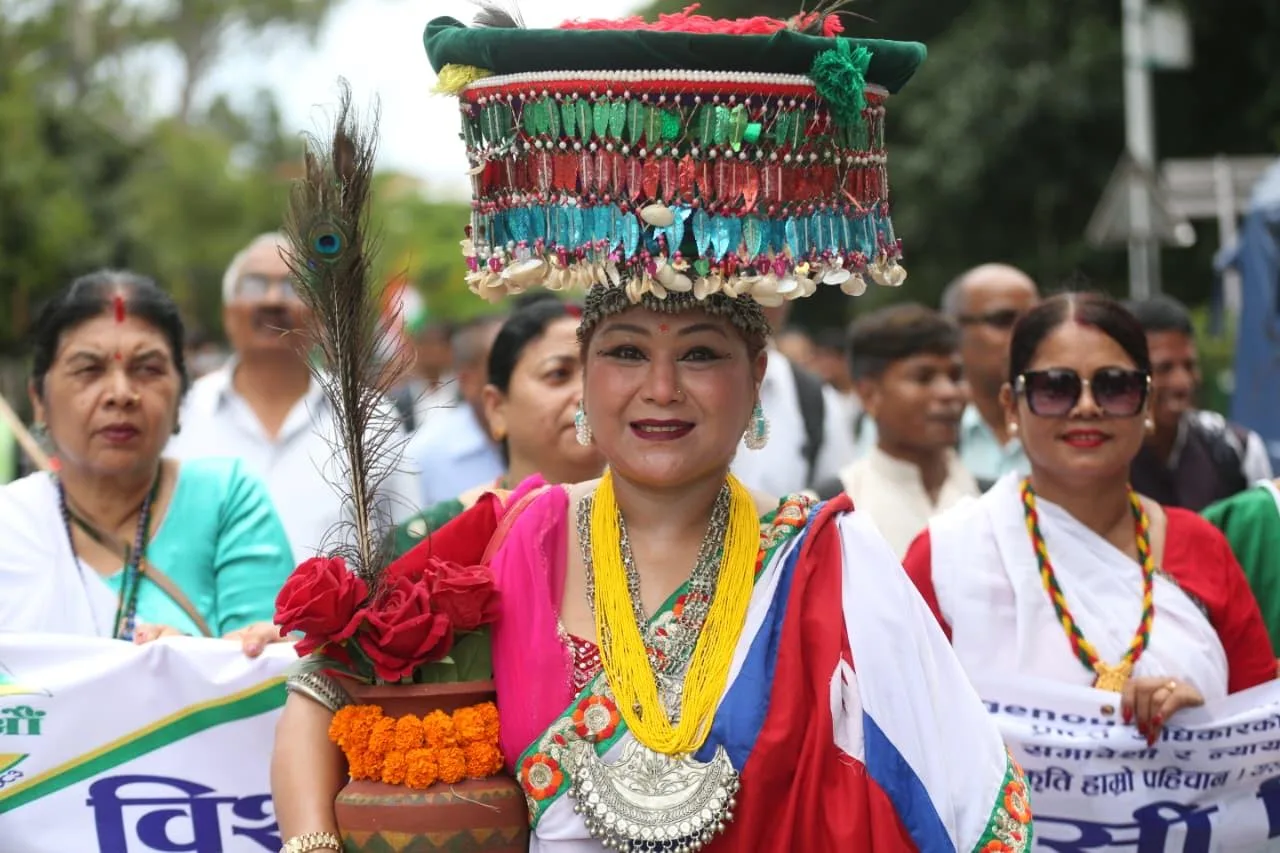
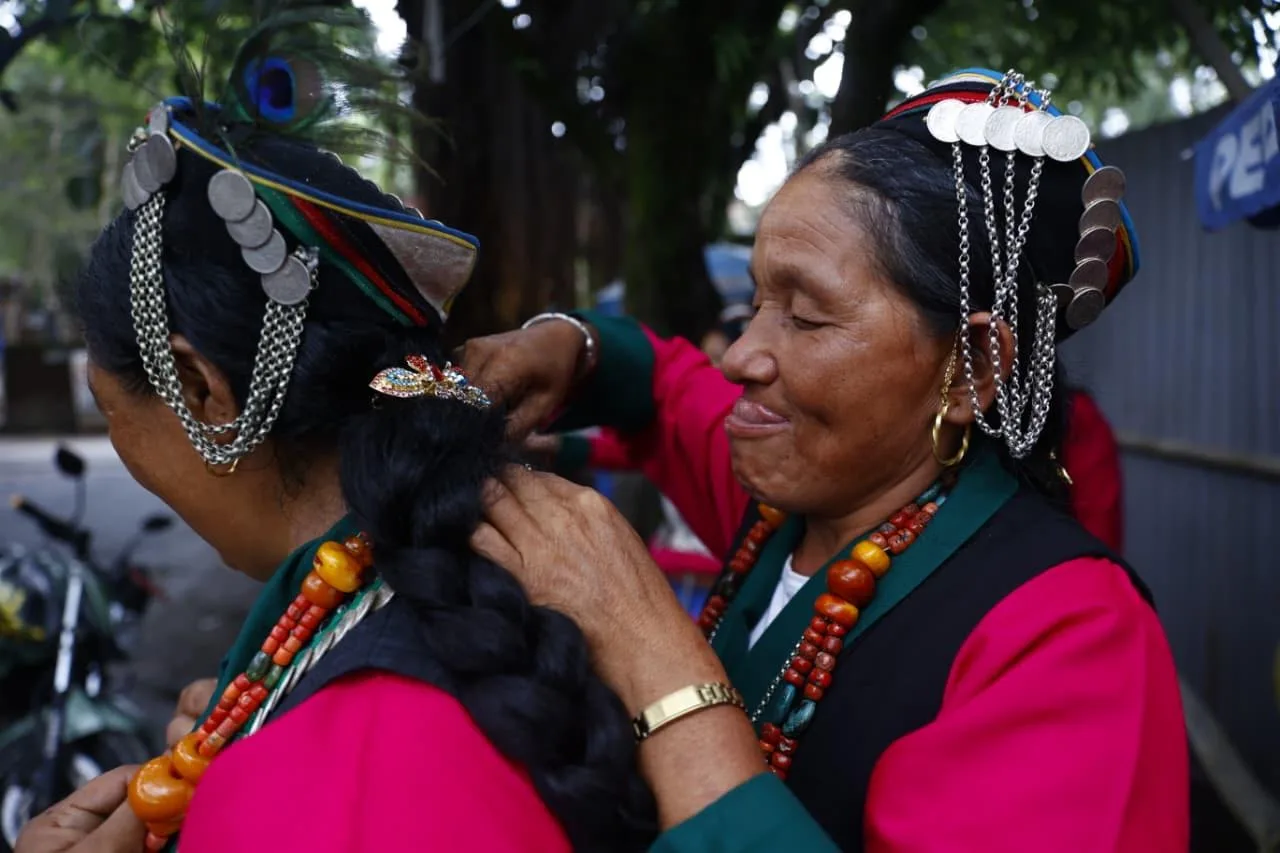
Participants appeared in traditional clothing and performed community-specific music and dances, creating a public display of Nepal's Indigenous heritage. Students, young people, women, artists, community organizations and representatives from outside the Kathmandu Valley were among those taking part.

A Procession Through Central Kathmandu
The day's activities included a large cultural procession beginning at Bhrikutimandap.
Participants travelled through Bhadrakali, Shahid Gate, Sundhara and the Bir Hospital area before reaching Khulamanch, where the main gathering was held.
Rather than being simply a march, the procession provided participating groups with a public space to represent their traditions through clothing, musical instruments, performances and cultural presentations.
Different Communities Share One Platform
The celebration reflected the wide range of Indigenous cultures found across Nepal.
Newar, Magar, Tamang, Sherpa, Gurung, Thakali, Dura, Majhi, Yakkha, Rajbanshi, Sunuwar and Hyolmo communities were among those represented, together with several other groups.
Each brought elements of its own cultural heritage, allowing visitors to experience multiple traditions within the same event.
Culture Beyond Music and Dance
Khulamanch offered more than stage performances.
Traditional cuisine, handicrafts, clothing, locally made products and other cultural materials were displayed during the gathering. Food also became part of the cultural experience, with a festival introducing visitors to dishes associated with different communities.
Together, these displays showed how Indigenous heritage survives not only through performances but through everyday practices, craftsmanship, food and knowledge passed between generations.
The Celebration Also Carried Demands
Behind the festivities was a broader conversation about the position of Indigenous communities in Nepal.
NEFIN has emphasized issues including the protection of Indigenous languages and traditional knowledge, access to ancestral land and natural resources, preservation of cultural heritage and meaningful participation in decision-making institutions.
The federation has also sought stronger implementation of rights and guarantees that already exist within Nepal's constitutional framework.
Keeping Mother Languages Alive
Language remains closely connected with the effort to preserve Indigenous identity.
Community organizations have continued to advocate for opportunities to learn and receive education through mother languages while ensuring that younger generations can inherit the knowledge and traditions carried through those languages.
The concern is not limited to preserving words. When a language weakens, generations of oral history, cultural practices and traditional knowledge can become increasingly difficult to pass on.
Representation Remains Part of the Conversation
The gathering also provided a platform for discussions about inclusion within Nepal's institutions.
Indigenous organizations have consistently sought meaningful representation and participation in areas where decisions affecting their communities are made. Their focus is increasingly on ensuring that commitments to inclusion and equality produce practical results rather than remaining limited to written guarantees.
Why the World Marks August 9
The celebration in Kathmandu formed part of a wider international observance held every August 9.
The United Nations established the International Day of the World's Indigenous Peoples in 1994. The date is linked to the first meeting of the UN Working Group on Indigenous Populations in 1982 and has since become an annual occasion for countries and communities to highlight Indigenous peoples' cultures, contributions and concerns.
More Than an Annual Celebration
Kathmandu's gathering demonstrated that World Indigenous Peoples Day carries both cultural and social significance in Nepal.
The colourful clothing, dances, music and food celebrated traditions that have survived across generations. At the same time, conversations about language, representation, land, resources and rights showed why Indigenous organizations continue to use the occasion to push for change.
For the communities gathered in Kathmandu, celebrating identity was also a reminder that preserving Nepal's diversity depends on keeping its cultures, languages and traditional knowledge alive for the generations that follow.
Published Aug 9 in Society