
Nepal Cancels Historic International Tibetan Studies Conference Amid Diplomatic Sensitivities
Nepal has canceled the 17th International Association for Tibetan Studies (IATS) Conference following a government request. The event was expected to bring 720 delegates from 39 countries to Kathmandu.
· 3 min read
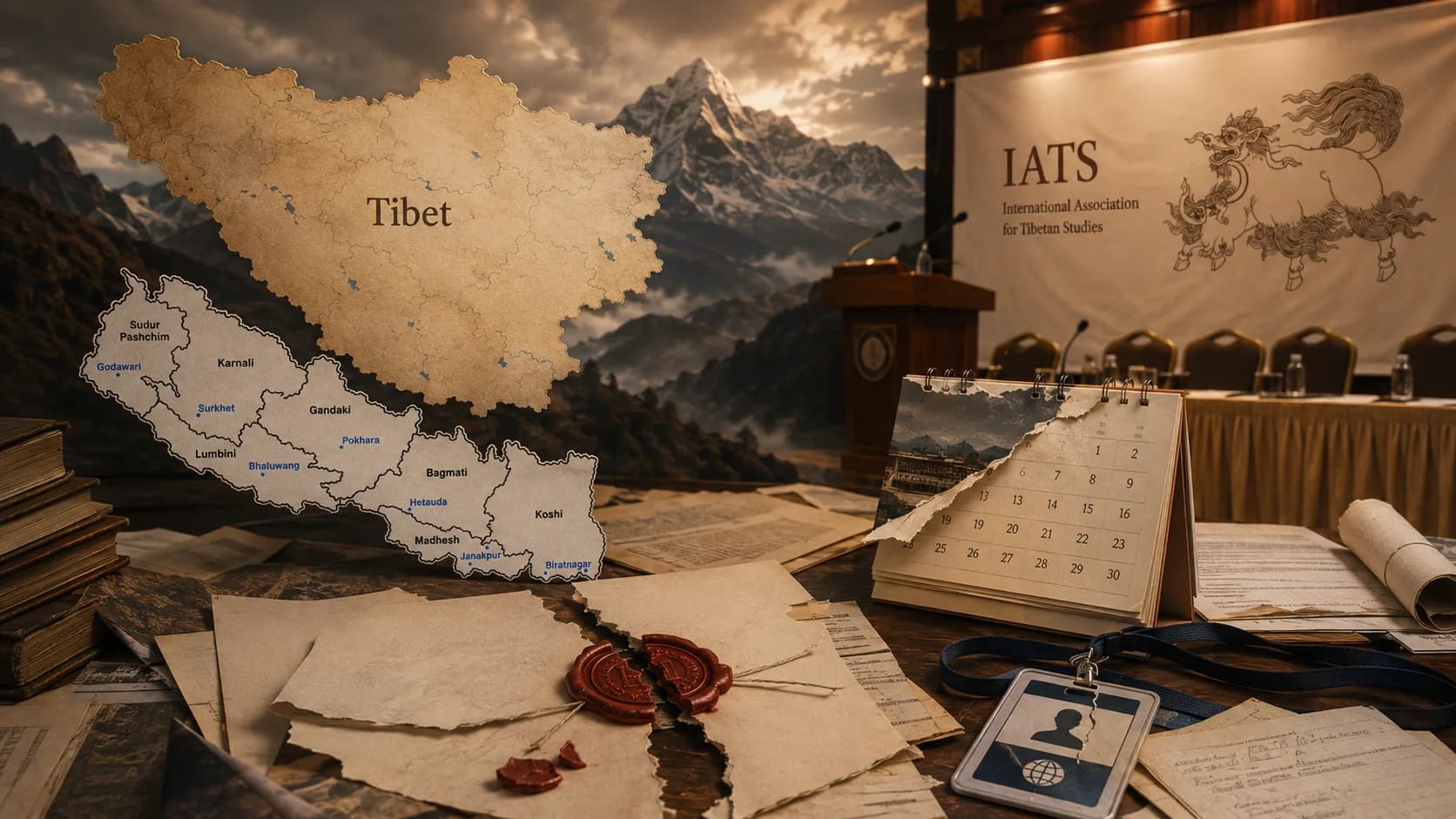
Kathmandu Loses Opportunity to Host Prestigious Global Academic Gathering
Nepal has canceled the 17th International Association for Tibetan Studies (IATS) Conference, a globally recognized academic event that was scheduled to take place in Kathmandu during the first week of Bhadra. The cancellation came after the Government of Nepal requested the local organizers not to proceed with the event, ending the country's opportunity to host the conference for the first time.
The conference was jointly organized by the Himalayan Center for Asian Studies (HiCAS) under Kathmandu University and the Centre for Buddhist Studies at Rangjung Yeshe Institute. Organizers confirmed that the decision to suspend the event was made following the government's request.

More Than 700 International Delegates Were Expected
The week-long conference was scheduled to run from Bhadra 7 to 13 and had already confirmed the participation of 720 scholars and researchers from 39 countries. The event would have brought together leading experts in Tibetan history, Buddhism, language, archaeology, culture, philosophy, and Himalayan studies.
The conference was expected to boost Nepal's profile as an international center for academic research while also benefiting the tourism and hospitality sectors through the arrival of hundreds of foreign delegates.
Diplomatic Concerns Reportedly Influenced the Decision
According to reports, diplomatic sensitivities surrounding Tibetan affairs played a major role in the government's decision. Chinese officials had reportedly expressed concerns over the possibility that representatives associated with the Central Tibetan Administration (CTA) and discussions on Tibetan political issues could be part of the conference.
Reports also indicate that the CTA had already decided not to send official representatives after concerns raised by China. Officials familiar with the matter said canceling the conference helped Nepal avoid diplomatic complications with neighboring countries.
Nepal Misses a Historic First
The cancellation is considered a significant setback for Nepal's academic community. This would have been the first time the International Association for Tibetan Studies selected Nepal as its host country despite Nepal's close historical, cultural, and religious connections to Tibet and the Himalayan region.
Many scholars viewed the event as an opportunity to strengthen international research collaboration, promote Nepal's academic institutions, and showcase the country's rich Buddhist and Himalayan heritage to the world.
A Conference With Nearly Five Decades of History
The International Association for Tibetan Studies was established in 1977, with its first conference held in Switzerland. Since then, the conference has rotated among several countries, including the United Kingdom, the United States, Germany, Japan, Norway, Austria, the Netherlands, Canada, Mongolia, France, and the Czech Republic.
Although Nepal had finally secured the opportunity to host the prestigious gathering, this year's event will no longer be held in Kathmandu. Organizers have not yet announced whether the conference will be rescheduled or moved to another country.
What the Cancellation Means
The cancellation highlights the complex balance Nepal often maintains between supporting international academic collaboration and managing its sensitive diplomatic relationships. While the conference focused on scholarly research, the geopolitical significance of Tibetan affairs ultimately overshadowed what would have been one of Nepal's largest international academic events.
Published Aug 5 in Nepal