
Nepal Government Plans to Raise VAT-Free Electricity Consumption Limit to 150 Units, Offering Relief to Millions of Households
Nepal Government is preparing to increase the VAT-free electricity consumption limit from 50 to 150 units. The proposal could benefit over 46 lakh households by reducing monthly electricity bills.
· 3 min read
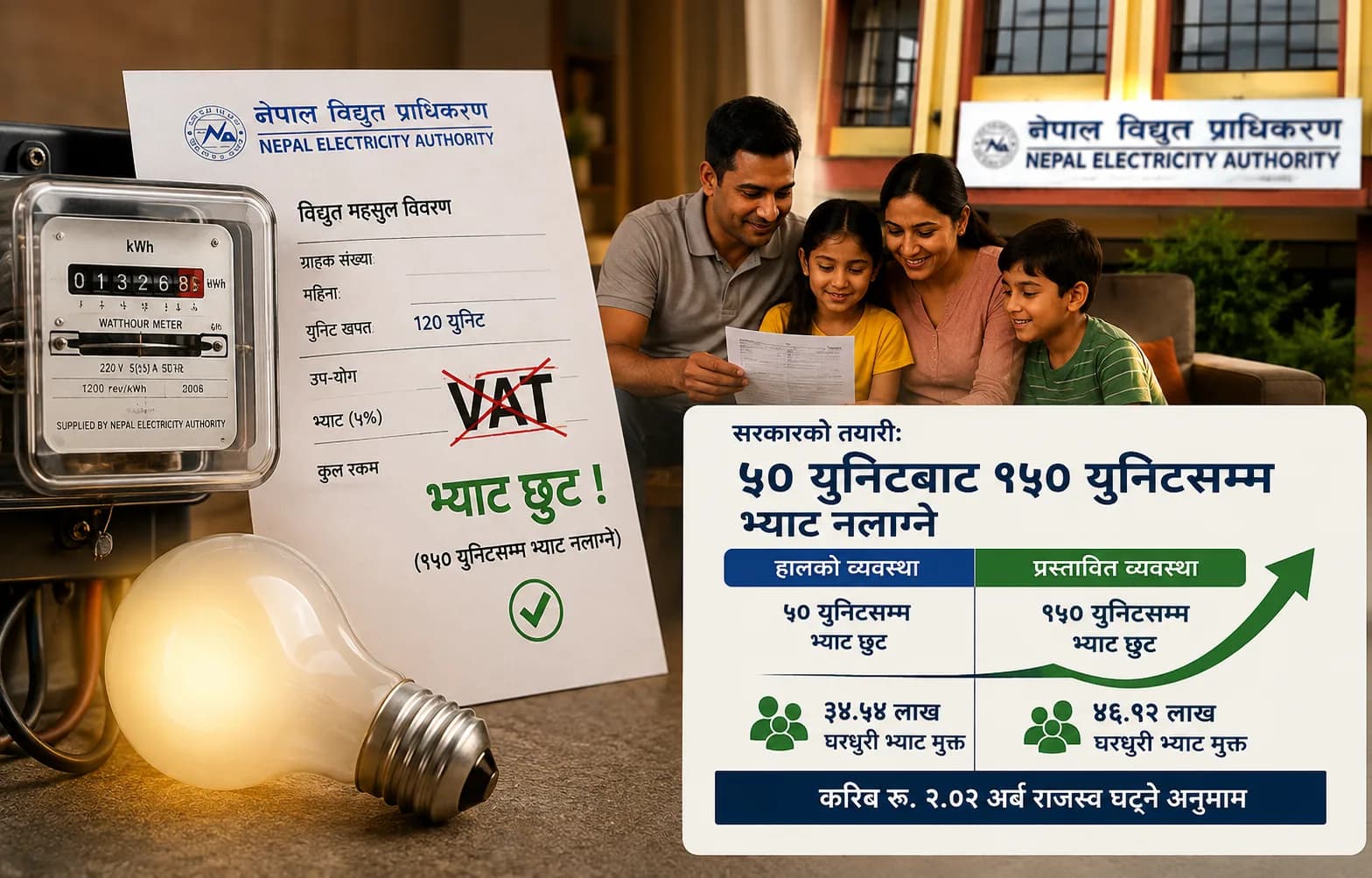
Government May Triple VAT-Free Electricity Limit to Reduce Household Power Bills
The Government of Nepal is preparing to increase the electricity consumption limit that is exempt from the 5% Value Added Tax (VAT) from the current 50 units to 150 units. If approved, the proposal will provide financial relief to millions of household electricity consumers who have been paying additional taxes on their monthly power bills since the new VAT policy came into effect.
The proposal comes after widespread criticism from consumers following the government's decision, announced through the Fiscal Year 2083/84 budget, to impose a 5% VAT on household electricity consumption above 50 units. Many households expressed concern over rising electricity bills, prompting the government to reconsider the threshold.

Energy and Finance Ministries Begin Discussions
According to officials, the Ministry of Energy, Water Resources and Irrigation has already started preparations to increase the VAT-free limit. The ministry is holding informal discussions with the Ministry of Finance to finalize the proposal before any official announcement is made.
Earlier, the government had also formed an Electricity Tariff Review Committee led by Nepal Electricity Authority (NEA) Board Member Anshukiran Shahi. The committee was tasked with reviewing whether electricity tariffs could be adjusted to reduce the financial burden on consumers. However, officials now believe that increasing the VAT exemption limit would provide quicker and more direct relief.
More Than 46 Lakh Households Could Benefit
Government data shows that Nepal currently has over 53 lakh domestic electricity consumers. Under the existing policy, around 34.5 lakh households consuming up to 50 units remain exempt from VAT, while nearly 18.5 lakh households are required to pay the additional 5% tax.
If the VAT-free threshold is increased to 150 units, the number of households exempt from VAT would rise dramatically to approximately 46.9 lakh, leaving only around 6.16 lakh consumers paying the tax. This would significantly reduce electricity expenses for middle-income families that consume between 50 and 150 units every month.
Government Expects Lower Revenue but Higher Electricity Use
The Ministry of Energy has conducted an initial financial assessment of the proposal. The study estimates that increasing the exemption limit to 150 units would reduce annual VAT revenue by approximately Rs 2.02 billion compared to the current 50-unit policy.
Despite the expected decline in tax revenue, officials believe the policy could have long-term economic benefits. Making electricity more affordable is expected to encourage households to use more electric appliances instead of traditional fuels, increasing electricity consumption and supporting Nepal's broader goal of expanding domestic energy use.
Officials also argue that higher electricity consumption can contribute to economic growth by reducing dependence on imported fossil fuels and promoting cleaner energy across the country.
VAT Controversy Sparked Public Backlash
The VAT policy has remained controversial since its announcement. Although the government stated that the 5% VAT would apply to electricity consumed from Shrawan 1, Nepal Electricity Authority initially included the VAT in bills based on electricity consumed during Asar, leading to widespread public criticism.
Following public complaints, the NEA clarified that VAT would only apply to electricity consumed from Shrawan onward, easing confusion among consumers.
Proposal Still Under Review
The proposal to increase the VAT-free electricity limit has not yet received final government approval. Discussions between the Energy Ministry and the Finance Ministry are ongoing, and the government is reviewing the financial impact before making a final decision.
If approved, the measure would become one of the largest electricity tax relief initiatives in recent years, benefiting millions of Nepali households while supporting the government's long-term strategy of encouraging greater electricity consumption across the country.
Published Aug 4 in Nepal