
Nepal Police Seeks Call Interception Power, Raising Fresh Privacy Concerns
Nepal Police has requested legal powers to intercept telephone calls and digital communications in real time during serious criminal investigations. While police argue the move is necessary to fight technology-based crimes, lawyers and rights advocates warn that such powers could threaten citizens’ constitutional right to privacy without strong safeguards.
· 3 min read
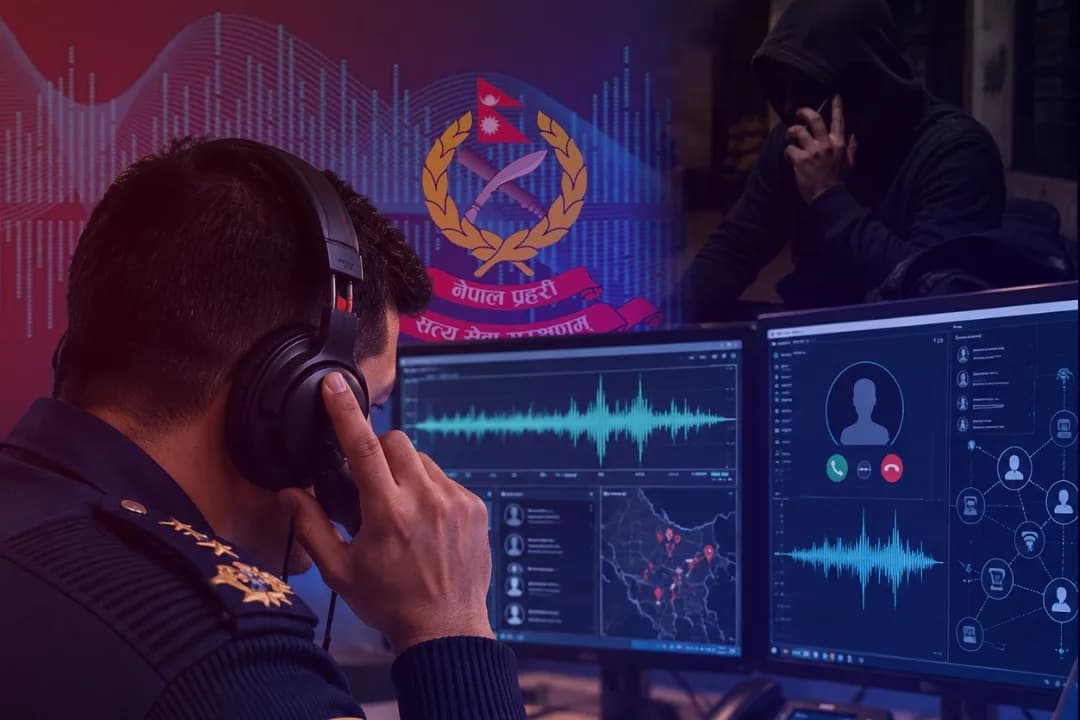
Kathmandu, Nepal | August 12, 2026: Nepal Police has proposed giving investigators legal authority to intercept telephone calls and digital communications in real time during criminal investigations.
The proposal has been included in the police’s strategic planning framework as officials argue that criminals are increasingly using encrypted platforms and advanced technologies to hide illegal activities.
The move has reopened a long-running debate over the balance between national security and individual privacy rights.

Police Argument: Need For Modern Investigation Tools
Nepal Police says existing investigation methods are becoming less effective as criminal networks adopt new digital technologies.
Deputy Inspector General Abi Narayan Kafle, spokesperson for Nepal Police, said investigators need advanced tools to deal with serious crimes.
According to police:
The power would target serious criminal investigations.
It would not be used for general surveillance.
Legal approval and oversight mechanisms would be required.
The aim is to make criminal investigations more technology-friendly.
Police officials argue that criminals involved in serious offences often use digital platforms to avoid detection, making communication monitoring an important investigative tool.
Privacy Experts Warn Of Possible Abuse
Lawyers and civil rights advocates have raised concerns over the possibility of misuse.
They argue that allowing authorities to directly listen to private conversations could create risks of:
Political surveillance
Monitoring journalists or activists
Unauthorised access to citizens’ personal communications
Abuse of power by state agencies
Senior Advocate Satish Krishna Kharel said live interception creates much greater privacy risks compared to accessing call records.
He argued that any such authority must have strict legal limits and independent judicial supervision.
Constitutional Protection Of Privacy
Nepal’s Constitution guarantees the right to privacy under Article 28.
The provision protects:
Personal communications
Documents
Data
Personal information
Individual character and privacy
Legal experts say any law allowing communication interception must operate within these constitutional protections.
Previous Surveillance Debate
This is not the first time Nepal has debated expanding state surveillance powers.
The National Investigation Department had previously proposed similar authority through a draft intelligence bill.
The proposed law included provisions that would have allowed monitoring of:
Phone calls
Text messages
Video communications
However, the proposal faced strong opposition from lawmakers, rights groups and civil society due to concerns about potential misuse.
Supreme Court Previously Restricted Communication Access
Nepal’s Supreme Court has already examined government access to telecommunications data.
During the investigation into the assassination of Supreme Court Justice Rana Bahadur Bam in 2012, police collected large amounts of call records and messages.
The investigation involved:
More than 500,000 call records
More than 30,000 text messages
However, the data collection exposed information of thousands of unrelated citizens.
The Supreme Court later ruled that investigative needs cannot provide unlimited access to citizens’ private communication data and established judicial approval as an important safeguard.
Difference Between Call Records And Live Interception
Experts highlight a major difference between existing communication access and the proposed power.
Call Detail Records (CDR)
These provide information such as:
Phone numbers involved
Call duration
Time of communication
Location-related information from cell towers
Live Interception
This would allow authorities to:
Listen to conversations as they happen
Monitor digital communications in real time
Because it involves the actual content of private conversations, experts consider it a much more sensitive power.
Proposed Safeguards Will Determine Future Implementation
Police officials say they are not seeking unlimited surveillance powers.
A senior police official said any interception system would require:
Judicial approval
Targeted investigation purposes
Independent oversight mechanisms
Legal experts have suggested additional safeguards, including:
Approval from an independent judicial authority
Clear legal criteria defining when interception is allowed
Reporting mechanisms to prevent unlawful surveillance
A Difficult Policy Choice For The Government
The government now faces a challenging decision.
On one side, law enforcement agencies argue that modern crimes require modern investigative tools.
On the other side, privacy advocates warn that surveillance powers without strong protections could threaten constitutional freedoms.
The final outcome will depend on whether Nepal can create a system that strengthens criminal investigations while protecting citizens’ right to privacy.
Published Aug 12 in Nepal