
Nepal Proposes Allowing 13-Year-Old Children To Do Limited Light Work Under New Labour Bill
Nepal is preparing to amend its child labour law, proposing that children aged 13 and above may perform certain light work outside school hours under strict safety rules.
· 3 min read
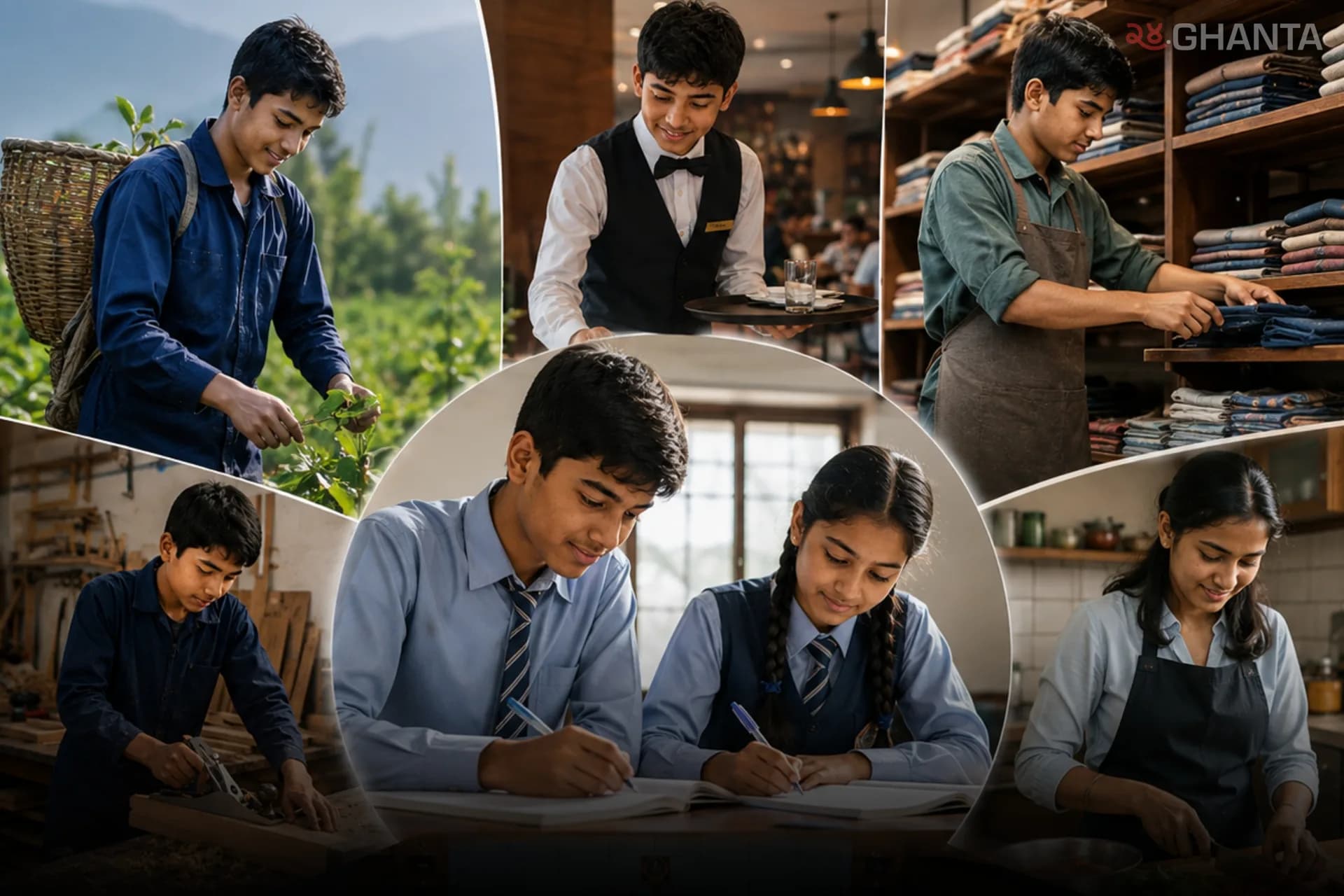
The government has proposed a major revision to the Child Labour (Prohibition and Regulation) Act 2056, introducing a legal framework that would allow children who have completed 13 years of age to engage in certain light work.
The amendment bill registered at the House of Representatives proposes that children between 13 and 15 years old can work only in approved activities without affecting their education, health or overall development.

Children Can Work Only Under Strict Conditions
According to the proposed amendment, children below 15 years cannot be employed in regular work except in activities related to their development.
However, children who have completed 13 years may be involved in light work if:
The child and their parent or guardian provide consent.
The work does not affect education and personal development.
The work is performed before or after school hours or during holidays.
The activity falls under the approved list of light work.
What Types Of Work Will Be Allowed?
The proposed law categorizes light work into five major groups.
Agriculture And Animal-Related Work
Children aged 13 and above may be allowed to:
Plant seeds and help with gardening.
Water plants and perform light farming activities.
Pick flowers and fruits within reachable height.
Feed livestock and assist in grazing animals.
Help monitor crops.
Household Work
Allowed activities include:
Cleaning and sweeping homes.
Washing light utensils and helping in the kitchen.
Taking care of younger siblings.
Washing clothes using washing machines.
Bringing lightweight goods from markets.
Helping with simple household tasks.
Handicraft And Skill-Based Work
Children may participate in:
Spinning and weaving threads.
Making simple baskets.
Producing clay items by hand.
Basic sewing and decoration work.
Making garlands and handicrafts.
Commercial And Office Assistance
The proposal also includes:
Arranging goods in shops.
Filing documents.
Assisting in product sales.
Maintaining simple records.
Helping in libraries or offices.
Reception-related tasks such as answering phones.
Community And Social Activities
Children may also participate in:
Cleaning public gardens and school areas.
Managing books in libraries.
Supporting literacy programs.
Participating in school plays and cultural activities.
Working Hours Will Be Limited
The proposed law sets strict working hour limits for children.
For children aged 13 to 15:
Maximum 2 hours per day.
Maximum 12 hours per week.
Work cannot interfere with regular schooling.
For children below 18 years:
Maximum 6 hours per day.
Maximum 36 hours per week.
The bill also prohibits employing children between 6 PM and 6 AM, except in certain approved cultural and social programs with proper permission.
Dangerous Work Remains Prohibited
The government has clarified that children will not be allowed to work in industries, mines or other dangerous sectors.
Employers will also be prohibited from assigning work that may harm:
Physical health.
Mental well-being.
Safety.
Morality.
Educational development.
Employers Will Have Additional Responsibilities
Under the proposed amendment, employers hiring children will have to:
Maintain records of employed children.
Submit details to authorities within 30 days.
Conduct health check-ups before employment and annually.
Ensure equal pay and facilities for equal work.
Include eligible child workers in social security provisions.
Government Says Amendment Aims To Protect Children
Labour Minister Ramji Yadav said the amendment is being introduced to make child labour regulations more practical and aligned with constitutional rights, international agreements and changing social conditions.
The government says the goal is not to encourage child labour but to regulate limited activities while protecting children from exploitation.
Bill Still Needs Parliamentary Approval
The proposed amendment will now go through parliamentary procedures, including discussion, possible revisions, approval from both houses of the Federal Parliament and presidential certification before becoming law.
Until the process is completed, the existing provisions of the Child Labour Act 2056 remain in effect.
Published Aug 4 in Nepal