
Nepal Telecom Brings 4G to Badimalika Above 4,200 Metres After Army Helicopter Airlifts Equipment
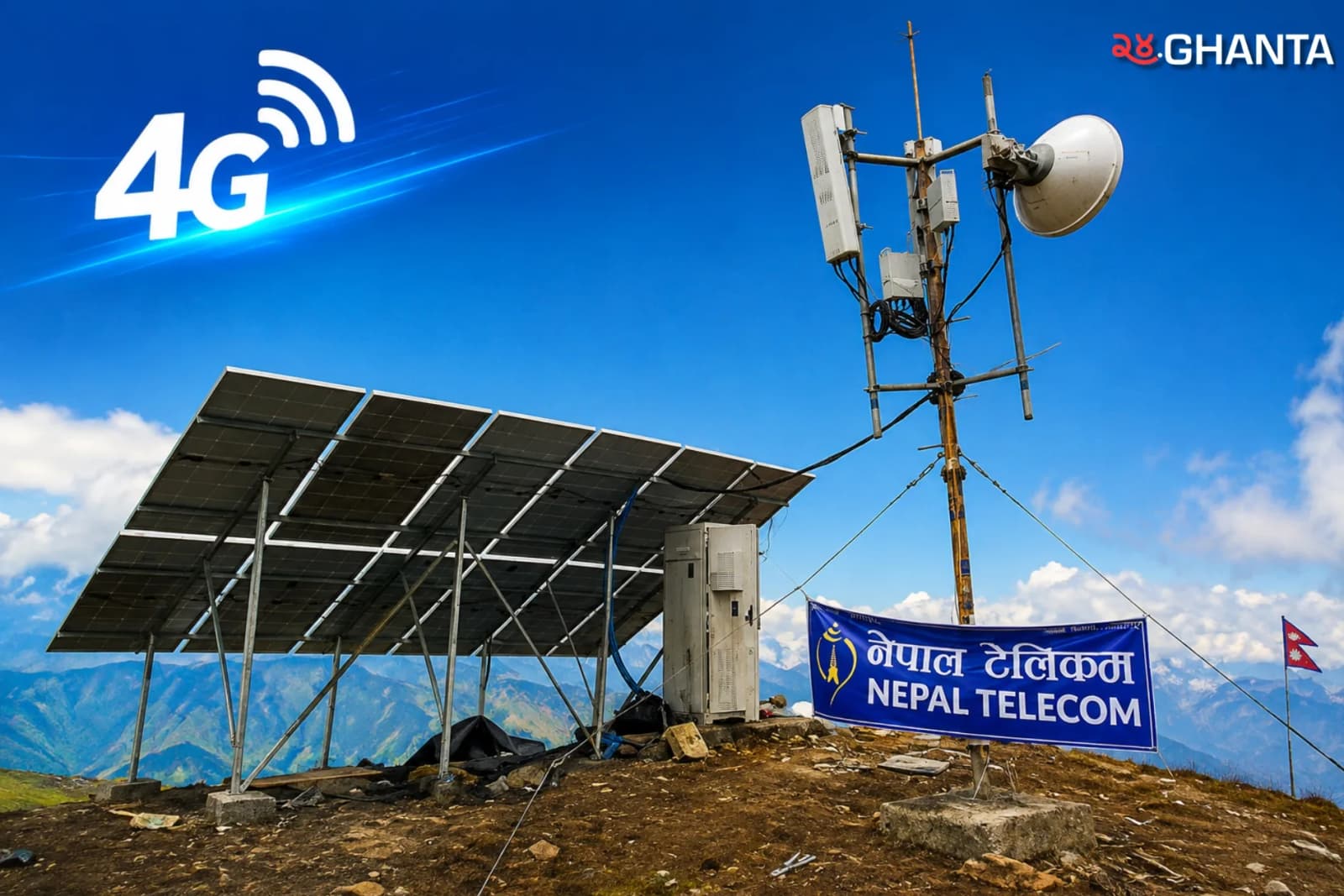
Nepal Telecom officially launched 4G mobile and internet service in the remote Badimalika area of Bajura on August 24, with the tower installed at Lauri Binayak at around 4,230 metres above sea level. The project required roughly 4,000 kg of equipment and materials to be transported by Nepal Army helicopter, bringing connectivity to pilgrims, tourists, local people and organizations in an area where communication had long been difficult.
· 7 min read
BAJURA, AUGUST 25, 2026
Nepal Telecom has officially launched 4G mobile and internet service in the Badimalika area of Bajura, one of Nepal's remote religious and tourist destinations, after completing the tower installation on Monday, August 24. The service was introduced to improve communication for local people, pilgrims, tourists and organizations visiting or working in the high-altitude area, where difficult mountain terrain and limited transport access had made reliable communication challenging. The tower has been installed at Lauri Binayak at around 4,230 metres above sea level, while the wider Badimalika Temple area lies at roughly 4,200 metres.
4G Goes Live Ahead of Religious Fair
Nepal Telecom completed the tower installation at around 1:00 PM on Monday, August 24, after which the 4G service became operational.

The timing is important because the service was activated ahead of the religious fair held in the Badimalika area around Janai Purnima. The pilgrimage brings large numbers of devotees and other visitors into an area with relatively few permanent settlements.
The new connection is expected to make it easier for pilgrims, tourists, trekkers, local people and government and non-government organizations to communicate while in the area.
Tower Installed at Around 4,230 Metres
Although Badimalika is widely described as being around 4,200 metres above sea level, Nepal Telecom says the new telecommunications tower itself has been installed at Lauri Binayak at an altitude of approximately 4,230 metres.
The tower is expected to provide important mobile and internet connectivity for people travelling around Badimalika Temple, surrounding high-altitude grasslands, trekking routes and the Triveni area.
The location also makes the project notable because building and maintaining telecommunications infrastructure becomes more difficult at such high elevations due to terrain, weather and transportation challenges.
Around 4,000 Kg of Equipment Airlifted
Getting the necessary infrastructure to Badimalika was one of the project's biggest challenges. The mountainous area lacks easy road access to the installation site, making normal transportation of heavy telecommunications equipment difficult.
According to reports from the equipment transportation stage, roughly 4,000 kilograms of telecommunications equipment and other materials had to be transported toward Badimalika.
A Nepal Army helicopter was used to airlift the materials because of the difficult geography. The operation allowed Nepal Telecom to move equipment that would have been extremely difficult to transport through conventional ground routes.
Even after the helicopter operation, the project faced logistical and technical challenges associated with moving equipment, deploying technicians and completing installation work in the high-altitude environment.
Project Accelerated After Government Direction
The latest phase of the project moved forward after Minister for Information and Communications Dr. Bikram Timilsina directed Nepal Telecom on July 24 to take immediate steps to provide telephone and internet services in Badimalika.
The minister raised concern over the lack of communication facilities in such an important religious and tourist destination and asked Nepal Telecom to proceed despite the area's geographical and technical difficulties.
Following the direction, Nepal Telecom accelerated the process of constructing the tower, transporting the necessary equipment and preparing the network for operation.
Minister Virtually Inaugurates Service
Communications Minister Dr. Bikram Timilsina virtually inaugurated the new service on August 24.
After the inauguration, the minister held a live video call with Nepal Telecom technicians working in Badimalika. The call also served as a practical demonstration of the new connectivity available from the remote mountain area.
During the call, the minister received updates about the installation, operation of the network and challenges faced by the technical team while working at the site.
Technical Team Worked in Difficult Terrain
Nepal Telecom personnel from its Wireless Service Directorate and Sudurpaschim Regional Directorate were deployed for the tower installation and service operation.
According to reports, Assistant Technical Officer Madhav Budhathoki, Engineer Sudarshan Acharya and Civil Engineer Deepak Raj Bhatta were among the technicians who provided updates about the work during the minister's video call.
Installing telecommunications equipment at more than 4,200 metres required the team to work in difficult terrain where transportation, changing weather and limited infrastructure can complicate construction and maintenance.
Why Badimalika Needed Better Communication
Badimalika has relatively few permanent settlements, but its religious and tourism importance creates a strong need for reliable communication.
The area attracts pilgrims visiting the Badimalika Temple as well as trekkers and tourists travelling through its mountain landscapes. During major religious occasions, the number of people travelling through the region can increase significantly.
Until now, limited communication access could make it difficult for people in the area to stay in contact. Mobile and internet connectivity can help visitors communicate with family members, receive information and stay connected while travelling.
It can also improve communication among local authorities, security personnel, government offices and organizations working in the area.
Connectivity Could Support Tourism and Safety
The importance of the new network goes beyond making phone calls or using social media. Reliable communication can be particularly valuable in a remote mountain destination where reaching help physically may take time.
Better connectivity can support coordination during emergencies, provide easier access to information and improve communication between visitors and authorities.
Local coverage has also highlighted potential benefits for tourism, security, health-related emergency coordination and economic activity around Badimalika.
However, maintaining reliable service in a remote high-altitude environment will remain important. Weather, power supply, equipment maintenance and difficult access can make long-term operation more challenging than at towers located near major settlements.
Nepal Telecom Says Remote Areas Are a Priority
Nepal Telecom Managing Director Sangita Pahadi said expanding communication facilities in remote areas remains a priority for the company.
She said Nepal Telecom is working not only to increase access but also to improve the quality of its services.
According to Pahadi, decisions to expand telecommunications infrastructure should not be based only on commercial profit. Providing communication services to remote communities where access remains weak is also part of the company's responsibility.
Part of Nepal's Wider Digital Expansion
The Badimalika project is part of a much larger effort to expand telecommunications infrastructure into Nepal's rural, mountainous and tourist regions.
The government has identified the current fiscal year as a period for transformation in the telecommunications sector, with priorities including wider 4G coverage, improved service quality, new infrastructure and the expansion of modern technologies.
Nepal Telecom says processes have been initiated for the construction of around 1,600 new mobile towers and related sites across Nepal.
The aim is to extend reliable mobile and internet services to communities that still have weak coverage while also increasing the capacity and quality of existing networks.
4G Expansion Moving Higher Into the Himalayas
Badimalika is not the only high-altitude area receiving attention.
A study is also underway to explore the expansion of 4G service toward the Sagarmatha Base Camp area. Nepal Telecom has already extended 4G connectivity to other geographically difficult locations, including Lhan in Tripurasundari Municipality-6 and Dunai in Thulibheri Municipality-1 of Dolpa.
These projects show an increasing focus on extending digital connectivity beyond Nepal's major cities and highways and into remote Himalayan regions.
From Communication Gap to 4G Connection
The Badimalika project highlights the unusual challenges involved in bringing modern communications infrastructure to Nepal's mountains.
Equipment weighing thousands of kilograms had to be flown into the region, technicians had to work above 4,200 metres, and the project required coordination among Nepal Telecom, the government, Nepal Army and local representatives.
With the tower now operating, an area known more for pilgrimage, trekking and difficult mountain journeys has gained access to modern 4G connectivity.
For the thousands of people who travel to Badimalika for religious and tourism purposes, the new tower could make one of Nepal's remote journeys significantly more connected.
Published Aug 25 in Nepal