
Nepal Traffic Police Propose Separate Driving Trial And Licence Category For Electric Vehicles
Traffic police have proposed requiring drivers to pass a separate trial before operating electric vehicles in Nepal, arguing that unfamiliarity with EV acceleration, braking and mechanical systems may be contributing to road accidents.
· 5 min read
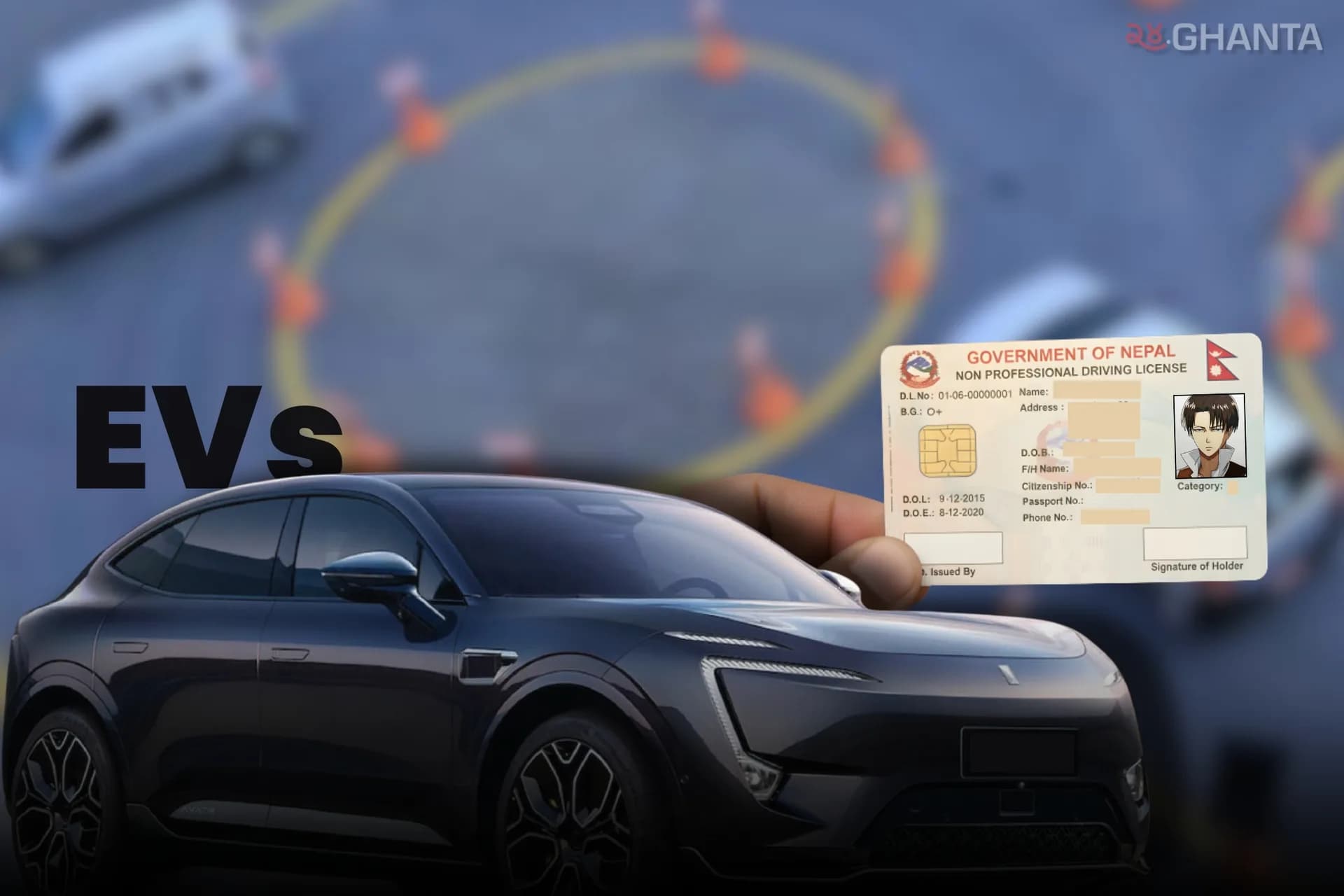
Drivers in Nepal could eventually be required to pass a separate practical examination before being permitted to operate electric vehicles if a new traffic police proposal moves forward.
The Kathmandu Valley Traffic Police Office has proposed adding a separate electric-vehicle category to driving licences and requiring applicants to complete an EV-specific trial examination.

Traffic officials say the proposal is being discussed as part of wider efforts to reduce accidents involving electric cars and make drivers more familiar with the vehicles’ operating systems.
However, the measure remains only a proposal. No separate EV licence or trial requirement has yet been formally approved or introduced.
Why Traffic Police Want A Separate EV Trial
Traffic officials believe some drivers who are accustomed to petrol or diesel vehicles may not fully understand how electric vehicles behave on the road.
EVs often provide rapid acceleration as soon as the accelerator is pressed. They can also have different braking responses, regenerative braking systems, driving modes and electronic controls.
According to traffic police, unfamiliarity with these features may lead drivers to lose control, accelerate unexpectedly or respond incorrectly during emergencies.
Kathmandu Valley Traffic Police SP Naresh Subedi said discussions were underway with the Department of Transport Management about carrying out further work on a separate EV licence category.
The proposal would mean that a conventional four-wheeler licence might not automatically be enough to operate an electric car unless the driver had also passed an EV-focused test.
Proposal Still Under Discussion
Traffic police have not announced when the proposed system could be introduced or what the EV-specific trial would include.
Any formal change would likely require coordination with the Department of Transport Management and possibly changes to existing licensing rules.
At present, Nepal’s driving licence system separates vehicles mainly by categories such as motorcycles, cars, heavy vehicles and public transport. There is currently no officially implemented licence category based solely on whether a vehicle is electric or fuel-powered.
Traffic police say the purpose of the proposal is not to discourage EV use but to ensure that drivers understand the technology before taking the vehicle onto public roads.
Importers Asked To Train Buyers
Traffic police have also urged EV importers and vehicle dealers to provide proper orientation to buyers before delivering new cars.
Officials say drivers should receive practical information about:
Acceleration and torque
Regenerative braking
Emergency braking
Driving modes
Battery safety
Charging procedures
Vehicle controls
Warning indicators
Safe hill driving
Emergency response
The recommendation follows a discussion between traffic police, EV importing companies, dealer technicians and representatives of Nepal’s automobile industry.
Representatives from the NADA Automobiles Association of Nepal and the Nepal Automobile Importers and Manufacturers Association participated in the discussion.
Traffic police argued that selling a vehicle without adequately explaining its operating system could create safety risks, particularly for first-time EV owners.
More Than 42,000 Electric Cars Reportedly Sold In Kathmandu Valley
Traffic officials said more than 42,000 electric four-wheelers have already been sold in the Kathmandu Valley.
The rapid growth of electric cars has changed Nepal’s automobile market, with buyers increasingly choosing EVs because of lower running costs, reduced fuel dependence and growing model availability.
However, traffic authorities say driver education and safety systems must expand alongside the number of vehicles.
The proposal reflects a growing concern that Nepal’s licensing and training system may not have adapted quickly enough to changes in vehicle technology.
Speed Governors Also Discussed
Traffic police and automobile-sector representatives also discussed whether electric vehicles should be equipped with speed governors.
A speed governor electronically limits a vehicle from travelling beyond a predetermined speed.
Officials believe factory-installed speed limits could reduce dangerous speeding, particularly because many electric cars can accelerate quickly even at relatively low motor power ratings.
However, no decision has been made on whether speed governors would become compulsory.
Further discussions would be needed to determine:
Which vehicles would require them
What maximum speeds would be permitted
Whether limits would differ by road type
How the system would be inspected
Whether existing EVs would also be covered
Debate Likely Over Whether Separate Licence Is Necessary
The proposal may generate debate among drivers, automobile businesses and road-safety experts.
Supporters may argue that special training is justified because EVs have different controls and acceleration characteristics.
Others may question whether a separate licence is necessary, pointing out that automatic petrol cars, hybrid vehicles and modern EVs already share many operating features.
There may also be concerns that a separate test could increase costs, lengthen the licensing process and create additional administrative pressure.
An alternative could be to include EV-specific questions and practical training within the existing four-wheeler licence system rather than creating an entirely separate category.
Dealer Responsibility Could Become More Important
Traffic police have also highlighted the responsibility of vehicle sellers in reducing accidents.
Dealers may be encouraged or required to provide buyers with basic training before handing over a vehicle.
Such training could include a short supervised drive, explanations of safety features and guidance on how the vehicle responds differently from a conventional car.
Traffic officials believe importers and dealers should not focus only on sales but should also ensure that customers can operate the vehicles safely.
What Could Happen Next?
The proposal will require further discussion between traffic police, the Department of Transport Management, automobile associations, importers and other relevant government bodies.
Authorities may study accident patterns involving EVs before deciding whether the vehicles require a separate trial, additional training or changes to existing licence examinations.
Until a formal decision is announced, current licence holders can continue driving electric cars under the existing vehicle categories.
The proposal nevertheless signals that Nepal’s traffic authorities are preparing to reconsider driving tests and road-safety rules as electric vehicles become more common.
Published Jul 30 in Technology