
Nepali Congress Begins 15th General Convention Today Amid Continuing Internal Dispute
Gagan Thapa Led Nepali Congress Begins 15th General Convention Today With Over 7,000 Expected Representatives Amid Continuing Dispute With Deuba Faction
· 7 min read
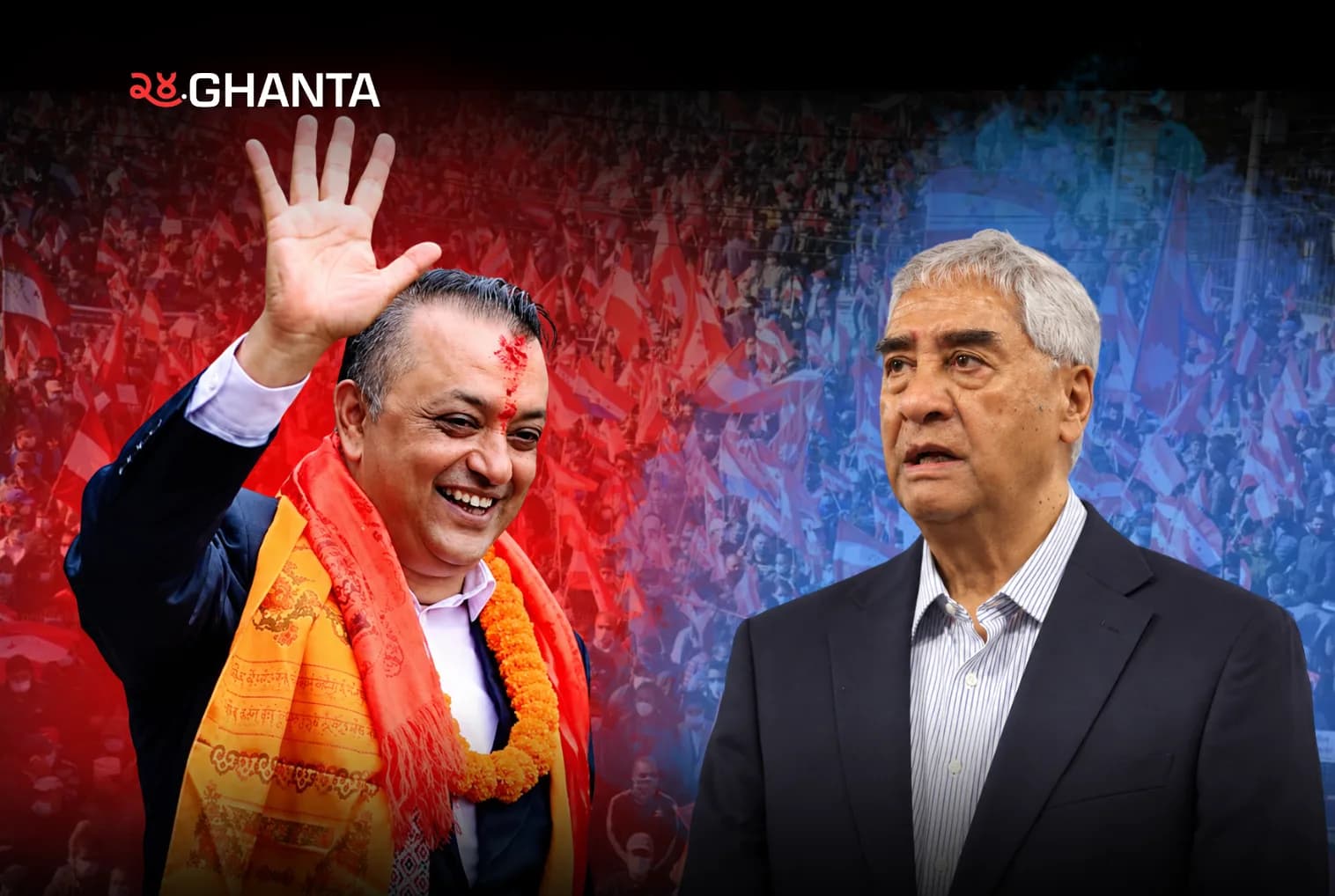
The Nepali Congress led by party president Gagan Thapa is set to begin its 15th General Convention at Khula Manch in Kathmandu’s Tudikhel on Sunday, bringing thousands of party representatives together for a major organisational gathering that comes nearly nine months after an internal revolt divided Nepal’s oldest political party.
More than 7,000 representatives are expected to participate in the convention, which is being organised under the leadership of Thapa and the Central Working Committee formed after the party’s special general convention in January. Party officials have described the gathering as a “unity convention”, arguing that most leaders who initially stayed away from Thapa’s leadership have since returned to the party’s mainstream.
All the while, former party president Sher Bahadur Deuba and a group of leaders still reject the legitimacy of the process that brought Thapa to the presidency and are conducting their own convention process under the Nepali Congress banner.

Dispute Between the Two Congress
The roots of the dispute go back to the political changes that followed the Gen Z movement in September 2025, when pressure grew inside the Congress for leadership and organisational reform.
Thapa and Bishwa Prakash Sharma, who were then the party’s general secretaries, backed calls for a special general convention. On October 15, representatives supporting the move submitted signatures from around 54 percent of the delegates elected at the party’s 14th General Convention.
Under Article 17(2) of the Congress statute, a special general convention must be called if at least 40 percent of general convention representatives formally demand one. Supporters of the special convention said they had the backing of 2,488 representatives, comfortably crossing that threshold.
The Deuba led establishment at the time resisted the special convention and instead pushed for the party’s regular 15th General Convention. The regular convention, however, could not take place according to the planned timetable and was later pushed back.
Thapa and Sharma then moved ahead with the special convention themselves. Held at Bhrikutimandap from January 11 to 14, the gathering eventually elected Thapa as Nepali Congress president and formed a new Central Working Committee, a move that effectively divided the party into two competing camps.
The scale of that division was particularly visible within the party leadership. Of the 167 members of the Central Working Committee led by Deuba at the time, only 30 participated in the January special convention.
But that has changed considerably since then. According to recent reports, another 70 former central members who did not participate in January have subsequently joined the Central Working Committee under Thapa. 19 former office bearers and central members joined in May, followed by another 51 in September.
Several leaders previously associated with Deuba have also moved into the convention process being led by Thapa. Among them are former ministers Bal Krishna Khand and Gyanendra Bahadur Karki, along with Mahalakshmi Upadhyay Dina, Surendra Raj Pandey, Indra Bahadur Baniya, Jeevan Bahadur Shahi, Shyam Ghimire and Min Bahadur Bishwakarma.
Former acting party president Purna Bahadur Khadka has also distanced himself from Deuba’s faction, while Shekhar Koirala, who challenged Deuba for the presidency at the 14th General Convention, has recently remained outside both competing convention processes.
According to a Kathmandu Post report, only 31 members of the previous 164 member Deuba led Central Working Committee are now said to remain with his camp.
Congress spokesperson Devraj Chalise has claimed that 99.99 percent of party leaders and activists will participate in the convention beginning Sunday. That figure is a party claim, but the movement of dozens of previously dissident leaders into the Thapa led process shows how significantly the internal balance has shifted since January.
The Legal Division
Following the January special convention, both sides claimed legitimacy. The dispute went to the Election Commission, which on January 16 recognised the Thapa led Nepali Congress. The Commission concluded that the party statute allowed at least 40 percent of general convention delegates to demand a special convention and treated the general convention representatives as the party’s supreme authority.
The decision meant Thapa’s signature was used to issue party tickets for the March 5 House of Representatives election.
Deuba’s side challenged the decision at the Supreme Court. On April 17, a division bench of the Supreme Court upheld the recognition of the Thapa led Congress, providing a major legal victory to the new leadership.
The dispute nevertheless reopened months later as Deuba and former acting president Khadka separately sought reviews of the Supreme Court ruling, and on August 6 a full bench allowed the review petitions to proceed.
That decision did not suspend the April ruling, meaning the Thapa led leadership continues to operate as the recognised Nepali Congress while the review remains pending. Separate petitions seeking to stop the current convention also failed to secure an interim order from the Supreme Court.
Deuba's Convention
Deuba’s supporters argue that the Central Working Committee elected by the 14th General Convention remains the body with the authority to organise the 15th General Convention.
They are therefore running a separate convention process under the Nepali Congress banner. The Deuba faction began ward level conventions on October 1 and plans to hold its central general convention from December 7 to 9. Former general secretary Shashank Koirala has been coordinating the convention preparations.
The faction has said it wanted a single convention but decided to move ahead with a separate process after the Thapa led leadership refused to stop its own convention while the Supreme Court review remains pending.
This means that, unless there is a political settlement or further legal intervention, two rival groups operating under the Nepali Congress name will have pursued processes that they describe as their own party’s 15th General Convention.
Electoral Setback and Convention's Importance
For Thapa, however, Sunday’s convention is also about something larger than settling the internal leadership dispute as Congress enters the gathering after a major electoral setback.
The party received 17,49,583 proportional representation votes in the March 5 election, compared with 27,15,255 in 2022, a decline of nearly 10 lakh votes. Its representation in the 275 member House of Representatives also fell to 38 seats. Congress had won 89 seats in 2022.
Thapa has said reconnecting with those lost voters is now one of his main priorities. In an interview with Kantipur ahead of the convention, he said Congress had lost around 10 lakh voters and estimated that around 2.5 lakh families had moved away from the party.
He has placed particular emphasis on attracting Gen Z and increasing the presence of younger people within the Congress organisation.
The party is introducing greater representation for younger members as part of its organisational changes. It has also proposed expanding the number of office bearers, increasing representation of women and different communities and establishing a two term limit for party presidents.
Thapa has argued that Congress can no longer depend only on its history to attract younger voters and instead needs to demonstrate what it can offer them in the future.
The 15th General Convention therefore begins with several questions looming over it.
Opportunities and Threats
For Thapa, it is an opportunity to consolidate the leadership that emerged from January’s disputed special convention, bring more former rivals into the organisational mainstream and present a changed Congress after its poor election performance. This convention is an opportunity for Thapa to present a case for his legitimacy as the party president of, arguably, the party with the deepest roots in Nepali Politics.
For Deuba’s remaining supporters, the fundamental question of the legitimacy of restructure of the Nepali Congress has not been settled, particularly while the Supreme Court review remains pending.
And for the wider Nepali Congress, the bigger test will be whether the movement of senior leaders towards Thapa can translate into genuine organisational unity and whether changes aimed at younger voters can help recover the support the party lost at the ballot box.
With one convention beginning in Kathmandu today, another faction preparing for its own gathering in December and the legal dispute still before the Supreme Court, it will be closely watched whether the 15th General Convention becomes the point at which Congress finally moves beyond its internal rupture, or marks the beginning of another chapter of dispute in the long and intricate history of the Nepali Congress.
Published 1 hour ago in Politics