
Nepal’s Cargo Rail Arrives, But Industries Still Prefer India Due To Higher Handling Costs
Although Nepal has started receiving container cargo trains at the Nepal Customs Yard in Biratnagar, many industries in the Sunsari-Morang industrial corridor continue to use the Indian Customs Yard. Industries say higher handling charges and additional fees in Nepal are making Indian facilities cheaper.
· 3 min read
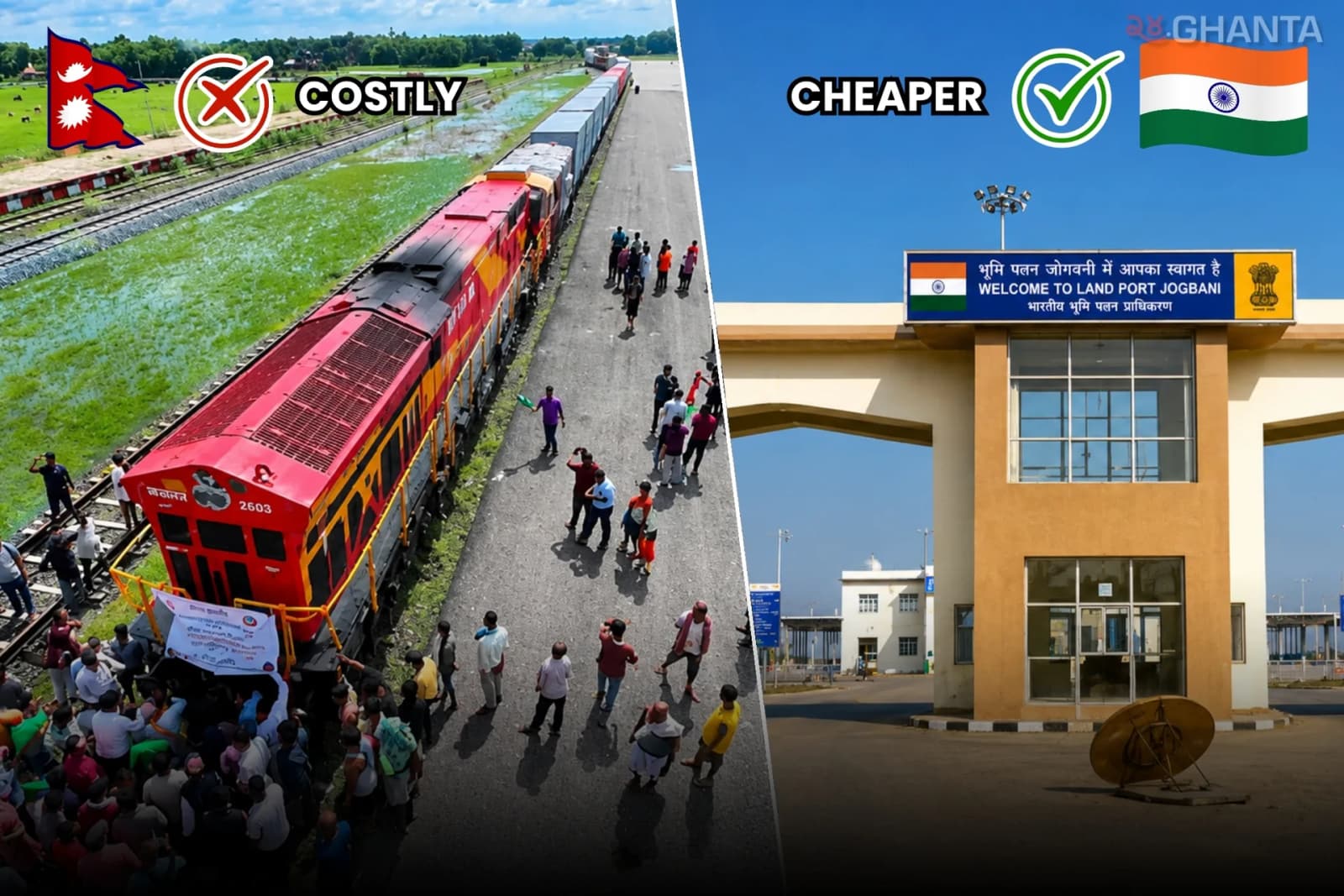
August 11, 2026 | Kathmandu: Nepal’s long-awaited container cargo rail service has finally started bringing imported goods directly to the Nepal Customs Yard (NCY) in Biratnagar.
The first cargo train arrived on Shrawan 4 carrying 40 containers of goods for Swastik Oil Industries located in the Sunsari-Morang industrial corridor.
Around 20 days later, another container cargo train departed from Kolkata Port for the same destination, with arrangements underway for handling, unloading and transportation at the Nepal Customs Yard.

However, despite the arrival of cargo trains in Nepal, many industries that had long demanded such a facility are still choosing the Indian Customs Yard (ICY) for their imports.
Cost Difference Driving Industries Towards India
Industrialists say the main reason behind their preference for the Indian facility is the difference in operational costs.
According to Pawan Sharada, President of Nepal Industries Confederation Koshi, both customs yards are located close to each other, but the charges differ significantly.
He said:
The Nepal and Indian customs yards are only around 500 metres apart.
Transportation and storage conditions are almost similar.
However, handling charges and additional fees make Nepal’s facility more expensive.
Industrialists have alleged that the company managing Nepal’s Integrated Check Post (ICP) has been charging additional amounts under different headings beyond government-approved rates.
Industries Claim Nepal Yard Is More Expensive
Industrialists claim that importing goods through Nepal’s customs yard costs Rs 64 to Rs 200 more per tonne compared to the Indian customs yard.
They say this difference affects multiple categories of goods, including:
Sponge iron
MS wire rod
HR sheets
GI wire
Gabion boxes
Other industrial raw materials
For example, industrialists claim:
Bringing MS wire rod through India costs around Rs 472 per tonne in handling, transportation and parking charges.
The same process through Nepal’s customs yard costs around Rs 640 per tonne.
This creates a difference of around Rs 168 per tonne.
A single railway rake carrying around 2,600 tonnes of MS wire rod could become approximately Rs 4.36 lakh cheaper if imported through the Indian customs yard, according to industry representatives.
Rail Transport Still Offers Major Savings
Despite the concerns over customs yard charges, industries acknowledge that cargo rail itself can significantly reduce transportation costs.
Currently:
Road transportation from Kolkata to Biratnagar costs around Indian Rs 3–4 per kilogram.
A 15-ton truck can cost around Rs 45,000–60,000 in transportation.
Cargo rail can reduce transportation expenses by around 35%.
For a 15-ton shipment, rail transport could reduce costs by approximately Rs 15,750–21,000, making railway connectivity economically attractive.
Government Says Charges Were Set Through Discussion
Officials from the Nepal Intermodal Transport Development Board have rejected claims that rates were fixed without consultation.
According to board officials, discussions were held with private sector representatives after the first cargo rail operation, and the charges were determined afterward.
The board has requested industries to raise specific complaints through the Ministry of Industry, Commerce and Supplies for further review.
Management Dispute Remains A Challenge
The management of the Biratnagar ICP has been assigned to Trans Nepal TRS Logipark, which handles cargo management activities.
However, industrialists argue that private sector concerns were not adequately considered while setting operational charges.
Meanwhile, management officials say they have not received formal complaints from industries regarding handling fees.
Industry Sees Cargo Rail As A Major Opportunity
Despite current disagreements, industrial representatives believe cargo rail is a major opportunity for eastern Nepal’s industries.
Nandakishor Rathi, President of Industry Organisation Morang, said the private sector remains hopeful that the government will improve coordination and make Nepal’s customs yard more attractive.
Industry leaders believe that solving cost-related issues could encourage more businesses to shift cargo operations from India to Nepal.
Published Aug 11 in Business