
Nepal’s Dog Chew Exports Grow Despite US Tariff, Industry Eyes Rs 10 Billion European Market
Nepal's dog chew exports increased by 7 percent despite a 10 percent US tariff, reaching Rs 4.29 billion in the first 11 months of the fiscal year. Industry leaders believe exports could exceed Rs 10 billion if Nepal gains access to the European Union market by meeting international animal health standards.
· 4 min read
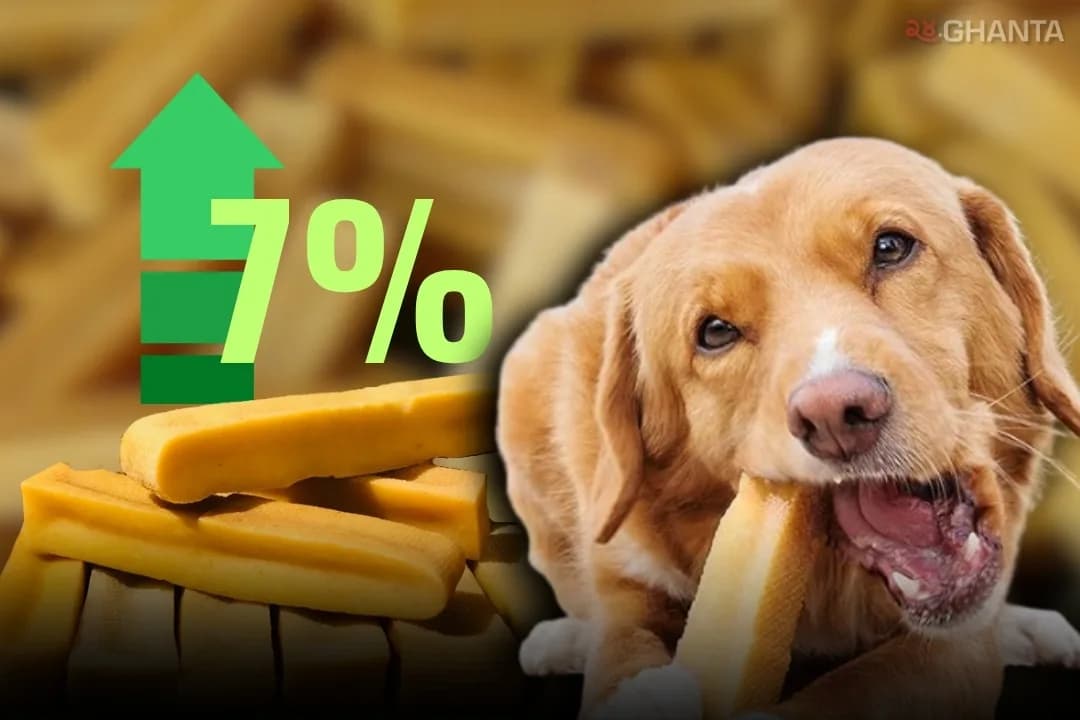
Nepal's dog chew industry has continued its strong growth despite facing a 10 percent tariff in the United States, the country's largest export destination. According to the Trade and Export Promotion Centre (TEPC), Nepal exported 2,733 tonnes of dog chews worth Rs 4.29 billion during the first 11 months of the current fiscal year, marking a 7 percent increase compared to the same period last year.
Industry experts say the sector has remained resilient due to sustained demand from international buyers, although exporters believe the industry's true potential lies in gaining access to the European market.
United States Remains Nepal's Biggest Buyer
The United States continued to dominate Nepal's dog chew export market, purchasing around three-fourths of all exports.

Major export destinations:
United States: 2,042 tonnes worth Rs 3.75 billion
Canada: 327 tonnes worth Rs 26.1 crore
United Kingdom: 76 tonnes worth Rs 10.88 crore
Japan: 119 tonnes worth Rs 7.5 crore
Denmark: 11 tonnes worth Rs 2 crore
South Korea: 13 tonnes worth Rs 1.86 crore
Hong Kong: 73 tonnes worth Rs 1.06 crore
Nepali dog chews were also exported to Australia, Germany, France, Italy, the Netherlands, New Zealand, Singapore, Thailand, the UAE, Israel, Brazil and several other countries.
US Tariff Has Had Limited Impact
Last year, the United States imposed a 10 percent baseline tariff on products imported from Nepal as part of a broader reciprocal tariff policy.
Despite initial concerns, exporters say the tariff has not significantly affected demand from major American buyers.
Dhurba Raj Regmi, Director and Chief Executive Officer of Native Nepali Agro Suppliers, said established US brands have continued purchasing dog chews from Nepal. However, smaller importers who typically buy smaller quantities have become more cautious because of the higher import costs.
His company exported approximately 100 tonnes of dog chews to 12 countries this fiscal year, compared to nearly 80 tonnes in the previous year.
What Makes Nepali Dog Chews Popular?
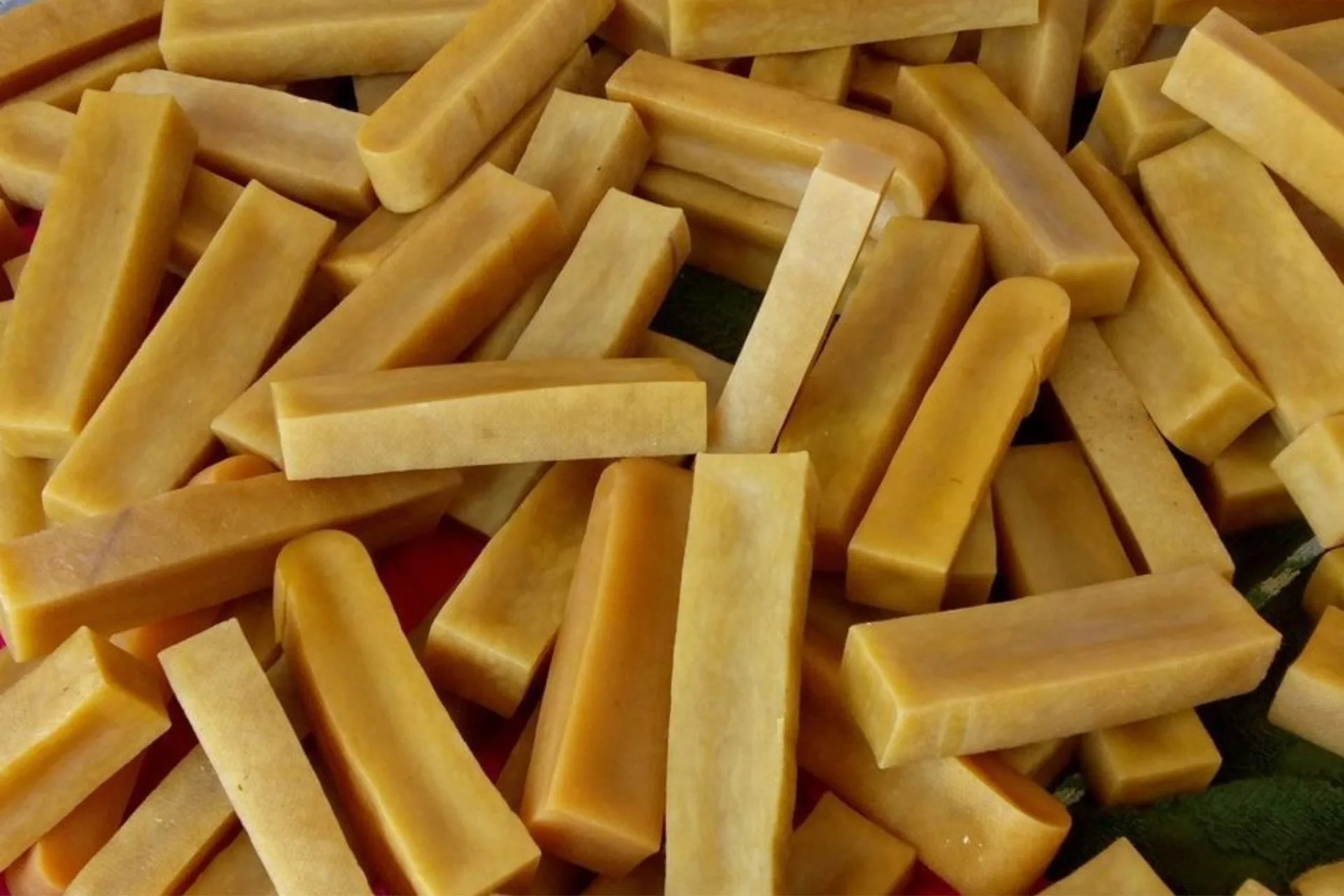
Dog chews, locally known as chhurpi, are produced mainly in the eastern hill districts of Ilam, Panchthar and Taplejung.
Made from Himalayan yak milk and cow milk, the product has gained international recognition as a premium natural pet treat.
Key features include:
More than 60 percent protein
Rich source of calcium and essential vitamins
No artificial preservatives
No added colours or chemicals
Handmade using traditional production methods
These qualities have helped Nepali dog chews establish a strong reputation in global pet food markets.
Europe Could Unlock Massive Growth
Exporters believe the European Union represents the industry's biggest untapped opportunity.
However, Nepal currently cannot export dairy-based products to Europe because it has not met the EU's animal health requirements.
Industry representatives estimate that annual exports could exceed Rs 10 billion if Nepal gains access to the European market.
According to exporters, Nepal's continued struggle with foot-and-mouth disease (FMD) and outbreaks of lumpy skin disease remains the primary obstacle.
While countries such as the United States recognise veterinary and quarantine certificates issued by Nepal's Department of Livestock Services, the European Union has stricter animal health standards.
India, meanwhile, is already authorised to export similar products to Europe because it meets the bloc's regulatory requirements.
China Also Seen as a Future Market
China is another promising destination for Nepali dog chews.
However, exporters say the continued presence of foot-and-mouth disease has prevented Nepal from expanding dairy exports into the Chinese market.
Industry leaders are urging the government to strengthen disease control measures, arguing that eliminating livestock diseases would open multiple international markets and significantly increase Nepal's export earnings.
Rising Shipping Costs Add Pressure
Although demand remains strong, exporters say global logistics costs have risen sharply.
Following recent geopolitical tensions in the Middle East, freight charges have increased significantly.
According to exporters:
Refrigerated sea freight from Kolkata has increased from around USD 5,000 to approximately USD 15,000 per container.
Air freight costs have also risen by 30 to 40 percent.
These higher transportation costs are placing additional pressure on exporters despite growing international demand.
Government Introduces New Standards
In January, the Government of Nepal approved updated standards for chhurpi, including dog chews, to align production with international food safety requirements.
The new regulations cover:
Production standards
Processing methods
Packaging requirements
Storage procedures
Transportation guidelines
Food safety compliance
The standards are intended to improve product quality and strengthen Nepal's competitiveness in global markets.
Nepal's Exports Continue to Grow
Nepal's overall merchandise exports increased by 12.28 percent during the first 11 months of the current fiscal year, reaching Rs 2.78 kharba.
The continued growth of the dog chew industry highlights the increasing international demand for Nepal's value-added agricultural products. Exporters now believe that improving animal health standards and expanding market access could transform dog chews into one of Nepal's largest export industries, with the potential to generate more than Rs 10 billion annually.
Published Jul 13 in Business