
Nepal's Economy In Mid-2026: What The Latest NRB Macroeconomic Update Really Means
Nepal Rastra Bank's latest macroeconomic report paints a picture of an economy that is financially stable but still faces long-term structural challenges. Foreign exchange reserves have reached record levels, remittances continue to grow strongly and inflation remains relatively moderate. At the same time, imports continue to outpace exports, private sector lending remains weak and government capital spending has slowed. This feature explains the latest economic indicators—including inflation, foreign exchange reserves, trade, remittances, banking, interest rates, and government finances in simple language, helping readers understand what the numbers really mean for Nepal's economy and for everyday life.
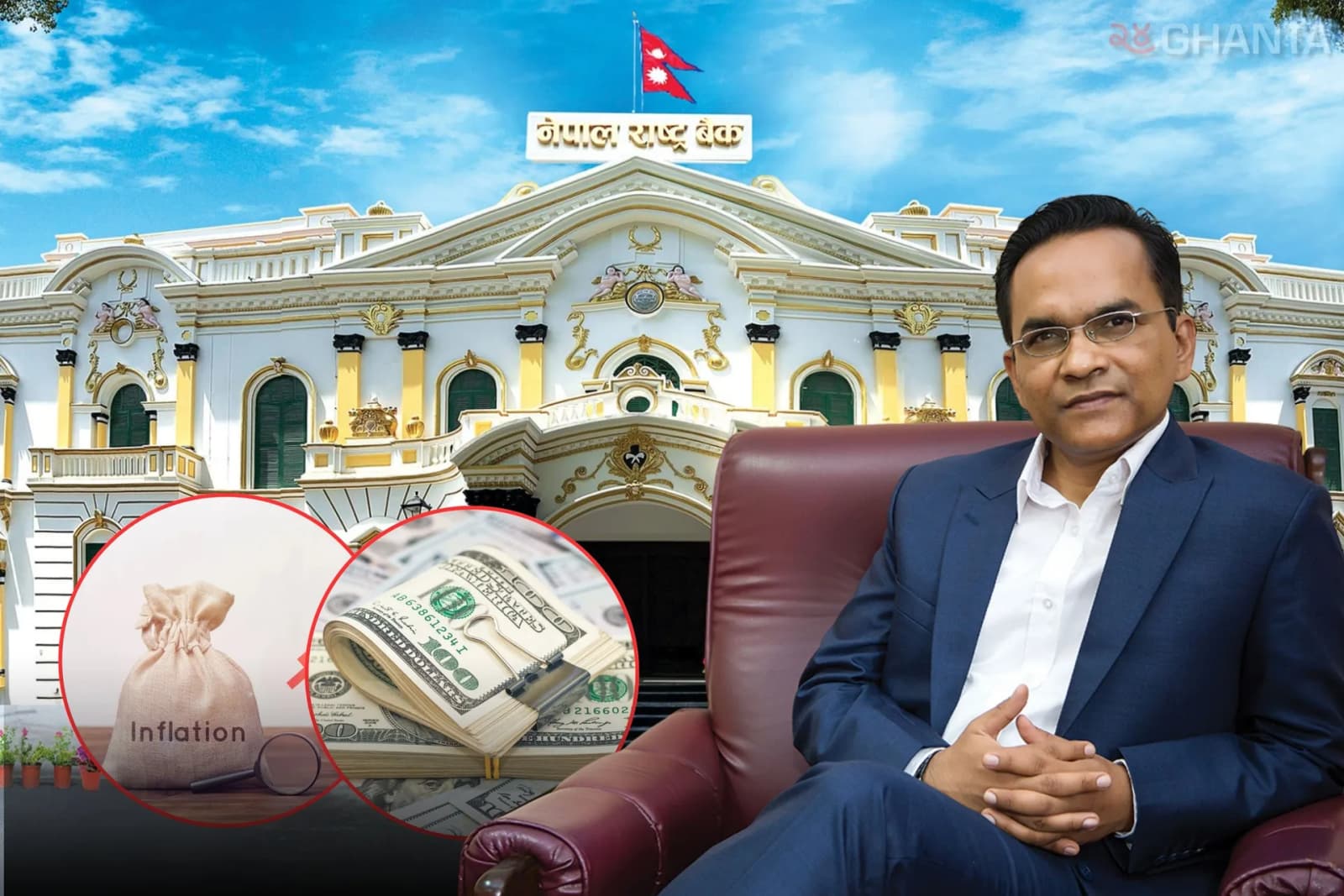
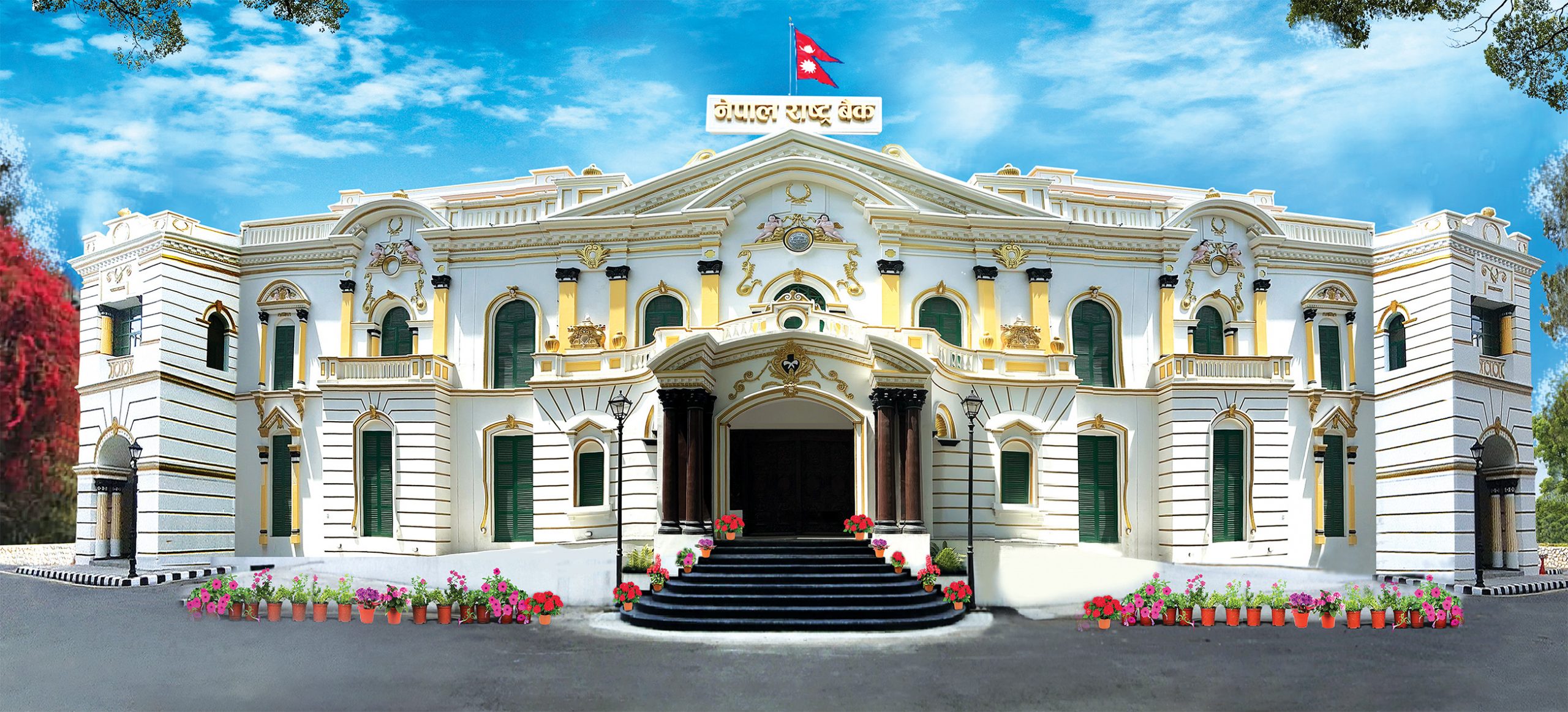
Every month, the Nepal Rastra Bank (NRB) issues a macroeconomic overview, which is a detailed analysis of how healthy the financial standing of the nation is. It does not concentrate on any particular figure like inflation or economic growth; instead, it covers scores of economic indicators ranging from price trends, trade, remittances, fiscal balances, bank operations, and foreign exchange reserves to financial markets.
All these together give an overview of the current standing of the Nepali economy, its strengths, weaknesses, and future prospects.
According to the latest report, prepared on the basis of data collected in the first eleven months of the fiscal year 2025/26 up to mid-June 2026, despite a number of structural problems, the economic situation in the country remains sound. High-level foreign exchange reserves, high remittance inflows, and healthy balance of payments have helped improve the external situation in the country. However, private lending, the import-export situation, and development activities of the government have remained subdued.


Inflation Is Rising, But Still Under Control
One of the most closely watched economic indicators is inflation, which measures how quickly the prices of goods and services increase over time. Inflation matters because it directly affects the purchasing power of households. When inflation rises faster than incomes, people can afford fewer goods and services even if their salaries remain unchanged. To measure inflation, economists use the Consumer Price Index (CPI). The CPI tracks changes in the prices consumers pay for a basket of everyday goods and services, including food, transportation, clothing, education, healthcare, and housing.
According to the NRB report, Nepal's year-on-year consumer inflation reached 5.22 percent in mid-June 2026, up from 2.72 percent a year earlier. However, the average inflation for the first eleven months of the fiscal year remained 2.89 percent, significantly lower than last year's average of 4.24 percent. Food prices have become noticeably more expensive. Fruit prices increased by 17.4 percent, while ghee and edible oil rose by 15.1 percent. Transportation costs climbed 15.3 percent, reflecting higher fuel and logistics expenses, while education costs also recorded moderate increases.
Although inflation has accelerated in recent months, it remains within a range that policymakers generally consider manageable. Nevertheless, households continue to feel pressure as essential goods become more expensive.
While consumers experience inflation through retail prices, businesses often feel it much earlier. This is measured using the Wholesale Price Index (WPI), which tracks price changes before products reach consumers. Think of WPI as measuring prices at the factory gate or wholesale market. When wholesale prices increase sharply, businesses often pass those higher costs to consumers later.
Nepal's wholesale inflation rose to 8.47 percent, much higher than consumer inflation. This suggests production costs are rising faster than retail prices and may eventually place additional upward pressure on consumer inflation if businesses decide to pass those costs on.
Foreign Exchange Reserves Reach Historic Highs
Foreign exchange reserves are the savings of the country in foreign currencies such as the US dollar, euro, and Indian rupee. With the help of these reserves, Nepal can purchase its imports, repay its foreign debt, and create confidence about the economy of the nation in uncertain international situations.
As of mid-June 2026, the gross foreign exchange reserves of Nepal touched the level of Rs. 3.76 Kharba (USD 24.68 billion) the record high in the nation’s history. It is an increment of more than 40 percent compared to the last year.
At present, Nepal possesses enough foreign currency to fund its imports of goods and services of around 19.1 months without receiving even a single dollar in export and remittance income. According to economists, sufficient reserves are those that can meet import costs of three to six months; hence, the current situation of Nepal is very healthy from an international perspective.
Nepal Still Buys Far More Than It Sells
Trade remains one of Nepal's weakest economic areas. During the review period, Nepal's exports increased 12.3 percent, reaching Rs. 278 arba. This growth was mainly supported by higher exports of soybean oil, palm oil, cardamom, and noodles.
However, imports grew even faster. Imports rose 15.2 percent to Rs. 1.89 trillion, driven largely by higher purchases of petroleum products, transport equipment, vehicle parts, chemical fertilizers, and silver. Because imports significantly exceeded exports, Nepal's trade deficit widened to Rs. 1.62 kharba.
Simply put, Nepal continues to spend far more on foreign goods than it earns by selling its own products overseas. This imbalance remains one of the country's biggest long-term economic vulnerabilities.
Government Spending Continues, But Development Projects Slow
Government finances also reveal a mixed picture. During the first eleven months of the fiscal year, the Government of Nepal spent Rs. 1.35 kharba while collecting Rs. 1.08 kharba in revenue through taxes and other sources.
The most concerning figure is capital expenditure, the money invested in roads, bridges, irrigation systems, schools, and other infrastructure projects. Capital spending actually declined by 7.5 percent compared to the previous year, despite overall government expenditure increasing.
Economists often consider capital expenditure one of the most productive forms of public spending because it creates jobs today while improving the country's productive capacity for years to come. A decline in such investment may slow future economic growth.
Banks Have Plenty Of Money, But Businesses Are Borrowing Less
Nepal's banking system currently has ample liquidity. Deposits in banks and financial institutions increased 10.3 percent, reaching more than Rs. 8 kharba.
Yet lending is weak. Credit to the private sector increased by only 6.2 percent, noticeably slower than deposit growth. This suggests banks have money available to lend, but businesses and households are borrowing cautiously.
Slower credit growth often signals weaker private investment and lower business confidence. Even when financing becomes cheaper, firms may postpone expansion if demand remains uncertain.
Borrowing Has Become Cheaper
Interest rates have continued to fall across Nepal's banking system. Commercial banks' average deposit rate declined to 3.29 percent, while the average lending rate fell to 6.64 percent. Similarly, the interbank rate and Treasury bill yields also decreased compared with the previous year.
Lower interest rates generally encourage borrowing and investment because loans become more affordable. However, the relatively modest growth in private sector lending suggests that lower borrowing costs alone may not be enough to stimulate stronger investment without greater business confidence.
The Nepali Rupee Has Weakened Against The US Dollar
The report also identifies changes in the exchange rate of Nepal. From July 2025 to mid-June 2026, there has been a depreciation of 9.8% of the Nepali Rupee vis-a-vis the US Dollar, whereby a single US Dollar is worth approximately Rs. 151.88 at the present time.
Depreciation of the currency has its merits and demerits. Firstly, remittances will be more valuable when they are converted to Nepali Rupees, which is a plus for families receiving money from overseas. Secondly, Nepali exports might have a little edge while competing in international markets. The demerits include higher prices for imported goods, including fuel, machinery, medicines, and electronic products.

Nepal's Financial System Remains Stable
Outside of the economy as a whole, the financial sector seems in fairly good shape. It can be seen from the report that banks are still adhering to capital adequacy regulations while sustaining high levels of liquidity. In addition to this, digital banking is continuing to grow rapidly.
From mid-May to mid-June alone, there were 7.73 crore transactions conducted through mobile banking, amounting to almost Rs. 598 arba, in addition to 6.36 crore QR-code transactions, amounting to more than Rs. 163 arba.
Foreign exchange reserves, a large current account surplus, impressive remittance growth, and low levels of inflation give the policymakers a lot of space to maneuver in handling economic problems in the future. The banking sector is liquid, interest rates are down, and the external position of the economy is one of the best in recent times.
But behind these positive numbers lurks some structural deficiencies. The economy is highly dependent on remittances and not local manufacturing. Imports dominate exports, there is no borrowing by the private sector even when interest rates are lower, and infrastructure spending by the government is slow.
Photo gallery(4)
Published Jul 15 in Researched Article