
Nepal’s Melting Mountains: How Climate Change Is Draining The Country’s Natural Wealth
Nepal's Himalayas are melting faster than ever, threatening rivers, agriculture, hydropower, tourism, and millions of lives. This investigative report explores how climate change is reshaping the country's natural resources, economy, and future, while examining the urgent steps needed to reduce the growing risks.
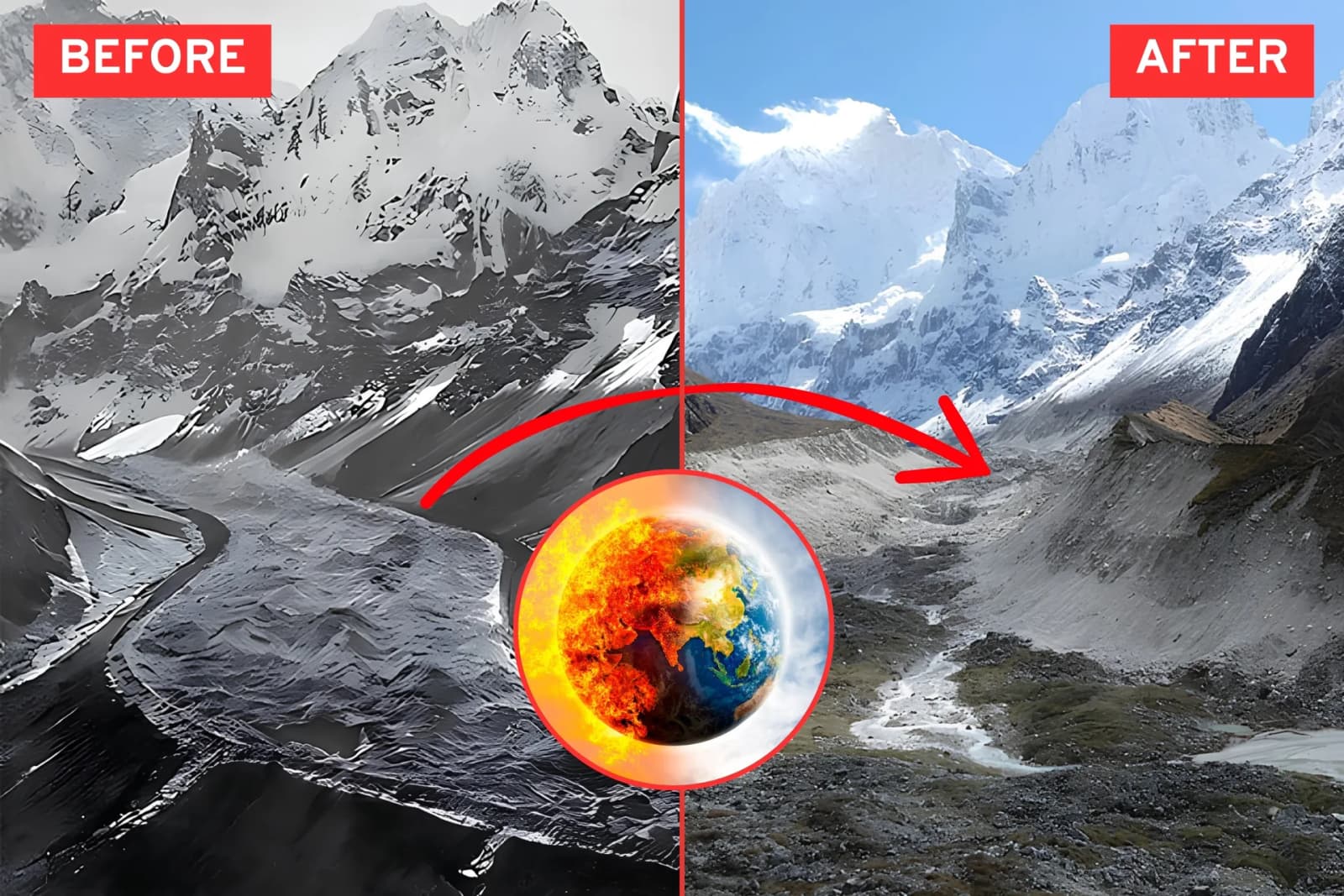
The natural wealth of Nepal was what used to make people understand Nepal. Snow and glaciers were kept in the Himalayas like a national water reservoir. Rivers originated in the mountains and went into the hills and Tarai, providing the means for irrigation, electricity generation, and cultural traditions. Springs provided water for the hill areas. Monsoons could be difficult at times, but were still predictable. People would plan the crop cultivation in accordance with the season and live in the snow-fed environment in the mountains.

The entire system has now started to change.
Scientific research by ICIMOD has proved that the glaciers of the Hindu Kush Himalaya are retreating at an alarming rate. The rate of disappearance of the glaciers in the 2010s has been found to be 65% higher than the decade before, and if emissions continue at the current pace, then up to 80% of glaciers might disappear by 2100. The same scientific report has also highlighted that the water availability will initially increase due to faster melting but will reduce in mid-century.
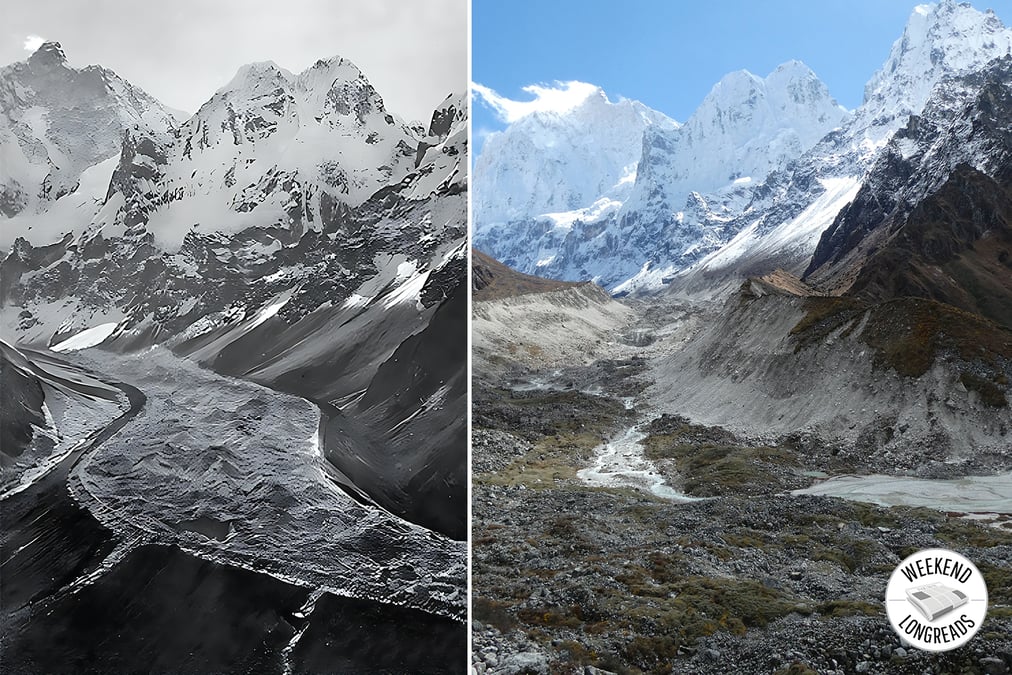

This is not only an environmental issue for Nepal. This is an issue of national security and survival. The first indication of this danger is water. The rivers of Nepal rely extensively on snow, glaciers, rain, and springs. Excessive melting of glaciers not only makes rivers hazardous in the short run but may also make them unreliable in the long run. More floods and landslides are expected in the future, whereas the people of the mountains have already been experiencing crop failure, death of livestock, damage to their homes, forced migration, and psychological problems.
The threat is clear before our eyes. The joint ICIMOD and UNDP report highlighted 47 glacial lakes that are considered to be potential sources of GLOF in the river basins of the Koshi, Gandaki, and Karnali rivers, out of which 21 are located in Nepal.
The Thame Flood in 2024, Solukhumbu, demonstrated how deadly such a new reality could be. According to ICIMOD’s report, it was caused by a rock avalanche, which resulted in a series of events in the glacial lakes, thus unleashing about 459,000 cubic meters of water. The disaster has made 135 people homeless, 25 houses were damaged, and carried debris up to 80 kilometers downstream.

title: Glacial lake outburst in Tibet triggers deadly flood in Nepal
source: https://phayul.com/glacial-lake-outburst-in-tibet-triggers-deadly-flood-in-nepal/
Its impact is not limited to mountains. The changes are having an effect on farming, hydropower, water supply, roads, health, and tourism. Climate change already affects the country's GDP according to a World Bank report, and floods, heat stress, crop loss, stress on livestock, and health effects will keep reducing growth in the future. Women, indigenous populations, and marginalized populations will suffer the most from the impact because they are closer to nature and have less protection.

For ordinary citizens, the impacts will affect them at the basic level of reduced availability of drinking water, increased cost of food items, more crop failures, more floods, damaged roads, local job loss, a hot working environment, diseases, and migration of villagers. For example, a farmer can lose his paddy due to either rainfall arriving late or in large amounts. The hydropower project company would experience too much sedimentation during flood season and less water during dry periods. Trekking routes in the hills will be affected, thus causing losses to a mountain hotel owner. A child might miss class due to floods destroying bridges.
There are numerous stakeholders in this case. The central government will coordinate policies and climate financing. Local governments should deal with disaster preparedness, land use, water resources, and adaptation issues. The hydropower companies should construct safe projects. The farmers require climate-smart technologies, irrigation, and insurance. There is also a requirement for the scientists to measure the glaciers and river levels. Tourism businesses should develop safe trekking routes. The international community and polluting nations around the world have an obligation because Nepal has contributed little to global pollution.
Nepal has developed its National Adaptation Plan from 2021 to 2050, which focuses on integrating climate adaptation into government planning and policies. However, it remains to be seen how this plan will be implemented. Plans for climate adaptation should make their way to the ward, farms, schools, forests, rivers, and mountains.

So, what to do? Nepal needs to have more effective glacial lake surveillance and warning systems, safer bridges and roads, hydropower generation facilities that are resilient against climate change, watershed protection, spring revival, improved urban drainage, forest conservation, and disaster-ready local governments. The farmers need irrigation, climate information services, and climate-resilient crop varieties.
Individual citizens also play a role in this situation. Individuals can conserve their local water bodies, reduce plastic and other kinds of waste that go into rivers, plant and conserve trees, make use of public transportation systems, save energy wherever possible, refrain from intruding on rivers, and demand disaster preparedness and climate responsibility from the government.
The Himalayas of Nepal are not only an attraction for tourists but also a source of water and protection from the harsh climate, a cultural icon, and an economic source of the country. When the mountains decline, rivers will change. And when rivers change, everything else, agriculture, housing, electricity production, tourism, and daily activities of people, will be changed too.
For Nepal, climate change is not a looming threat but a problem that is already here, in its rivers, glaciers, agriculture, and the everyday life of its people. The question is whether Nepal will consider this problem a side issue or the most pressing national problem of this generation.
Photo gallery(1)
Published Jul 13 in Researched Article