
One Form For Every Government Office? Nepal Moves Toward Paperless Public Services
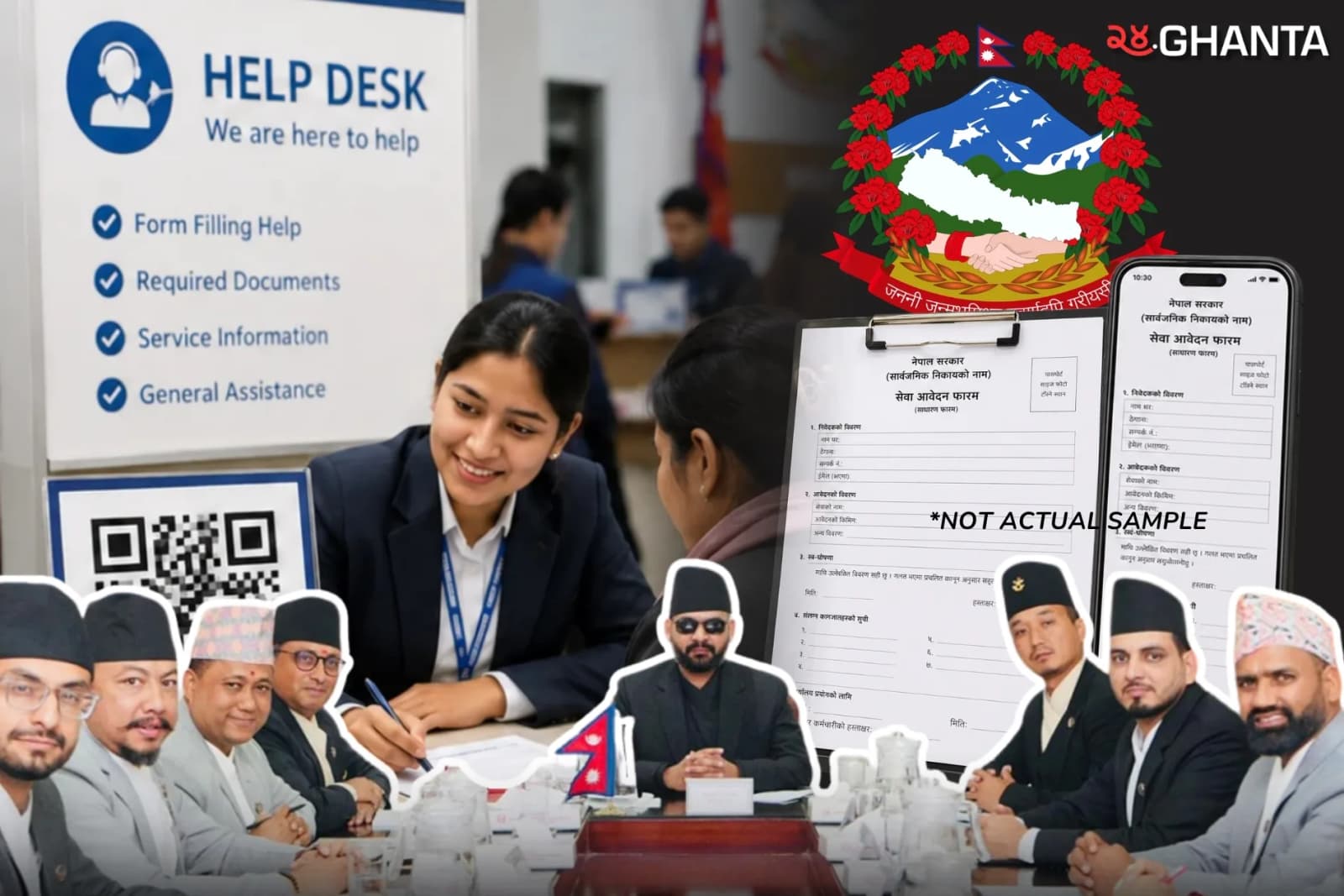
Nepal’s government has approved new guidelines requiring government offices and public bodies to standardize application formats, replacing the confusing system where citizens often need different styles of applications for different offices. The guidelines also require forms to be designed for digital use, including websites, QR codes, electronic forms and downloadable PDFs, while offices must provide free help to service seekers.
· 3 min read
KATHMANDU, August 12, 2026
The Office of the Prime Minister and Council of Ministers (OPMCM) has approved and directed nationwide implementation of the Formats of Applications Used in Government Offices and Its Implementation Guideline, 2083, requiring government bodies across Nepal’s federal, provincial and local levels to standardize application formats. The reform is intended to reduce confusion for citizens, simplify public services and prepare government procedures for online and mobile-based delivery under Nepal’s broader digital-service push.
What Exactly Is Changing?
Government offices currently use different application formats for different services and institutions, often forcing citizens to figure out how each individual office expects an application to be prepared. Under the new guidelines, public bodies must develop a clear prescribed application format for each service they provide.

The formats are to be prepared primarily in simple and clear Nepali, with English versions where necessary. They must also be designed so the same forms can function electronically rather than being limited to paper applications.
What Information Will The Forms Include?
The standardized formats are expected to contain basic information such as the name of the government office, details of the application, service requested, required self-declaration, date, applicant’s signature, supporting documents and information required by the office.
This does not necessarily mean one identical form for every government service. Rather, offices are required to create standardized formats for the individual services they provide, following the common framework established by the guidelines.
Government Offices Get A Seven-Day Task
One important requirement is that every government office must prepare a list of all services it provides within seven days of the guidelines taking effect. Application formats for those services must then be prepared and approved by the respective office chief.
Once approved, the formats must be displayed on office notice boards and websites and made available to citizens free of charge.
QR Codes, PDFs And Electronic Forms
The reform goes beyond simply redesigning paper forms. Government offices are directed to make prescribed applications accessible through websites, QR codes, electronic forms and downloadable PDF files, helping create the infrastructure needed for increasingly paperless government services.
The government says digital-ready forms could eventually make it easier for citizens to access services through online portals and mobile applications, supporting the broader vision of Digital Nepal.
Free Help Desks For Service Seekers
The guidelines also require offices to establish a Customer Help Desk to assist people with preparing applications, completing forms, identifying required documents and understanding available services. Assistance from these desks is required to be provided free of cost.
This provision could be particularly important for citizens who are unfamiliar with administrative procedures or digital systems.
Government Wants To Reduce Middlemen
Another stated objective is to reduce the dependence on unauthorized intermediaries and informal application-writing services operating around government premises for commercial gain. By providing standard forms and free official assistance, the government expects citizens to have less need to pay third parties simply to complete routine paperwork.
Who Is Responsible For Implementation?
Responsibility for effectively implementing the guidelines has been placed primarily on the heads of the respective government offices. Agencies across the country have been instructed to introduce the new system rather than treating the guidelines merely as a future policy proposal.
Why This Matters
For citizens, the biggest change could be surprisingly simple: less guessing about how to write an application every time they visit a different government office.
More significantly, establishing digital-ready standard forms creates a common foundation on which Nepal can expand online public services. The success of the reform, however, will ultimately depend on how consistently thousands of federal, provincial and local offices implement the new requirements.
Published Aug 13 in Politics