
Six Months of Balen Government: How Much Has Actually Changed?
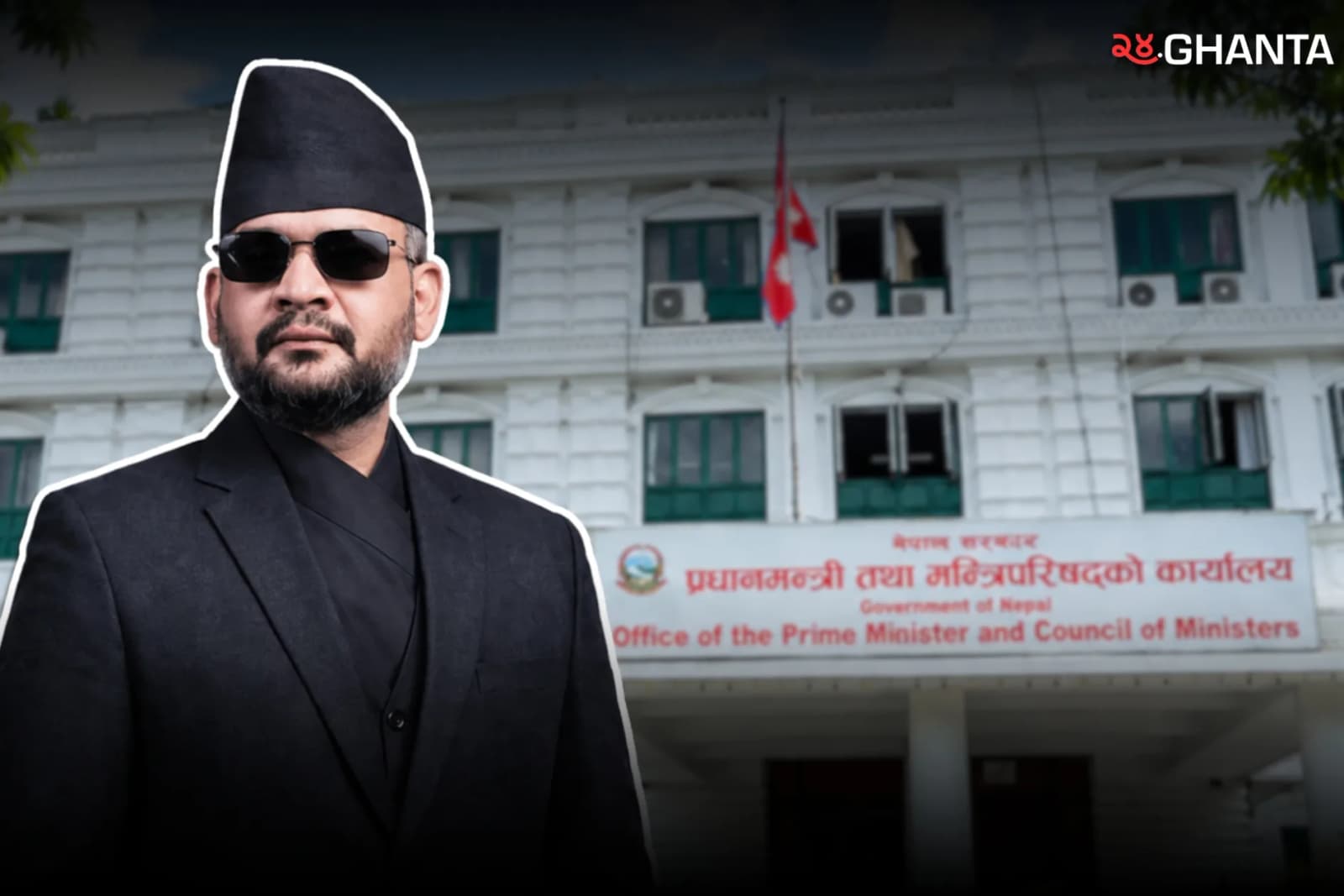
Prime Minister Balendra Shah’s government has completed six months in office, after beginning its term with a 100-point governance reform agenda covering administration, corruption control, public services, laws and the economy. At its first 100-day review, the government claimed 87.2% overall progress and said 70 of the 100 agenda items had been implemented, but six months into the term, several promised legal and institutional reforms remain unfinished.
· 6 min read
Kathmandu, September 28, 2026
Six Months of a New Government
Prime Minister Balendra Shah’s government completed six months in office on September 27, 2026, after taking office on March 27 (Chaitra 13) and approving a 100-point Governance Reform Agenda at its first Cabinet meeting in Singha Durbar, Kathmandu. The plan was introduced to make government work more result-oriented, measurable and accountable, with priorities including administrative restructuring, good governance, corruption control, legal reform, better public services and economic management.
What Did the Government Claim After 100 Days?
When the government presented its first 100-day progress report on July 4, spokesperson and Education and Sports Minister Sasmit Pokharel said the administration had achieved 87.2% overall progress on the 100-point agenda.

According to the government's assessment, 70 agenda items had been implemented, 17 had recorded more than 80% progress, while 13 remained below 60% progress. The Office of the Prime Minister and Council of Ministers was tasked with monitoring the agenda through deadlines, responsible agencies and performance indicators.
Government Structure Was Reshaped
Administrative restructuring was among the government's most visible early moves. At its 100-day review, the government said it had reduced the number of federal ministries to 18 and formed a 17-member Cabinet, with officials estimating that the smaller structure could save around Rs 20 Arba annually in administrative costs.
The government also reported steps to restructure public bodies and change the way the civil administration operates, including action against politically affiliated trade unions in the civil service.
Anti-Corruption Push
Another major promise was scrutiny of wealth accumulated by people who had held powerful public positions. In April, the Cabinet formed an Asset Investigation Commission led by former Supreme Court Justice Rajendra Kumar Bhandari to collect, verify and investigate the assets of major political figures and senior officials who had held public office since 2062/63 BS.
The government has presented such measures as part of its wider policy of zero tolerance toward corruption, alongside fiscal discipline, merit-based appointments and increased digital public services.
Policies and Laws Moved Forward
By its 100-day review, the government said it had approved and implemented 17 procedures, drafted and provided consent for 14 bills, and prepared seven action plans and 14 study reports. It also reported preparing or implementing guidelines, strategies, standards, regulations and other policy instruments across government.
Among its economic and infrastructure policies was an Energy Consumption Growth and Export Strategy, which set targets for expanding domestic electricity consumption and generation while increasing Nepal's capacity to export clean energy.
But Some Major Promises Remain Unfinished
The government's own 87.2% figure should not be read as meaning that 87 of the 100 commitments were fully completed. It was an overall progress calculation presented by the government, while officials said 70 items had been implemented at the 100-day mark.
More recent reporting also shows delays in some important legal commitments. The Federal Civil Service Bill, which the original agenda targeted for formulation within 45 days, had still not reached Parliament nearly six months into the government's term. Several other promised laws covering areas such as e-governance, data protection, urban development, waste management, public procurement and national integrity were also reported to be at different stages of drafting, consultation or parliamentary processing.
Public Services Remain the Bigger Test
The government has repeatedly said its reforms are intended to produce changes people can directly experience, particularly through digital government services and simpler public administration. At the 100-day mark, it also highlighted measures involving fertilizer distribution, cooperative savings refunds and evidence-based policymaking.
However, the six-month mark shows that policy announcements and completed administrative tasks are only one part of the picture. The next measure will be how quickly unfinished laws and institutional reforms translate into faster services, stronger accountability and visible changes in everyday life.
Six Months Down, Longer Test Ahead
The first six months have therefore produced a mixed factual picture: the government has completed or advanced a number of administrative, anti-corruption, digital and policy initiatives, while several of the larger legislative commitments remain in progress.
With the administration describing its first year as the “Foundation Year for Governance Reform,” the remaining six months of that year will provide a clearer picture of how many early policy decisions become fully functioning reforms.
What Has Balen Shah’s Government Done In Six Months?
The government has reduced the number of federal ministries from 22 to 18, saying the move will make the government structure smaller and more efficient.
The government has introduced a 100-point governance reform agenda covering administrative reform, corruption control, public services, legal reform and economic management.
At the 100-day mark, the government claimed that 70 of the 100 agenda points had been completed, with overall progress reported at 87.2%.
The government has formed an Asset Investigation Commission to examine the assets of specified former and current public officials.
The government has taken steps to remove politically affiliated trade unions from the civil service as part of its administrative reform plans.
The government has formed a 17-member Cabinet, keeping the number below the constitutional maximum of 25.
The government has expanded digital public services, including services available through the Nagarik App and other online government systems.
The government has upgraded the Hello Sarkar system to connect government offices and handle public complaints through a more integrated platform.
The government has moved forward with public procurement reforms aimed at making government purchasing more transparent and competitive.
The government has released Rs. 25 Crore as an initial amount for cooperative deposit refunds to help affected small depositors.
The government has reported recovering around Rs. 13.26 Crore from Tribhuvan University staff who did not return after taking study leave.
The government has collected more than 12 lakh applications for a digital database of landless people as part of its land-management work.
The government has introduced a National Integrity Policy focused on improving transparency, accountability and integrity.
Ministers have signed performance agreements with the Prime Minister to make their work more measurable and focused on specific targets.
The government has advanced plans to increase domestic electricity use, power generation and electricity exports through its energy policy.
Following major floods and other disasters, the government has placed greater focus on disaster preparedness and climate resilience.
At the United Nations General Assembly, Prime Minister Balen Shah proposed a Nepal–India–China Himalayan Climate Resilience Mechanism to improve cooperation on climate risks, early warnings and Himalayan protection.
What Is Still Pending?
The Federal Civil Service Bill has not been completed within the government's original 45-day target, and it remained pending nearly six months into the government's term.
Several other promised laws and reforms are still being drafted, discussed or processed, meaning not all commitments have been completed.
Published 1 hour ago in Politics