
The Moon Has Nearly 200 Tons Of Human Waste From Decades Of Space Exploration
The Moon may appear untouched from Earth, but decades of exploration have left behind thousands of human-made objects, creating a new challenge for future lunar missions.
· 3 min read
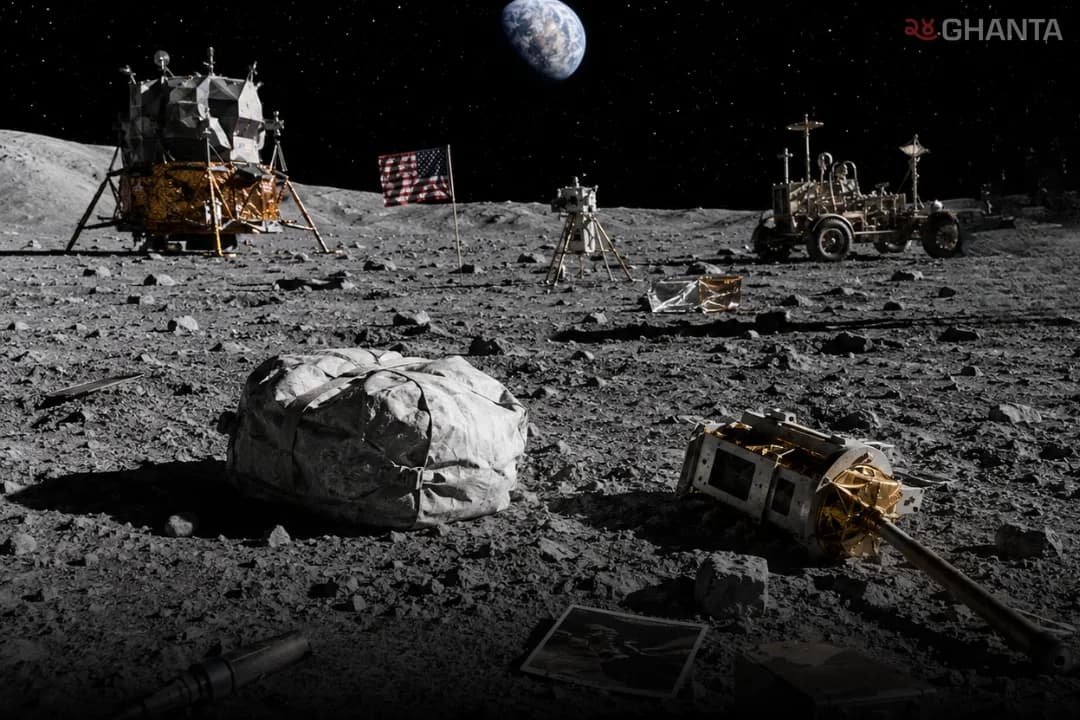
The Moon Has A Growing Human Footprint
The Moon is often seen as a pristine world covered only by natural craters, but decades of space exploration have left behind a significant amount of human-made material.
According to reports, nearly 3,000 artificial objects weighing around 190,000 kilograms are currently scattered across the lunar surface.

The accumulation began in 1959, when the Soviet Union’s Luna 2 became the first human-made spacecraft to reach the Moon. Since then, landers, spacecraft parts, scientific instruments and crashed missions from multiple countries have added to the growing collection of debris.
Apollo Missions Left Hundreds Of Objects Behind
NASA’s historic Apollo programme contributed significantly to the amount of material remaining on the Moon.
The six successful Apollo landings left behind around 796 objects.
Items include scientific equipment, tools, cameras, flags and other mission materials.
Astronauts also left personal waste bags and discarded materials to reduce weight before returning to Earth.
Some unusual objects from the Apollo era still remain on the lunar surface, including golf balls and personal belongings.
SpaceX Rocket Impact Brings Attention Back To Lunar Waste
The issue gained renewed attention after a SpaceX Falcon 9 upper stage, weighing around 4,000 kilograms, was believed to have crashed into the Moon near the Einstein Crater area.
The rocket part reportedly struck the lunar surface at around 8,690 kilometres per hour, creating a powerful impact.
Scientists estimate:
The collision released energy equivalent to about three tons of TNT.
It could have created a crater around 27 metres wide and 5 metres deep.
Dust and debris from the impact could provide researchers with valuable information about the Moon’s surface.
Why Lunar Waste Is Becoming A Concern
Unlike Earth, the Moon has no atmosphere, oceans or ecosystem, meaning human waste does not create environmental damage in the same way it does on Earth.
However, scientists have raised concerns about future risks.
Major concerns include:
Damage to historic landing sites: Future missions could disturb important locations from early space exploration.
Loss of scientific information: Untouched lunar soil contains billions of years of geological history that researchers want to study.
Threats to future missions: Increasing spacecraft activity could make existing debris a hazard for astronauts and equipment.
The Challenge Of Future Moon Exploration
With countries and private companies planning more lunar missions, managing space waste is becoming an important challenge.
NASA, SpaceX and other space organisations are discussing ways to prevent uncontrolled impacts and develop better disposal methods for future spacecraft.
As humanity prepares for more frequent Moon missions, scientists say exploration must be balanced with protecting the lunar environment and preserving historical sites.
Published Aug 6 in World