
Traffic Police Chief Pushes ‘Faceless Traffic’ System as Nepal Records Eight Road Deaths a Day
Kathmandu Valley Traffic Police chief SSP Suresh Prasad Kafle has called for wider adoption of a technology-driven “faceless traffic” system, arguing that road deaths cannot be reduced through conventional roadside policing alone. He says Nepal needs to combine technology with better road engineering, traffic education and effective enforcement as reckless driving continues to put both offenders and rule-following road users at risk.
· 6 min read
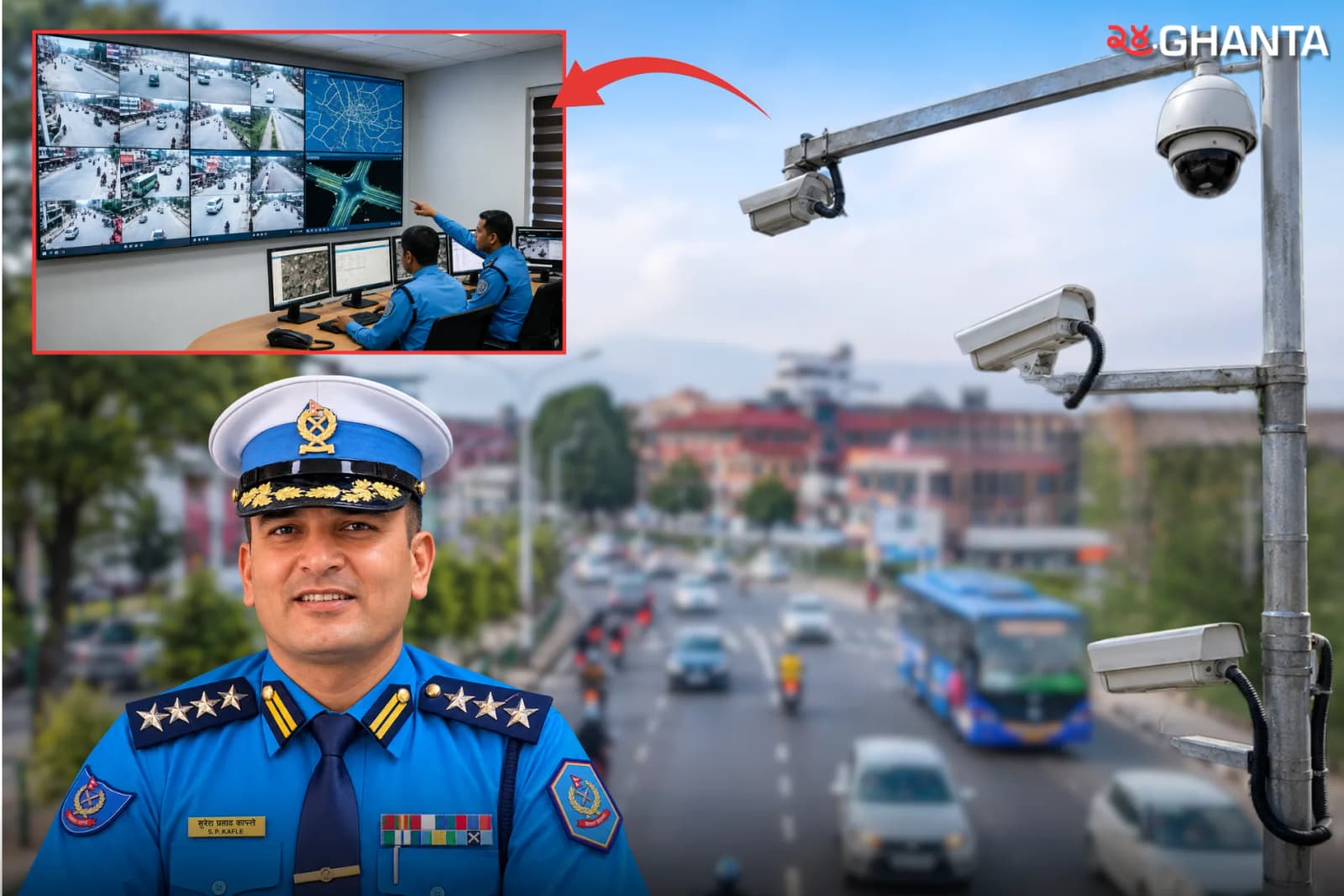
KATHMANDU, August 9, 2026 — Kathmandu Valley Traffic Police Office chief Senior Superintendent of Police Suresh Prasad Kafle has called for Nepal to move further toward a technology-driven “faceless traffic” management system, saying during a discussion on national and international traffic-management practices in Kathmandu on Sunday that traditional roadside enforcement alone cannot sufficiently reduce crashes and deaths caused by speeding, impaired driving and poor road discipline.
Why Kafle Wants ‘Faceless Traffic’
Kafle argued that traffic management needs to move beyond a system heavily dependent on officers standing on roads, blowing whistles and manually identifying violations.
Under the faceless model, cameras, digital monitoring and automated enforcement can increasingly identify violations without requiring direct interaction between traffic officers and motorists.

The concept is intended to make enforcement more consistent and transparent while allowing traffic police to monitor violations even when an officer is not physically present at an intersection.
Kathmandu Is Already Moving Toward the System
The idea is already being put into practice in parts of Kathmandu Valley.
Traffic police have been expanding CCTV-based enforcement and working toward a system in which violations can be detected remotely. Recent reporting indicates that hundreds of CCTV cameras are being used for traffic surveillance across the Valley, with feeds connected to the Traffic Police Control Room.
The cameras can help authorities identify offences such as running red lights, speeding, riding on pavements, illegal turns and other traffic violations.
Traffic authorities have also been working toward connecting surveillance information with the Department of Transport Management so that violation notices and fines can eventually be sent digitally to vehicle owners.
Nearly Half of Enforcement Actions Already Use CCTV
The shift toward technology is already significant.
In July, Kafle said around 40 to 50 percent of traffic enforcement actions in Kathmandu Valley were being initiated using evidence captured through CCTV cameras.
The faceless system is intended to take that process further by reducing unnecessary physical interaction between officers and road users and making monitoring increasingly automated.
Three Things Nepal Needs for Safer Roads
Kafle stressed that technology alone cannot solve Nepal's road-safety problems.
He called for equal attention to what he described as the “Three Es” — Engineering, Education and Enforcement.
Engineering means improving roads and traffic infrastructure. Education means teaching people how to use roads safely and responsibly. Enforcement means ensuring that traffic laws are actually followed.
According to Kafle, meaningful improvements in road safety require all three areas to work together rather than depending solely on police enforcement.
Traffic Education Should Start in Schools
Kafle also wants traffic and road-safety education incorporated into Nepal's formal education system.
He pointed out that students in Nepal can pursue advanced studies across numerous subjects, yet basic traffic and road-safety knowledge has received little attention in formal curricula.
Traffic police have therefore been visiting schools, colleges and universities to provide students with practical information on road safety, traffic rules and the responsibilities of pedestrians and drivers.
The Kathmandu Valley Traffic Police Office has also been using social media and other awareness campaigns to reach a wider audience with road-safety messages.
Drunk Driving and Speeding Put Innocent People at Risk
Kafle identified dangerous road behaviour as a continuing threat to people who follow traffic rules.
Drivers who operate vehicles after consuming alcohol or drugs, as well as those travelling at excessive speeds, can put pedestrians, passengers and other motorists at risk regardless of whether those people themselves are following the law.
His argument is that enforcement therefore needs to focus not merely on catching offenders but on preventing dangerous behaviour before it costs lives.
Traffic Police Say Fines Are Not the Main Goal
Kafle also stressed that the objective of traffic policing should not be measured by the number of tickets issued or the amount collected through fines.
The priority, he said, should be preventing unnecessary deaths and serious injuries.
That position is consistent with the Kathmandu Valley Traffic Police Office's recent public awareness approach encouraging drivers to follow traffic rules and avoid violations rather than treating fines as the ultimate purpose of enforcement.
Police Conduct Is Also Part of the Reform
Kafle said technology should be accompanied by improvements in how traffic officers interact with citizens.
He has instructed personnel to communicate politely, respect road users and maintain transparency when enforcing traffic rules.
According to Kafle, some public dissatisfaction with traffic police comes not simply from enforcement itself but from the manner in which officers communicate and carry out their duties.
Reducing unnecessary officer-driver interaction through automated enforcement could also address some of these concerns.
Eight People Die on Nepal’s Roads Every Day
Despite recent efforts, Nepal continues to face a serious road-safety problem.
Kafle said an average of around eight people die in road crashes every day, while approximately 75 people suffer serious injuries.
He also said road crashes had declined by around 20 percent compared with the previous year, but argued that the improvement was not enough considering the continuing number of deaths and injuries.
The daily death figure is consistent with broader road-safety estimates that place Nepal's annual road fatalities at roughly 2,900 people.
What Would ‘Faceless Traffic’ Look Like?
A fully developed faceless traffic system would mean motorists could be monitored even when no traffic officer is standing nearby.
CCTV cameras and other technology could identify violations, while digital databases could connect the offending vehicle to its registered owner. Authorities are working toward a system where motorists could eventually receive notifications about violations and enforcement actions directly on their registered mobile phones.
Kathmandu Valley already has around 950 CCTV cameras in public areas, with 297 directly connected to the Traffic Police Control Room, according to recent reporting.
The long-term plan is to develop a more integrated digital traffic-management centre capable of monitoring roads, identifying violations, managing congestion and enforcing rules with less direct human intervention.
From Whistles to Technology
The move toward faceless traffic represents a broader change in how authorities want to manage Kathmandu's increasingly busy roads.
Rather than relying almost entirely on officers stationed at intersections, traffic authorities are gradually shifting toward CCTV surveillance, automated monitoring, digital enforcement and centralized traffic management.
For Kafle, however, technology is only one part of the solution. Nepal's road-safety challenge will also require safer infrastructure, better education, responsible behaviour from road users and consistent enforcement.
The ultimate measure of success, he argues, should not be how many drivers are fined, but how many deaths and serious injuries can be prevented.
Kathmandu's proposed “faceless traffic” model is already moving beyond the planning stage, with CCTV evidence being used in a substantial share of traffic enforcement. Authorities now want to expand technology-based monitoring while combining it with better road engineering, public education and enforcement to reduce Nepal's continuing road deaths.
Published Aug 10 in Society