
Traffic Police Ordered to Stop Cash Deals and Improve Public Conduct
Infrastructure Development Committee Chairman Ashish Gajurel has instructed traffic police to improve the way they speak to and treat citizens while maintaining strict financial discipline, following complaints that some officers allegedly take money from traffic violators instead of issuing official tickets. He also stressed better technology, nationwide traffic awareness and stronger enforcement, while clarifying that proposed fines of Rs 100,000 to Rs 150,000 are only under discussion and have not been implemented.
· 3 min read
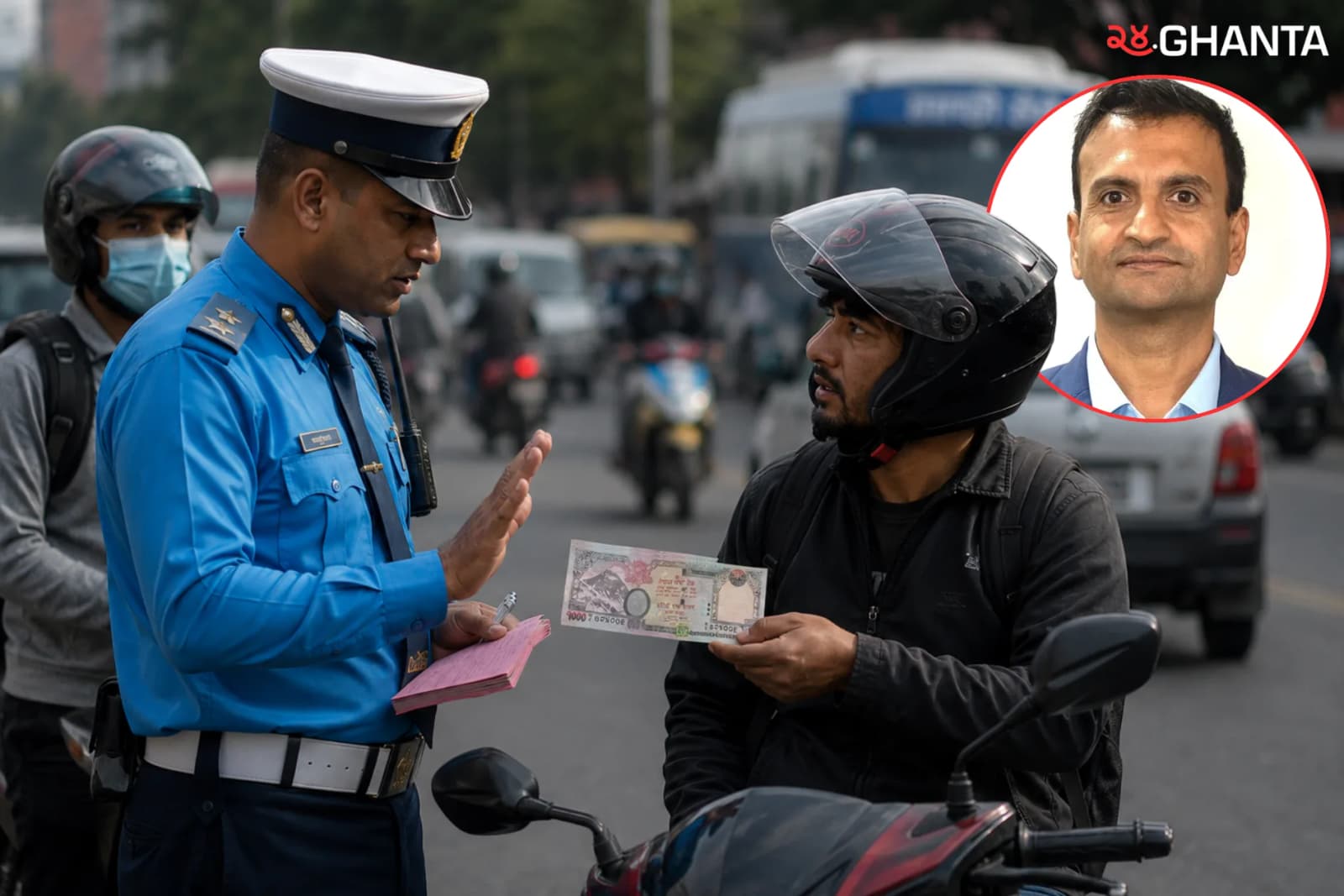
KATHMANDU, August 9, 2026 — Nepal’s traffic police have been urged to strengthen professional conduct and financial accountability after concerns were raised that some officers may be settling traffic violations informally instead of following the official ticketing process. Infrastructure Development Committee Chairman Ashish Gajurel raised the issue during a Sunday discussion in Kathmandu on national and international approaches to traffic management, calling for respectful communication with the public, transparent enforcement and better discipline within the service.
Informal Settlements Raise Concerns
A key issue discussed at the event was the allegation that some motorists caught breaking traffic rules have been allowed to leave after paying money directly rather than receiving an official violation ticket.
Gajurel said such practices cannot be tolerated within the traffic police. He also cautioned against judging the entire institution because of the actions of individual officers, arguing that stronger internal discipline is necessary to protect public confidence in the organization.

How Officers Treat Citizens Matters Too
Financial accountability was only one part of the message. Gajurel also called for improvements in everyday interactions between traffic officers and the public.
Traffic personnel, he said, should communicate appropriately and treat citizens with courtesy while carrying out enforcement duties. Better behavior on the road should go alongside stronger institutional standards rather than being treated as a separate issue.
Police Need Better Tools and Support
While demanding greater accountability from officers, Gajurel also acknowledged the challenges they face while managing traffic.
He said personnel should have access to modern technology, adequate safety measures, necessary facilities and sufficient authority to perform their responsibilities effectively. Improving traffic management, therefore, requires investment in the system as well as improvements in individual conduct.
Huge Traffic Fines Have Not Taken Effect
Gajurel also addressed public discussion surrounding the possibility of sharply increasing penalties for traffic offences.
He clarified that proposed fines reaching Rs 1 lakh to Rs 1.5 lakh remain under discussion and are not currently in force. Before deciding on penalties of that scale, he said authorities should consult citizens and relevant stakeholders.
Awareness Must Accompany Tougher Enforcement
Another concern is whether people across the country have sufficient knowledge of traffic regulations. Gajurel called for broader public-awareness campaigns, particularly as people travelling from different areas may encounter unfamiliar traffic systems when entering Kathmandu and other busy urban centres.
Lack of knowledge does not remove a person's responsibility to obey the law, he said, but authorities should still make information about traffic rules easier to understand and more widely available.
Turning Transport Policy Into Action
Gajurel also pointed to the National Transport Policy 2083, saying reforms included in national policy need to translate into practical changes on Nepal's roads.
That means combining effective enforcement with technology, public education, institutional accountability and adequate support for officers rather than relying solely on tougher penalties.
A Push for Accountability on Both Sides
The discussion ultimately placed responsibility on both road users and those enforcing the rules. Drivers are expected to respect traffic laws, while police are expected to apply those laws fairly, professionally and without seeking personal financial benefit.
The broader goal is a traffic-management system where rules are enforced transparently, officers are properly equipped and citizens can expect respectful treatment when dealing with police.
Published Aug 9 in Politics