
Upper Mustang’s Centuries Old Chortens Are Slowly Fading And Locals Want Action Before It Is Too Late
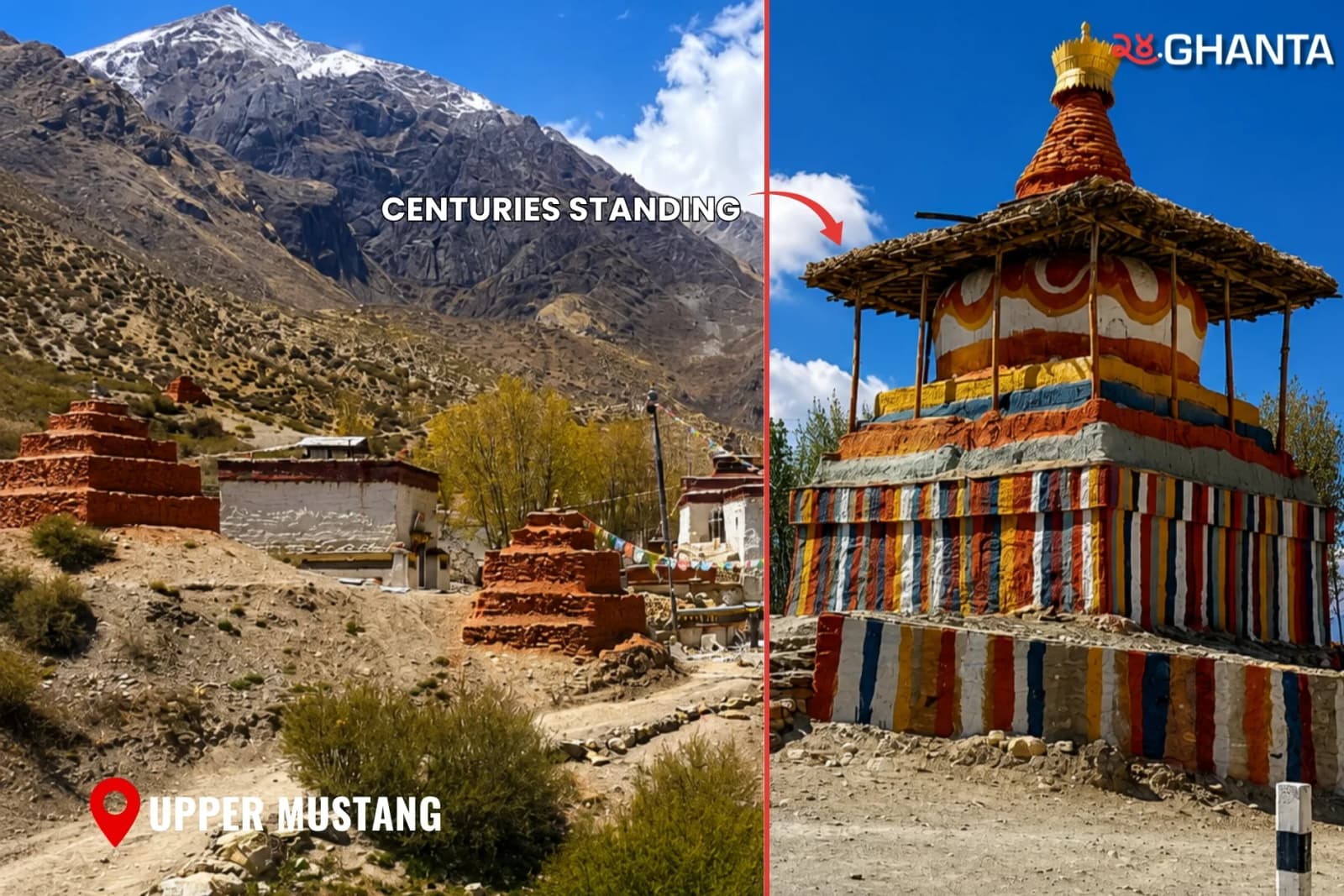
Centuries old Buddhist chortens across Upper Mustang, including structures in and around the ancient walled city of Lo Manthang, are in need of repair and stronger protection as age, natural disasters and changing development put the historic structures at risk. Local communities and conservation groups have been working to protect them, but residents say stronger and more organized support from the government is needed to save this important part of Mustang’s Buddhist heritage.
· 4 min read
Mustang, Nepal | August 25, 2026
Centuries Of History Face An Uncertain Future
Who, What, When, Where and Why: Local residents and conservation officials in Upper Mustang are calling for stronger protection of centuries-old Buddhist chortens in Lo Manthang and surrounding settlements as of August 2026. Many of these religious structures have stood for hundreds of years and represent the region’s Tibetan Buddhist culture, but age, natural disasters, road expansion and limited maintenance have left some structures damaged or at risk of disappearing.
Lo Manthang Holds Centuries Of Heritage
Lo Manthang is the historic capital of the former Kingdom of Lo and was developed as a walled settlement in the 15th century. UNESCO describes the town as an important earthen settlement at around 3,800 metres, containing historic monasteries, rows of chortens and mani walls.

Historical research shows that the wider Upper Mustang region has remained closely connected with Tibetan Buddhist culture for centuries. Its monasteries, palaces, caves, chortens, paintings and religious objects together form one of Nepal’s most unusual cultural landscapes.
Some Chortens Are More Than 600 Years Old
According to the latest local report, some chortens in the Upper Mustang region are more than 600 years old, while Buddhist structures were built across the area over several centuries.
Lo Manthang itself was established as the capital of the Kingdom of Lo under King Ame Pal in the 15th century. Research into Upper Mustang's historic architecture has produced a tree ring record stretching back to 1317, showing just how deep the region's architectural history goes.
More Than 100 Chortens Near Ghar Gompa
One of the most striking collections is reported around Ghar Gompa in Marang, Lo Ghekar Damodarkunda Rural Municipality Ward 1, where more than 100 similarly shaped chortens can be found.
Chortens are also found around Lo Manthang, Tangbe, Chhusang, Ghiling, Charang and Chhoser, as well as along routes extending toward the Korala border area. Together, these structures help tell the story of Buddhist life and culture across Upper Mustang.
Why Are Chortens Important?
Chortens are much more than old buildings. In Tibetan Buddhist tradition, they carry deep religious meaning and represent Buddhist teachings and beliefs.
Many feature traditional designs connected with Buddhist symbols and the five elements. Decorative details can include religious symbols, dragons, animals, flowers and wall paintings. Their traditional construction also reflects generations of local knowledge using materials such as earth, stone and wood.
Road Expansion Is Changing The Landscape
The expansion of roads across Upper Mustang has brought easier transportation and access, but it has also changed traditional routes through the region. Some chortens that once stood prominently along old walking trails are now receiving less attention as movement shifts toward newer roads.
Local residents fear that structures already weakened by age could slowly disappear without regular inspection and repair.
2015 Earthquake Added To The Damage
The 2015 Nepal earthquake also damaged important heritage structures in Upper Mustang. Lo Manthang’s historic palace was among the structures affected, while the latest report says many chortens were left weakened.
Upper Mustang's traditional buildings rely heavily on earth, stone and timber. Preserving them therefore requires specialist knowledge and careful restoration rather than simply replacing old structures with modern materials.
ACAP Provides More Than Rs 3 Million Annually
The Annapurna Conservation Area Project has been helping with the conservation of chortens and monasteries in Upper Mustang. According to the latest report, ACAP's Lo Manthang office provides more than Rs 3 million annually for repair and maintenance of chortens and monasteries.
Local governments, Buddhist monasteries, donor organizations and communities have also supported conservation work. International conservation efforts have operated in Mustang for decades, including projects that trained local residents to restore historic buildings and paintings using appropriate techniques.
Locals Want Stronger Government Support
Despite ongoing conservation work, residents say the scale of Upper Mustang's heritage requires greater attention from the federal and provincial governments.
Local experts have called for a detailed study to count and document monasteries and chortens across Mustang's five local levels. Such records could help authorities understand which structures are most at risk and decide where conservation money should be spent first.
Heritage Also Supports Mustang Tourism
The chortens and monasteries are also part of what attracts visitors to Upper Mustang. The region is known internationally for its walled settlements, Tibetan Buddhist culture, monasteries, caves and dramatic Himalayan landscape.
Lo Manthang itself has been on UNESCO's World Heritage Tentative List as part of the Medieval Earthen Walled City of Lo Manthang. Protecting the surrounding religious structures therefore matters not only to local Buddhist communities but also to Nepal's wider cultural and tourism heritage.
The Race To Protect Mustang’s Past
Upper Mustang has preserved a remarkable cultural landscape for centuries despite its remote location and harsh environment. But historic structures cannot survive on history alone.
For residents and conservationists, the concern now is whether Nepal can properly document, repair, and protect these chortens before centuries of Buddhist history are permanently lost.
Published Aug 25 in Nepal