
US-Iran War Moves Into The Strait Of Hormuz, Raising New Fears For Global Oil, Shipping And Marine Life
The US Iran war has expanded into the Strait of Hormuz, one of the world’s most important energy routes, as attacks on oil tankers increase risks to global shipping and oil supplies. The growing conflict also threatens the Persian Gulf’s marine ecosystems, fishing communities and desalination systems, raising fears that a major oil spill could turn the military crisis into a long term environmental disaster.
· 7 min read
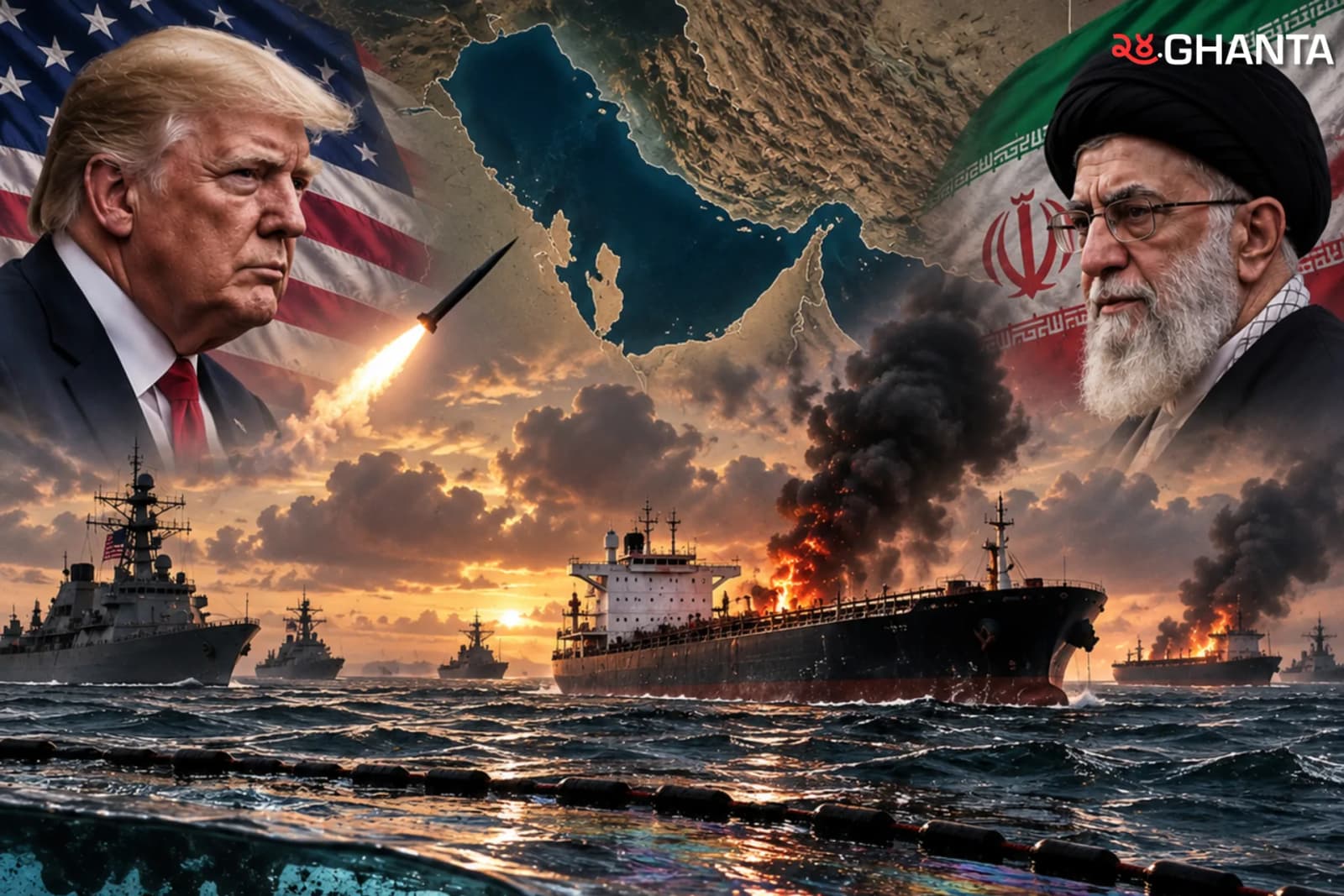
Kathmandu, 9 September, 2026: The conflict between the United States and Iran has entered a more dangerous maritime phase, with oil tankers and commercial shipping increasingly caught in attacks around the Persian Gulf and the Strait of Hormuz.
The escalation is no longer only a military concern. It is disrupting one of the world's most important energy routes, pushing oil prices higher and creating a growing environmental threat. A major tanker fire or sinking could release huge quantities of crude oil into waters that support coral reefs, mangroves, fisheries and coastal communities.
The US-Iran war began on February 28, 2026, when the United States and Israel launched coordinated strikes against Iran, targeting its nuclear and military capabilities. The conflict followed years of tension over Iran's nuclear program, US sanctions, missile development, and Tehran's regional influence. What began as attacks on military and nuclear targets gradually expanded into a wider conflict, with control and security of the Strait of Hormuz becoming one of its biggest flashpoints.

US And Iran Expand Attacks At Sea
On September 5, US forces struck three Iranian oil carriers after Iran's Islamic Revolutionary Guard Corps launched ballistic missiles at two US Navy ships, according to US Central Command. Iran also said it targeted tankers travelling through what it described as unauthorized routes in the Strait of Hormuz.
The confrontation intensified again on September 8 when the United States destroyed five Iranian oil tankers. Iran then launched retaliatory attacks against US and allied targets. By September 9, Iran said it had attacked 10 ships near the Strait of Hormuz, marking the largest declared wave of attacks on shipping by the two sides since the current war began.
At least one seafarer was reported killed and another missing in the latest maritime attacks. The escalation has also affected military and energy targets elsewhere in the Middle East.
Why The Strait Of Hormuz Matters To The World
The Strait of Hormuz is a narrow waterway connecting the Persian Gulf with the Gulf of Oman and the Arabian Sea. It is one of the world's most important routes for transporting crude oil, petroleum products and liquefied natural gas.
Before the war, about 20 million barrels of crude oil and petroleum products were moving out of the Middle East each day, according to figures cited by Reuters. Recent exports have fallen to roughly half that level as the conflict disrupts normal flows.
Shipping traffic through Hormuz has also dropped sharply. Preliminary Kpler data showed only six commodity vessels crossed the strait on September 8, compared with a recent ten-day average of 12. Before the conflict, around 125 commercial vessels were normally passing through the waterway each day.
The latest attacks have already affected global energy markets. Brent crude moved above $100 per barrel as concerns grew about further disruption to oil supplies.
Dozens Of Tankers Waiting Around Hormuz
MarineTraffic data cited in environmental reporting showed that 42 tankers were waiting to transit the Strait of Hormuz on September 7. Eighteen were carrying oil, while hundreds of other vessels were waiting or moving slowly across the wider Gulf region.
The 42 tankers had an estimated combined carrying capacity of around 1.76 million cubic metres of oil and petroleum products, equivalent to roughly 11.1 million barrels. This figure represents their estimated capacity and does not mean all the vessels were carrying that amount of oil at the time.
That distinction is important. However, even one heavily loaded tanker being seriously damaged could create a major environmental emergency.
War Creates A New Environmental Threat
Oil tankers are not only economic targets. When ships carrying crude oil are struck, burn or sink, their cargo can become a source of long term marine pollution.
Oil released at sea can spread far beyond the original location because of currents and winds. It can remain on the surface, reach coastlines, or become trapped in coastal sediments.
The Persian Gulf is particularly sensitive because it is a shallow, semi-enclosed marine environment with limited exchange of water with the wider Indian Ocean. Pollution can therefore place additional pressure on ecosystems already living under extreme heat and salinity.
Corals, Mangroves And Marine Animals At Risk
Despite its difficult natural conditions, the Gulf supports coral reefs, seagrass beds, mangrove forests, mudflats and salt marshes.
These environments provide feeding and breeding areas for fish, sea turtles, dugongs and migratory birds. They also support fisheries and help protect coastlines.
Oil contamination can poison marine organisms and cover sensitive habitats. Fish eggs and larvae can be particularly vulnerable, while pollution reaching coral reefs, seagrass or mangrove areas can damage ecosystems that may take years to recover.
The environmental problem is not only theoretical. Satellite imagery and maritime monitoring have already documented oil pollution incidents in the wider Gulf and Strait of Hormuz region during the conflict.
Fishing Communities Could Pay The Price
The economic consequences of a major oil spill would extend beyond global energy markets.
Fishing communities around the Gulf depend directly on healthy marine ecosystems. Contaminated fishing grounds can reduce catches, increase operating costs and affect the income of families dependent on the sea.
Pollution that settles into sand, mud and marine sediments can also remain for extended periods, meaning environmental damage can continue even after visible oil disappears from the surface.
This creates a difficult situation in which communities that have no direct role in the military conflict could face long-term economic consequences.
Drinking Water Is Another Concern
The Gulf's dependence on seawater creates another potential risk.
Countries across the region rely heavily on desalination, a process that removes salt from seawater to produce drinking water. If a major oil spill reaches seawater intake areas, it can affect the quality of water entering desalination facilities.
The level of danger would depend on several factors, including where a spill occurs, ocean currents, the depth and location of intake systems, and the technology used at individual plants.
This does not mean a tanker spill would automatically stop drinking water supplies. Modern monitoring and treatment systems can reduce the risk. But a large spill near important intake facilities could create additional operational pressure during an already serious regional crisis.
The 1991 Gulf War Remains A Warning
The Gulf has experienced catastrophic wartime oil pollution before.
During the 1991 Gulf War, enormous quantities of oil entered the marine environment as Iraqi forces withdrew from Kuwait and oil infrastructure was damaged or deliberately destroyed.
Oil and tar contaminated extensive areas of the Gulf coastline, producing environmental effects that continued long after the fighting ended.
The present situation is different, but the historical experience demonstrates why environmental experts are concerned. This time, large oil tankers moving through or waiting near conflict zones could themselves become sources of major pollution if attacks continue.
Conflict Now Threatens More Than Military Targets
The latest escalation shows how quickly a military confrontation can spread into global trade, energy security and environmental protection.
The United States says its recent strikes on Iranian tankers followed Iranian attacks against American naval forces. Iran has responded with attacks and warnings of further retaliation. Meanwhile, commercial ships continue to navigate an increasingly dangerous maritime environment.
For the wider world, the Strait of Hormuz is much more than a battlefield between Washington and Tehran. It is a major artery of the global energy system and the gateway to a fragile marine environment shared by millions of people.
As attacks at sea intensify, the danger is no longer simply that another tanker will be hit. The larger concern is that one major incident could turn military escalation into a serious environmental disaster, with consequences for marine ecosystems, coastal economies, drinking water systems, and global energy supplies.
Published Sep 9 in World