
Arghakhanchi Seeks 20 ‘Monkey Watchers’ To Protect Farmers’ Crops
The Division Forest Office in Arghakhanchi has invited applications for 20 temporary “monkey watchers” to protect agricultural crops in 26 heavily affected areas. Selected applicants will earn Rs 12,500 per month for two months.
· 3 min read
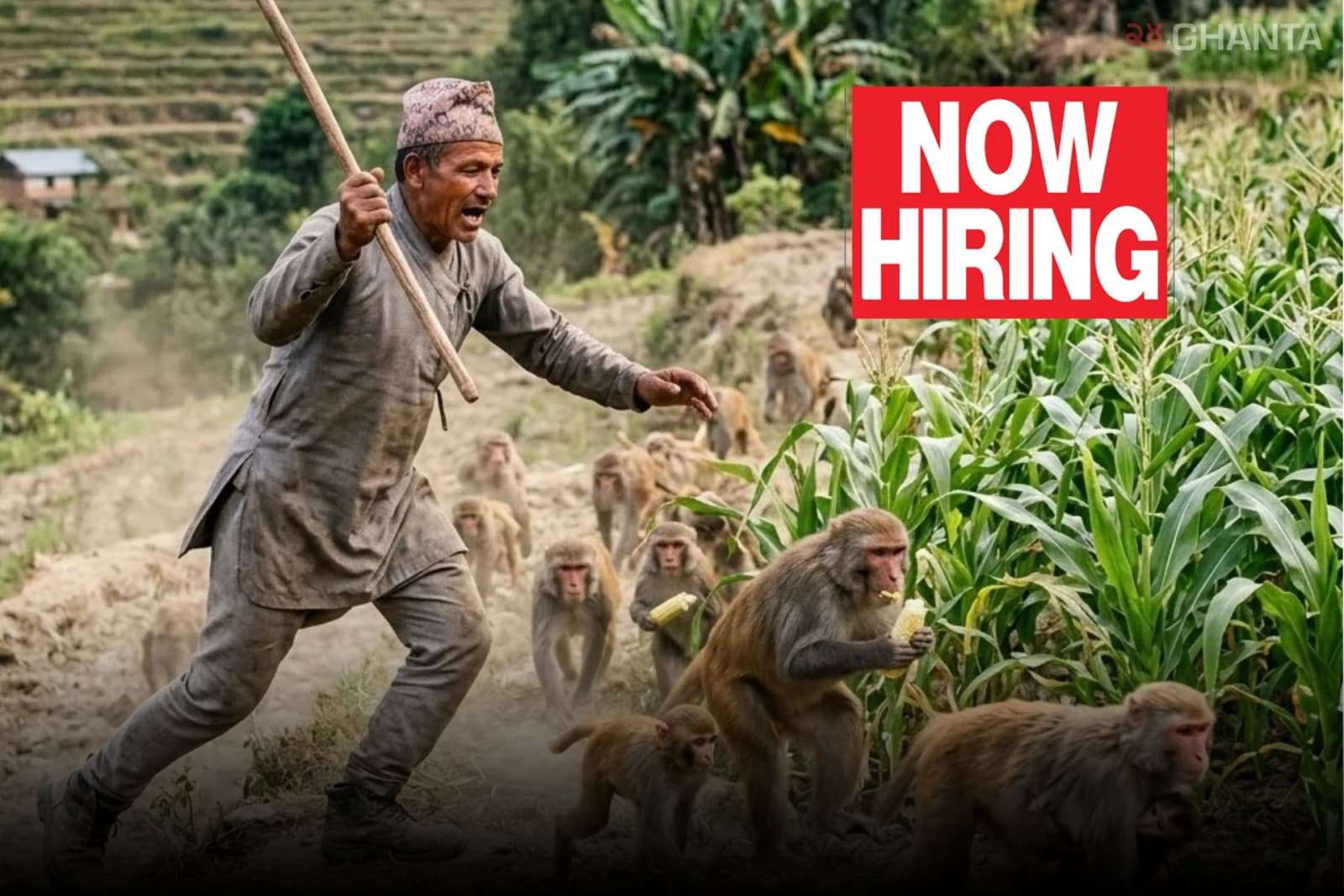
The Division Forest Office in Arghakhanchi has invited applications for 20 temporary “monkey watchers” as farmers across the district struggle to protect their crops from increasing monkey attacks.
According to a public notice issued by the office, the workers will be deployed across 26 areas identified as severely affected by monkeys. Their main responsibility will be to protect farmland and reduce conflict between farmers and wildlife.
Two-Month Job With Rs 12,500 Monthly Salary
The selected workers will serve for two months, from Shrawan 10 to Asoj 10, 2083.

Each monkey watcher will receive a monthly payment of Rs 12,500, meaning they can earn Rs 25,000 during the full employment period.
The appointments are being made through cost-sharing arrangements involving community forest groups practising forest management based on forest enhancement systems.
Who Can Apply?
Applicants must be permanent residents of the monkey-affected areas where they are seeking employment.
The notice sets the following eligibility conditions:
Applicants must be between 18 and 45 years old
They must live permanently in the affected area
They should have an interest in forests, wildlife and biodiversity conservation
Previous experience in forest or wildlife-related work will receive priority
People who have worked as community forest guards, nursery attendants, forest group leaders or in similar roles will be given preference.
Interested residents were asked to submit applications within three days of the notice’s publication.
What Will The Monkey Watchers Do?
The selected workers will regularly monitor monkey movements near settlements and farmland.
Their duties will include:
Warning farmers when monkeys approach agricultural areas
Coordinating with farmers, local wards and forest officials
Recording crop damage caused by monkeys
Reporting the damage to the relevant authorities
Driving monkeys away from farms using humane and environmentally friendly methods
Directing the animals towards their natural habitats
The workers will not be allowed to injure or kill the animals while carrying out their duties.
Applicants Must Submit Local Recommendation
Applicants must submit an application along with documents showing relevant experience, where available.
They must also provide a recommendation letter from their ward office containing details of previous crop damage caused by monkeys in the area.
Applications will be evaluated before the workers are deployed across the 26 affected locations.
Age Limit Raises Concerns
Some local residents have reportedly questioned the upper age limit of 45 years.
They argue that many younger residents have already left rural communities for employment or education, making it difficult to find enough eligible workers below the required age.
Older villagers, who are more likely to be available and familiar with local farming conditions, could be excluded from the recruitment process because of the age restriction.
Monkey Attacks Becoming A Major Farming Problem
Monkey attacks have become a growing concern in several rural parts of Nepal.
Farmers frequently report damage to maize, fruits, vegetables and other crops, sometimes losing much of their harvest within a short period.
The problem has also contributed to abandoned farmland, reduced agricultural production and migration from affected villages.
The Arghakhanchi programme is intended to provide immediate protection during the main crop-growing period while encouraging non-violent management of wildlife.
Published Jul 23 in Society