
Can Citizens Legally Record Police Officers in Nepal? Constitution and Existing Laws Explained
A legal discussion published by law student Bibek Chaudhary examines whether citizens in Nepal have the constitutional right to record police officers performing official duties in public places. The analysis concludes that no existing law explicitly prohibits such recordings and argues that they are protected under the rights to freedom of expression and access to information.
· 5 min read
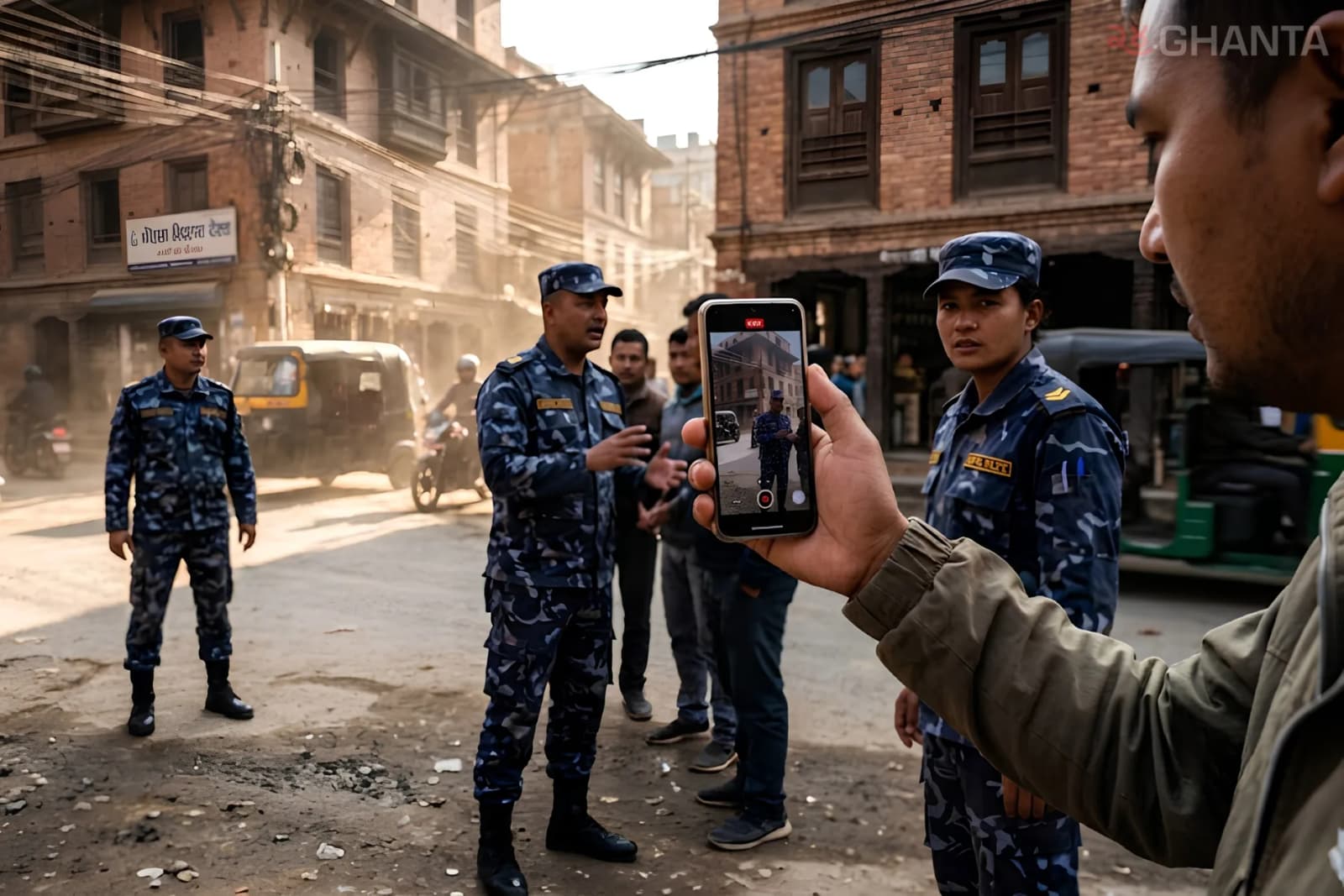
Can Citizens Record Police Officers?
The question of whether citizens can legally record police officers while they are carrying out official duties has become increasingly common in Nepal.
Videos shared on social media often show police officers asking people to stop recording, ordering them to switch off their mobile phones, attempting to seize devices, or demanding that videos be deleted.

These incidents have created confusion among the public about what the law actually allows.
A legal analysis by law student Bibek Chaudhary examines Nepal’s Constitution, existing laws and legal principles to answer this important question.
What Does Nepal’s Constitution Say?
According to the analysis, there is no constitutional or legal provision that expressly prohibits citizens from recording police officers performing official duties in public places.
Instead, several constitutional rights support the practice.
Freedom of Expression
Article 17 of the Constitution guarantees every citizen the right to freedom of expression.
The analysis explains that freedom of expression is not limited to speaking or publishing opinions. It also includes the right to:
Gather information
Record matters of public interest
Document government actions
Share factual information with the public
Recording police officers carrying out official duties is therefore viewed as one practical exercise of this constitutional right.
Right to Information
Article 27 of the Constitution guarantees citizens the right to information.
Since police officers exercise public authority on behalf of the state, their official actions become matters of public interest rather than private activities.
Recording these activities may help citizens:
Preserve evidence
Report misconduct
Promote transparency
Encourage public accountability
Do Existing Laws Ban Recording Police?
The legal review concludes that no existing Nepali law clearly prohibits recording police officers performing public duties in public spaces.
The study examined:
Muluki Criminal Code, 2017
Privacy Act, 2018
Nepal Police Act
Constitutional provisions
None of these laws explicitly require citizens to obtain permission before recording police officers performing official duties in public.
The analysis also points out that criminal laws must be interpreted strictly. If a law does not clearly prohibit an action, it generally cannot be treated as a criminal offence.
What About Privacy?
Many people argue that recording police officers violates privacy.
However, the legal review explains that privacy rights are different for public officials carrying out official responsibilities.
Police officers exercising state authority in public places cannot normally expect the same level of privacy as private individuals.
Their actions are part of public administration and therefore subject to public observation.
Why Are Police Subject to Public Oversight?
The article argues that transparency is a cornerstone of democratic governance.
Police officers exercise significant powers, including:
Making arrests
Conducting investigations
Searching individuals or vehicles
Using force where legally justified
Maintaining public order
Because these powers directly affect citizens’ rights and freedoms, public oversight helps ensure they are exercised lawfully.
Recording official police actions can:
Improve accountability
Protect citizens
Protect honest police officers through objective evidence
Strengthen public trust
Discourage abuse of authority
International Legal Perspective
The article also refers to constitutional practice in the United States.
American courts have recognised that recording police officers in public is protected under the First Amendment as part of freedom of speech and freedom of the press.
Although these rulings are not legally binding in Nepal, the analysis suggests they provide useful guidance when interpreting constitutional freedoms in a democratic society.
What Has Nepal’s Supreme Court Said?
The analysis notes that Nepal’s Supreme Court has not yet issued a direct ruling specifically on recording police officers.
However, the Court has consistently established important constitutional principles.
These include:
Rule of law
Government accountability
Limits on state power
Public authorities may exercise only powers granted by law
Based on these principles, the article argues that police officers cannot exercise powers that have no legal basis.
Can Police Stop Citizens From Recording?
According to the legal analysis, there is currently no law that specifically authorises police officers to:
Stop citizens from recording
Demand prior permission
Confiscate mobile phones solely because recording is taking place
Force deletion of photographs or videos
If police attempt any of these actions without clear legal authority, those actions could themselves become subject to judicial review.
Citizens may also have legal remedies, including filing complaints or seeking compensation where appropriate.
Are There Limits to the Right?
Yes.
The article makes it clear that the right to record is not unlimited.
Citizens should not:
Obstruct police officers performing lawful duties
Interfere with criminal investigations
Tamper with evidence
Enter restricted areas without permission
Violate the legal rights or privacy of others
Recording should always be done responsibly and within the limits of the law.
Key Legal Takeaways
According to the legal review:
Nepal’s Constitution does not prohibit recording police officers performing official duties in public.
Freedom of expression supports documenting matters of public concern.
The right to information strengthens public oversight of state authorities.
Existing laws do not require prior permission before recording police in public.
Police officers may exercise only those powers specifically granted by law.
Public accountability and transparency are essential principles in a democratic society.
Citizens must exercise their rights responsibly without obstructing lawful police work.
Conclusion
The legal analysis concludes that citizens in Nepal generally have the constitutional right to record police officers carrying out official duties in public places.
This right is supported by constitutional guarantees of freedom of expression, access to information and democratic accountability. At the same time, citizens must ensure that recording does not interfere with police operations or violate the rights of others.
Ultimately, the article argues that public recording should be viewed not as a threat to law enforcement but as an important tool for transparency, accountability and strengthening public trust in democratic institutions.
Photo gallery(1)
Published Jul 15 in Nepal