
Could Driverless Podways Become Nepal’s Next Public Transport Revolution?
Nepal is exploring automated electric Podway transport as a possible solution to traffic congestion, difficult terrain and growing demand for cleaner public transportation, with feasibility studies and project proposals emerging in Kathmandu, the Kathmandu–Hetauda–Birgunj corridor, Biratnagar, Koshi, Karnali and other areas. While reports have mentioned a possible 2,055-kilometre national network, most projects remain at the study, DPR or planning stage, meaning Nepal is still far from having a confirmed nationwide Podway system.
· 5 min read
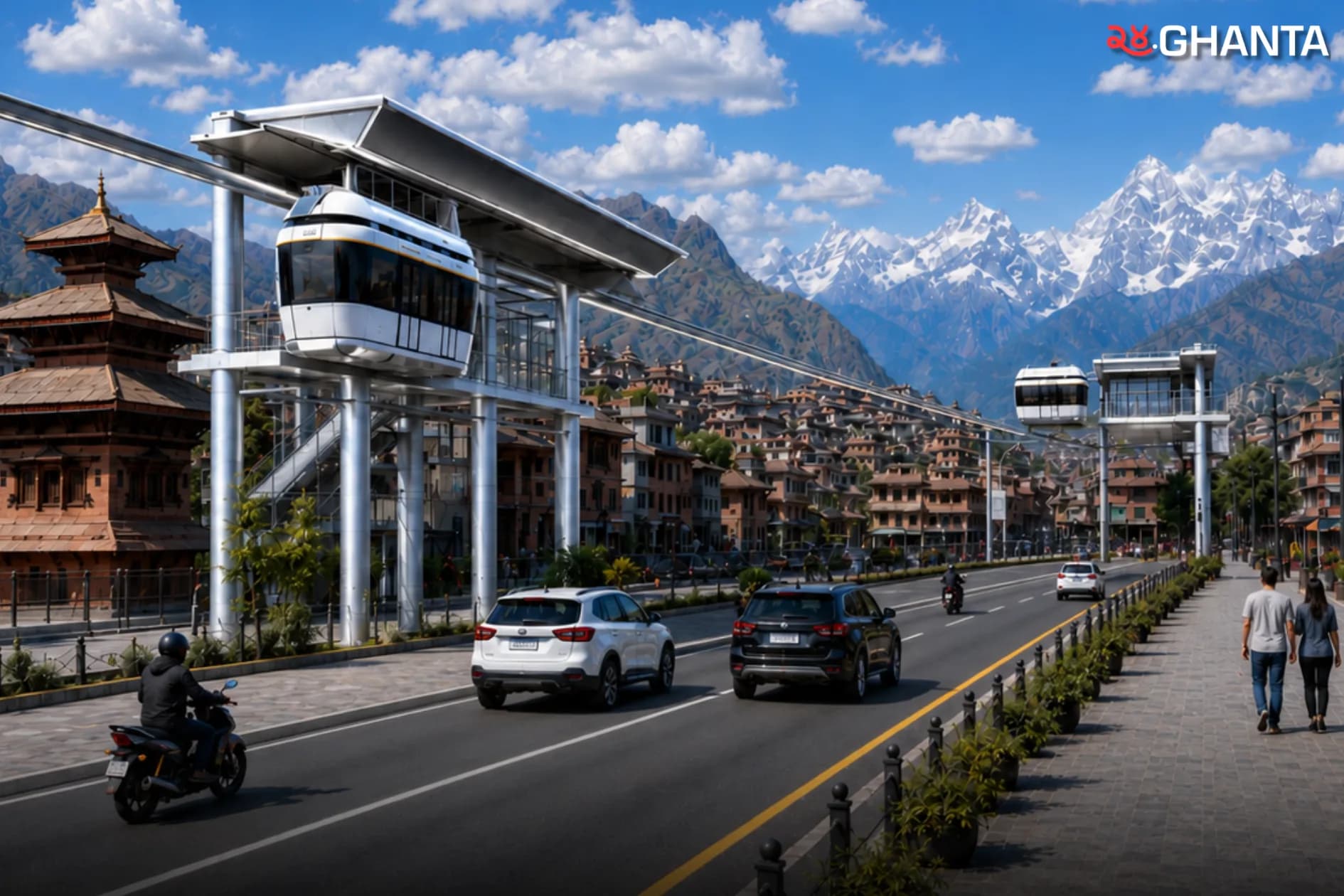
Nepal’s federal government, provincial authorities, the Investment Board Nepal and private developer Kathmandu Podway Company are exploring automated electric Podway systems as a new form of passenger and cargo transport. The idea has gained government attention since Podway was formally recognised among alternative transport technologies in 2023, followed by feasibility programmes in the 2024/25 and 2025/26 federal budgets and new project approvals during 2025 and 2026. Studies and proposals cover Kathmandu Valley, Kathmandu–Hetauda–Birgunj, Biratnagar and areas of Koshi, Karnali, Lumbini and Gandaki. Authorities and developers see the elevated system as a possible way to reduce congestion, use domestic electricity and create transport links in places where widening roads or constructing conventional railways can be difficult.
WHAT EXACTLY IS A PODWAY?
A Podway is an automated transport system in which electrically powered passenger or cargo vehicles travel along a dedicated elevated guideway. Unlike conventional buses that share congested streets, the proposed system would operate separately from road traffic, allowing automated movement between stations. The technology being promoted in Nepal is associated with string-rail systems developed by Unitsky String Technologies, whose proposed Nepal projects include passenger as well as freight transport.

THE GOVERNMENT HAS ALREADY PUT PODWAY INTO BUDGET PLANS
Podway is no longer only a private-sector idea. Nepal's federal budget for FY 2024/25 specifically called for a feasibility study and investment model for a Podway corridor beginning from Bimalnagar on the Prithvi Highway and connecting areas including Ligligkot, Barpak, Gorkha Bazaar, Manakamana and Benighat. The following year's federal budget also allocated funds for studying a new-technology Podway as an alternative to the closed Kathmandu–Hetauda ropeway.
KATHMANDU–HETAUDA–BIRGUNJ IS ONE OF THE BIGGEST PROPOSALS
The Kathmandu–Hetauda–Birgunj corridor has moved beyond general discussion. Investment Board Nepal authorised the process for survey permits and a detailed feasibility study for the project, while the initial Kathmandu–Hetauda section has been discussed at roughly 42 kilometres using the corridor of the former ropeway. The longer-term concept is to extend the system toward Birgunj, potentially creating a passenger and freight connection between the capital and Nepal's major southern trade gateway.
BIRATNAGAR HAS TAKEN A MORE CONCRETE STEP
Koshi Province has become one of the most active areas for Podway development. In 2026, the Koshi Province Investment Authority approved the preparation of a Detailed Project Report for a proposed seven-kilometre line along the Koshi Highway between Rani in Biratnagar and the city's Bus Park. Kathmandu Podway Company submitted the proposal with an estimated investment of about US$45.1 million, following an agreement reached during the Koshi Investment Summit.
STUDIES HAVE REACHED SEVERAL PARTS OF NEPAL
Earlier feasibility work by Kathmandu Podway Company has looked well beyond Biratnagar. Reports describe preliminary studies for roughly 100 kilometres of routes inside Kathmandu Valley, around 231 kilometres between Surkhet and Limi in Humla, approximately 83 kilometres in Koshi Province and a smaller proposed system in the Lumbini area. These figures represent studies and proposals rather than completed or fully approved construction networks.
WHY NEPAL IS INTERESTED
Nepal's geography makes large transport projects unusually difficult and expensive. Mountain slopes, densely developed cities and limited road space can make highway widening or conventional railway construction complicated. Because Podway infrastructure can be elevated and powered electrically, supporters argue that it could use less surface land, avoid normal road congestion and reduce dependence on imported petroleum while making greater use of Nepal's electricity. These advantages remain claims that must be tested through detailed engineering, environmental and financial studies before large-scale construction begins.
COULD IT HELP KATHMANDU'S TRAFFIC?
Kathmandu is one of the most obvious locations being discussed because its streets have limited space for major expansion. Preliminary work has examined several possible corridors across the Valley, and Kathmandu municipalities have previously discussed Podway and other alternative transport technologies as ways of improving urban mobility. An elevated network could theoretically separate passengers from road traffic, but its actual effect on congestion would depend on station locations, passenger demand, connections with buses and other transport, ticket prices and the eventual size of the network.
WHAT ABOUT THE REPORTED 2,055-KILOMETRE NETWORK?
Recent reports have described a Department of Transport Management proposal for a national Podway network of around 2,055 kilometres, covering major cities and corridors. However, that exact nationwide figure could not be independently confirmed in the publicly accessible primary government documents reviewed for this research. The strongest verified evidence currently concerns individual corridors, feasibility studies, provincial proposals and federal budget commitments. Until an official master plan or detailed government document confirms the 2,055-kilometre figure, it should be presented as a reported proposal rather than an approved construction target.
WHAT ABOUT THE NATIONAL TRANSPORT POLICY AND 16TH PLAN?
Recent reporting says the government has adopted a new National Transport Policy 2083 aimed at making Nepal's transport system safer, more modern, sustainable and technology-friendly. Podway has also received broader government recognition as an alternative transport technology, while Nepal's Sixteenth Plan sets the larger framework for improving sustainable infrastructure and transport. However, publicly accessible primary documents reviewed for this report did not provide enough evidence to confidently state that a specific 2,055-kilometre Podway network has been formally approved under either the Sixteenth Plan or Nepal's national Project Bank.
SO, WHEN WILL NEPAL ACTUALLY GET PODWAYS?
There is currently no confirmed date for nationwide commercial Podway operations. Most major proposals are still going through feasibility studies, DPR preparation, investment structuring, regulatory approvals or financing discussions. Biratnagar and the Kathmandu–Hetauda–Birgunj corridor are among the projects showing clearer institutional progress, but construction, testing and commercial service would require several additional approvals and major investment.
THE BIG QUESTION
Nepal has discussed metros, monorails, ropeways and other alternatives for years, but Podway is now receiving more formal attention through budgets, feasibility studies and investment decisions. The technology could potentially suit Nepal's crowded cities and difficult geography—but the real test will be whether the proposals move from reports and DPRs into financially viable construction.
Could driverless Podways finally become the transport breakthrough Nepal has been waiting for?
Published Aug 5 in Technology