
Fake Love, Real Loss: Kaski Woman Loses Rs 3.1 Million (रु 31 Lakh) in Romance Scam
A woman in Kaski reportedly lost Rs 3.1 million (रु 31 lakh) after an online relationship that began on Facebook developed into an elaborate scam involving a supposed wealthy British man and callers posing as Indian police. Police say the case highlights how online fraudsters increasingly exploit emotions, trust and fear alongside techniques such as fake identities, OTP theft and fraudulent foreign opportunities.
· 7 min read
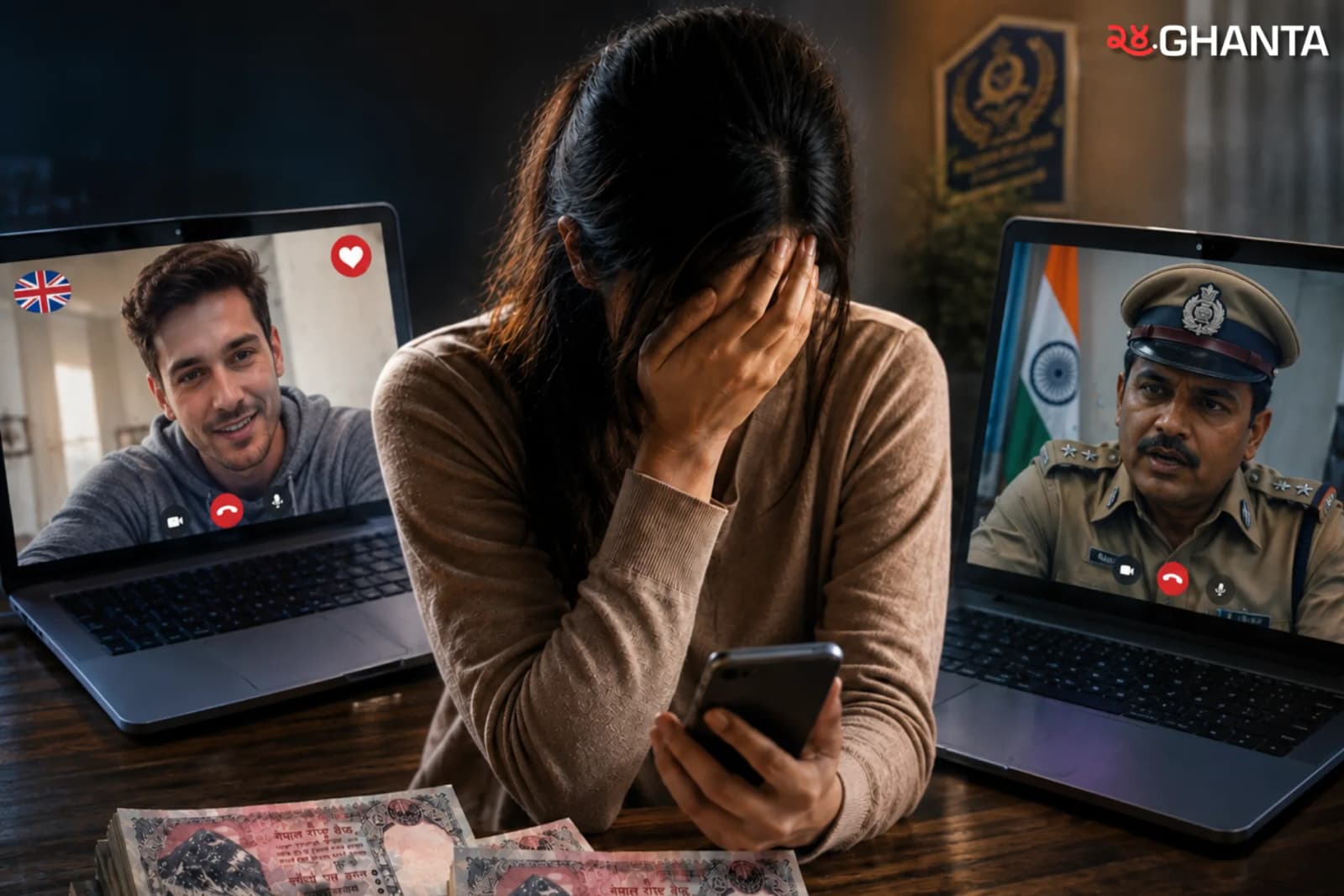
KASKI, August 10, 2026 — A woman in Kaski has reportedly lost Rs 3.1 million (रु 31 lakh) after being deceived through a Facebook relationship by fraudsters who allegedly posed first as a wealthy unmarried man living in the United Kingdom and later as Indian police officers, convincing her to repeatedly transfer money for supposed customs charges and fines after claiming the man had been detained while travelling to Nepal, according to information from the District Police Office, Kaski.
A Facebook Friendship Turned Romantic
The case reportedly began when the woman connected with an unidentified man through Facebook.
Their conversations later continued through WhatsApp using a number carrying a United Kingdom country code.

The man presented himself as unmarried and extremely wealthy, gradually building a relationship with the woman and gaining her trust.
He allegedly told her that he intended to sell his property in Britain, move permanently to Nepal and start a new life with her.
He Promised a New Life in Nepal
As the relationship developed, the man allegedly promised that he would purchase a house and land after arriving in Nepal and spend the rest of his life with her.
To make his story appear believable, he reportedly sent videos appearing to show airports and communicated with her through video calls.
Eventually, he told the woman that he had started his journey to Nepal and would travel through India.
That was when the alleged scam entered its next stage.
Then an ‘Indian Police Officer’ Called
The woman subsequently received a WhatsApp call from a different number.
According to the report, the account's profile picture showed a person dressed in an Indian police uniform.
The caller allegedly told her that the British man she had been speaking with had been arrested in India while carrying a large amount of cash and property.
The supposed police officer then claimed that money was required to pay customs charges and fines before the man could be released.
She Initially Sent Rs 900,000 (रु 9 Lakh)
Believing the man she considered her future partner was genuinely in trouble, the woman reportedly transferred money several times.
Her initial payments eventually reached approximately Rs 900,000 (रु 9 lakh).
The situation demonstrates a common characteristic of social-engineering scams: rather than immediately demanding a huge payment, criminals can first spend time building trust before creating an urgent situation that pressures the victim into acting quickly.
Nepal Police's Cyber Bureau separately warns the public about scams where fraudsters claim foreign gifts or valuables are being held and demand money for supposed taxes or customs clearance.
Police Warned Her It Was a Scam
After transferring the initial Rs 900,000 (रु 9 lakh), the woman reportedly became suspicious and approached the District Police Office, Kaski.
Police investigated and warned her that she was being deceived, advising her not to send any more money.
But according to the reported account of the case, the scammers had already established a powerful emotional connection.
The manipulation continued even after the police warning.
Another Rs 2.2 Million (रु 22 Lakh) Was Sent
The alleged scammer reportedly contacted the woman again and convinced her that his release was close.
He allegedly told her that if she paid the remaining amount, he would finally be released and travel to Nepal with his property.
The woman subsequently transferred another Rs 2.2 million (रु 22 lakh), bringing her total reported loss to Rs 3.1 million (रु 31 lakh).
According to the account attributed to Kaski Police, coordination with Indian authorities eventually established that the supposed romantic partner was not who he had claimed to be.
Romance Was the Tool, Money Was the Goal
What makes the case particularly concerning is that the alleged fraud did not rely solely on a suspicious link or a single fake message.
The scammers reportedly built a relationship over time, created an elaborate story about wealth and marriage, used video communication to strengthen credibility and then introduced a supposed emergency.
By the time money was demanded, the victim had reportedly been led to believe she was helping someone with whom she expected to build a future.
The case demonstrates how social engineering can turn emotional trust into a tool for financial fraud.
Police Warn of Multiple Online Scam Tactics
Nepal Police warns that online financial fraud can take many different forms.
The Cyber Bureau's official guidance specifically identifies schemes involving fake gifts or lottery winnings, requests for customs payments, OTP fraud and manipulation through social-media platforms.
Police have also dealt with cases where fraudsters use Facebook, WhatsApp, Viber and other platforms to establish contact with victims before persuading them to send money. Previous police investigations have documented schemes involving fake foreign parcels, expensive goods, customs charges and attractive foreign-employment promises.
Your Friend Asking for Money May Not Be Your Friend
Another tactic highlighted by Nepal Police involves compromised social-media accounts.
If someone receives a message from a known friend or relative unexpectedly asking for money, the Cyber Bureau advises contacting that person through another method to verify the request because their account may have been hacked.
This is particularly dangerous because the request appears to come from someone the victim already knows and trusts.
Never Give Anyone Your OTP
Police also specifically warn people against sharing one-time passwords (OTPs).
An OTP can be used as a verification tool for banking or online accounts, and providing it to another person can allow criminals to gain unauthorized access.
The Cyber Bureau identifies OTP fraud as one of the common forms of online deception and advises people to protect sensitive account information.
Foreign Jobs and Unrealistic Offers Are Another Warning Sign
Fraudsters also exploit people's desire to work or travel abroad.
Nepal Police advises the public to be suspicious of online employment offers that unexpectedly require the applicant to invest or transfer money first. The Cyber Bureau also specifically warns against attractive sponsored job advertisements and other social-media offers that may be designed to lure victims.
The basic warning applies across many types of scams: if an online offer appears unusually attractive, verify it independently before sending money or personal information.
How Police Say People Can Protect Themselves
Nepal Police advises people not to trust unexpected links, foreign-gift claims or suspicious online offers. Users should avoid sharing sensitive personal information, use strong passwords and enable two-factor or multi-factor authenticationwherever possible.
People should also independently verify requests for money—even when the request appears to come from a friend, family member, romantic partner, bank or other trusted source.
Victims Should Preserve Their Evidence
People who believe they have been targeted by online financial fraud should preserve screenshots, payment vouchers, chat histories, audio, video and other available evidence.
Nepal Police says cybercrime complaints outside Kathmandu Valley can be filed at a convenient police office or District Police Office, while cases within Kathmandu Valley can be reported to the Nepal Police Cyber Bureau.
The Cyber Bureau also provides a dedicated process for reporting online financial fraud.
The Bigger Warning Behind the Rs 3.1 Million (रु 31 Lakh) Loss
The Kaski case is a reminder that modern online scams do not always look like obvious fraud.
A scammer may spend weeks building credibility, create convincing identities, use international phone numbers, make video calls, and involve additional people pretending to be officials.
The technology may change, but the objective remains the same: gain the victim's trust, create urgency, and convince them to send money before they have time to independently verify the story.
For internet users, the safest response to an unexpected request for money, particularly one involving a foreign romantic partner, customs payment, emergency, investment, or valuable parcel—is to stop the transaction and independently verify the claim first.
Money Breakdown
First transferred: Rs 900,000 (रु 9 lakh)
Later transferred: Rs 2.2 million (रु 22 lakh)
Total loss: Rs 3.1 million (रु 31 lakh)
Published Aug 10 in Crime