
Ganesh Karki Raises Concern Over AI Use in Nepal Parliament
Rastriya Swatantra Party lawmaker Ganesh Karki has raised concerns about the growing use of artificial intelligence in Nepal’s Parliament, saying lawmakers must not allow technology to replace their own judgment and responsibility.
· 3 min read
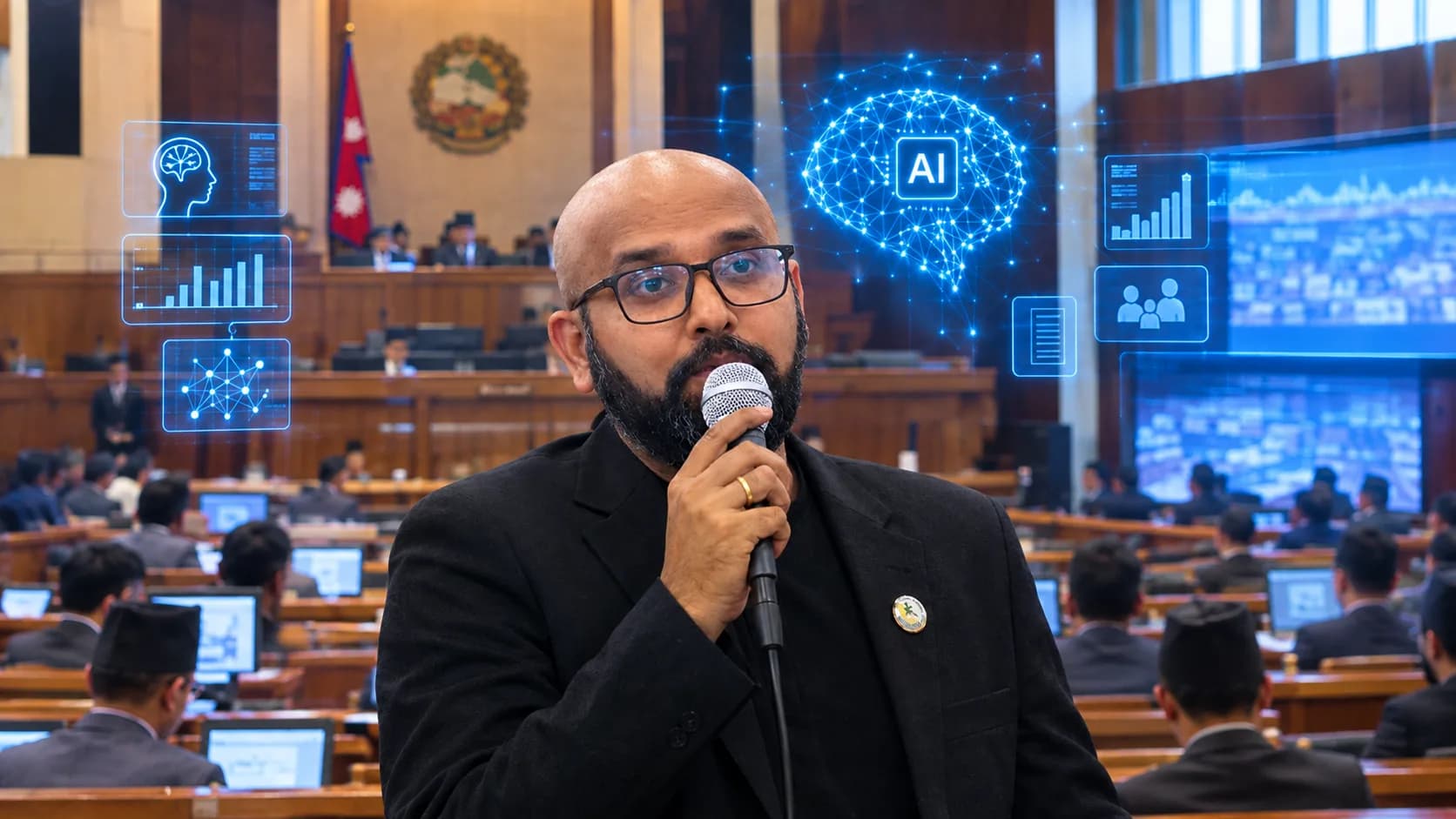
Kathmandu — Rastriya Swatantra Party (RSP) lawmaker Ganesh Karki has raised concerns over what he described as the growing influence of artificial intelligence in Nepal’s Parliament.
Speaking during a meeting of the House of Representatives on Tuesday, Karki said lawmakers should use their own judgment, energy and time to work for the country and its citizens. He argued that MPs should not simply wait for government proposals and then support or oppose them without making their own contribution.

Karki made the remarks while discussing the role of lawmakers and the need for Parliament to change the way it works. Taking a sarcastic approach to the growing use of AI, he said Parliament had become so “AI-filled” that it seemed only necessary for someone to say, “Hey, I am AI.”
Karki Calls for Independent Thinking
Karki said being a lawmaker should involve more than simply reacting to proposals brought by the government. According to his remarks, elected representatives have a responsibility to use their own knowledge, ideas and judgment for the benefit of citizens.
He also suggested that lawmakers can use different resources and tools to do their work better, but technology should support their work rather than replace their thinking. His comments come as artificial intelligence is becoming increasingly common in research, writing, information gathering and other areas of public life.
Debate Over AI and Political Responsibility
The comments have opened a wider discussion about the role of artificial intelligence in politics. AI tools can help lawmakers find information, study documents and understand large amounts of data more quickly. However, important political decisions still require human judgment, debate and accountability.
Karki also warned that simply changing technology would not be enough if the thinking and working methods of Parliament remained unchanged. He said that if lawmakers do not change their thinking, technology and tools, future parliamentary sessions could continue in the same way as previous ones.
The remarks are particularly relevant as governments and elected representatives around the world are trying to understand how AI should be used in public institutions. The challenge is to benefit from new technology while ensuring that elected officials remain responsible for the decisions they make.
Ganesh Karki was elected from Morang-3 and received 36,924 votes, according to election reporting by Kantipur.
Conclusion
Ganesh Karki’s comments highlight a simple but important question for Nepal’s Parliament: how can lawmakers use artificial intelligence without allowing it to replace independent thinking? As AI becomes a bigger part of everyday work, the debate over technology, human judgment and political responsibility is likely to continue.
Published 2 hours ago in Politics