
RSP’s 182 Seat Victory Faces A New Test As Controversies Put Candidate Screening And Accountability Under Scrutiny
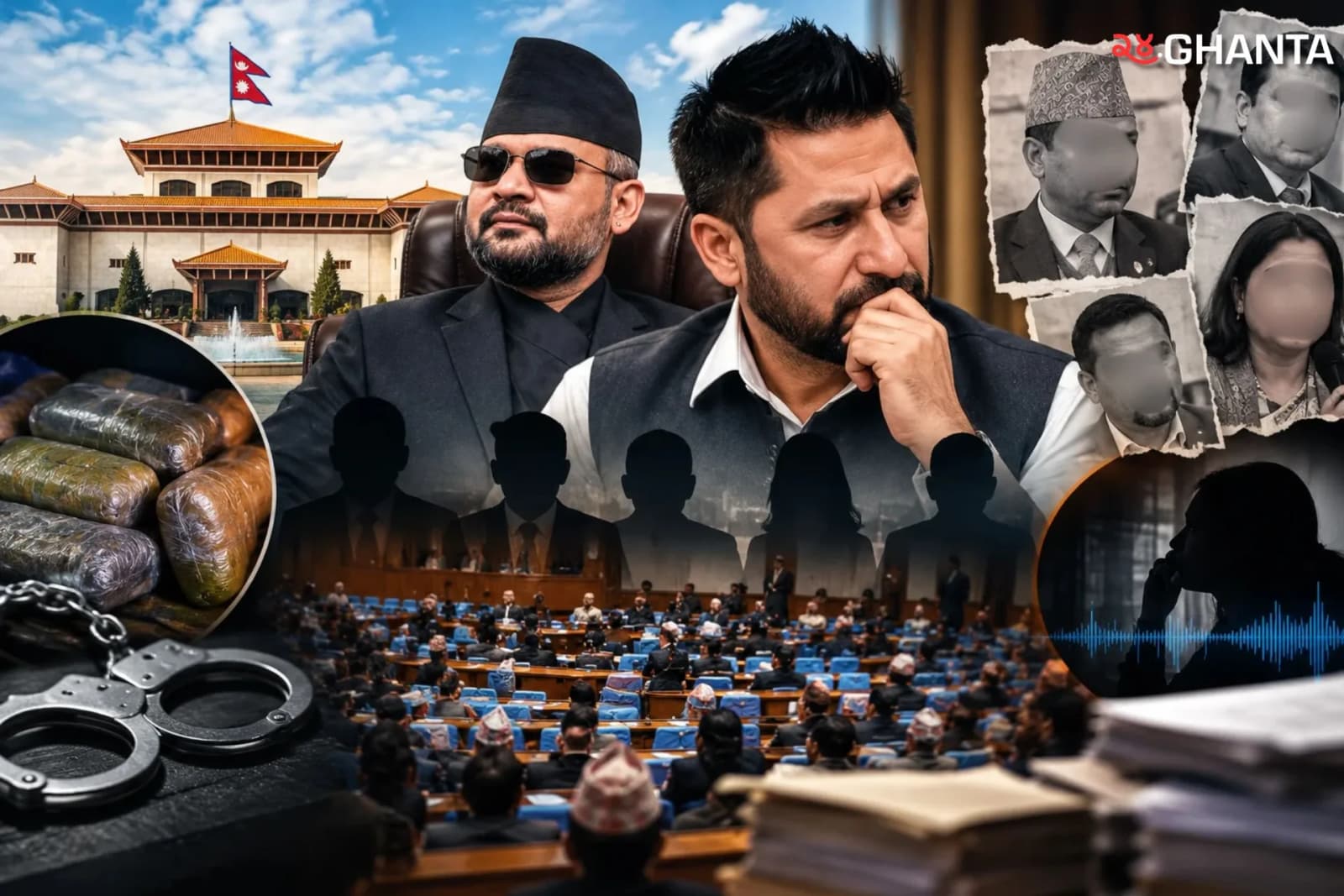
RSP’s historic 182-seat victory is now facing scrutiny as controversies involving its MPs, ministers and leaders raise questions about candidate screening and party accountability.
· 8 min read
Kathmandu, October 14, 2026
The Rastriya Swatantra Party (RSP) entered government with one of the strongest electoral mandates in Nepal’s recent political history, winning 182 of the 275 seats in the House of Representatives in the March 5, 2026 election. The party had campaigned as an alternative to the traditional political establishment, promising cleaner politics, stronger accountability and a different style of governance.
Under a seven-point agreement reached before the election, Balendra Shah was to become prime minister while Rabi Lamichhane would remain party chair. Shah was appointed prime minister on March 27 after the RSP emerged as the largest party with 182 seats.

Seven months into the government, however, the party is facing a different challenge. A series of controversies involving MPs, ministers and local party leaders has raised questions about how candidates were selected, how thoroughly they were screened and whether the party can maintain the standards it promised voters.
From Political Alternative To Governing Party
The RSP's rise was built around public dissatisfaction with established political parties. Its campaign brought a number of relatively new political faces into Parliament, including people from backgrounds outside traditional party politics.
The party's candidate selection process had itself faced criticism before the election. The sources reported in February that some RSP members had accused the party leadership of taking greater control over candidate selection, despite the party previously presenting primaries as an important difference from traditional parties.
The huge election result gave the party enough strength to form the government almost on its own. But that success also meant that many newly elected representatives suddenly moved into positions carrying significant political responsibility.
That has made the quality of candidate screening a much bigger issue.
Latest Controversy: Sabir Hussain Arrested
The latest development involves Sabir Hussain, chair of the RSP's Surunga Municipality committee in Saptari.
Police arrested Hussain from the RSP party office at Kadmaha Bazaar in Surunga Municipality 4. According to police, he had been wanted in connection with a drug case involving the seizure of 130 kilograms of marijuana following a road accident at Zeromile in Dhangadhimai Municipality 10, Siraha, on December 14, 2024.
Police said the marijuana was found packed in five bundles inside a car involved in the accident. The car driver reportedly fled the scene, and Hussain was later arrested in connection with the case.
The arrest is an allegation and legal process, not a finding of guilt. Hussain's case will have to proceed through the relevant legal process. Instagram
Khagendra Sunar Case Raises Questions Over AI And Audio Evidence
Another major controversy currently facing the party involves RSP lawmaker Khagendra Sunar.
Audio recordings were publicly circulated in October, with reports alleging that the voice belonged to Sunar and involved abusive language, threats, demands for money and allegations connected to a woman.
Sunar has strongly denied that the voice is his. He has claimed that the material may have been created using artificial intelligence and other technology and has said he is ready to cooperate with investigations.
The RSP has taken action while the allegations remain unresolved. The party's Central Disciplinary Commission began an internal investigation, and Sunar was instructed not to perform his duties as a lawmaker or central committee member while the inquiry continues.
The state investigation was initially more limited. Nepal Police said it required a formal complaint to begin a criminal investigation, although police were making inquiries into the material that had become public.
This distinction is important. The allegations against Sunar have not been established as fact, and the authenticity of the recordings remains a central question. Instagram
Earlier Controversy Involving Krishna Kumar Karki
In May, another RSP lawmaker, Krishna Kumar Karki, came under scrutiny following allegations that he had impregnated a Nigerian woman and later abandoned her.
The issue was raised in Parliament and attracted significant attention on social media. The RSP's disciplinary commission began gathering information from Karki as part of an internal inquiry. Karki denied the allegations.
The case added to concerns about the party's internal mechanisms for dealing with allegations against its elected representatives.
Cabinet Controversies
The problems have not been limited to MPs and local party leaders.
Deepak Kumar Sah
Labour, Employment and Social Security Minister Deepak Kumar Sah was removed from office in April after the RSP's Central Disciplinary Commission found that he had misused his position in relation to his wife's continuation as a member of the Health Insurance Board.
RSP chair Rabi Lamichhane recommended Sah's removal, and Prime Minister Balendra Shah acted on the recommendation.
This case is also important because it showed the party taking disciplinary action against one of its own ministers within the early months of the government.
Sudan Gurung
Home Minister Sudhan Gurung resigned in April after questions were raised about his investments, property details and business links.
The government later formed an investigation committee to examine the allegations. The committee concluded that the allegations could not be substantiated and found his assets legitimate. Gurung was subsequently reappointed as home minister on June 9.
Therefore, Gurung's case should not simply be described as a minister being forced out over proven wrongdoing. He resigned while facing public questions, an investigation followed, and he later returned to the Cabinet after the government panel cleared him. (1) Instagram
Gauri Kumari Yadav
Industry, Commerce and Supplies Minister Gauri Kumari Yadav resigned in September following criticism of her remarks concerning the country's LPG shortage.
Yadav had said during a parliamentary committee meeting that LPG supplies would not improve unless action was taken against industrialists. She also questioned the number of LPG companies operating in Nepal. She later submitted her resignation to Prime Minister Shah, citing personal reasons. (1) Instagram
Is RSP Taking Action?
One argument in favour of the RSP leadership is that the party has not always ignored controversies involving its own members.
In the Sah case, the party's disciplinary mechanism recommended removal from ministerial office. In the Sunar case, the party has opened an internal investigation and restricted his official activities while the inquiry continues. In the Karki case, the party also began an internal investigation after the allegations became public.
Rabi Lamichhane has also publicly spoken about discipline within the party. At the RSP's national convention in June, he said the party would not allow factions and argued that RSP should learn from the problems of older political parties.
But disciplinary action alone does not settle the larger question.
The Bigger Question Is Candidate Screening
The central issue is whether these controversies represent the normal difficulties faced by a young political party or expose weaknesses in the way RSP selected its candidates.
The party's political success came partly from bringing new faces and people from outside traditional politics into Parliament. That helped RSP present itself as different from established parties.
But political inexperience can also create challenges when newly elected representatives suddenly become lawmakers, ministers or senior party officials.
The question for RSP is therefore not whether every allegation against one of its members is true. Several remain unresolved or disputed.
The bigger question is whether the party has strong enough systems to:
properly screen candidates before elections
examine potential legal and ethical concerns
respond quickly when allegations emerge
separate political protection from disciplinary decisions
complete investigations rather than simply announce them
take proportionate action when wrongdoing is established
Rabi Lamichhane Faces A Leadership Test
As party chair, Rabi Lamichhane is at the centre of this debate.
The RSP's electoral success cannot be separated from the political image built by its leadership. Voters who supported the party expected it to provide an alternative to the practices associated with established political parties.
That makes controversies involving RSP representatives more politically damaging than they might otherwise be.
At the same time, Lamichhane's own political and legal history means the party's promise of accountability is closely watched. The standard expected from RSP is not simply that it should investigate allegations. Voters will also look at whether investigations reach clear conclusions and whether confirmed wrongdoing leads to meaningful consequences.
The RSP's Real Test After 182 Seats
Winning 182 seats out of 275 gave RSP an extraordinary opportunity to demonstrate whether a new political force could govern differently.
But electoral victory is only the first stage.
The latest arrest of an RSP local leader, the unresolved allegations surrounding MP Khagendra Sunar, the earlier controversy involving Krishna Kumar Karki, and the Cabinet controversies involving Sah, Gurung and Yadav have created a growing accountability debate.
Some cases have resulted in disciplinary action. Others remain under investigation or have been resolved in favour of the person facing allegations.
The challenge now is for RSP to show that its internal systems are strong enough to distinguish between false allegations, genuine misconduct and unresolved claims, while ensuring that no party member receives special protection because of political position.
For a party that won public support by promising a break from old political practices, that may be the most important test of all.
The question facing RSP is no longer simply whether it can win elections. It is whether it can build a political organisation capable of screening its own people, investigating problems transparently and maintaining public trust when its own leaders and representatives come under scrutiny.
Tags
Published 51 mins ago in Politics