
India-China Resume Border Trade Through Lipulekh Despite Nepal’s Objection
India and China have restarted their traditional border trade through Lipulekh Pass, a route Nepal claims falls within its territory, reopening a long-standing diplomatic issue.
· 3 min read
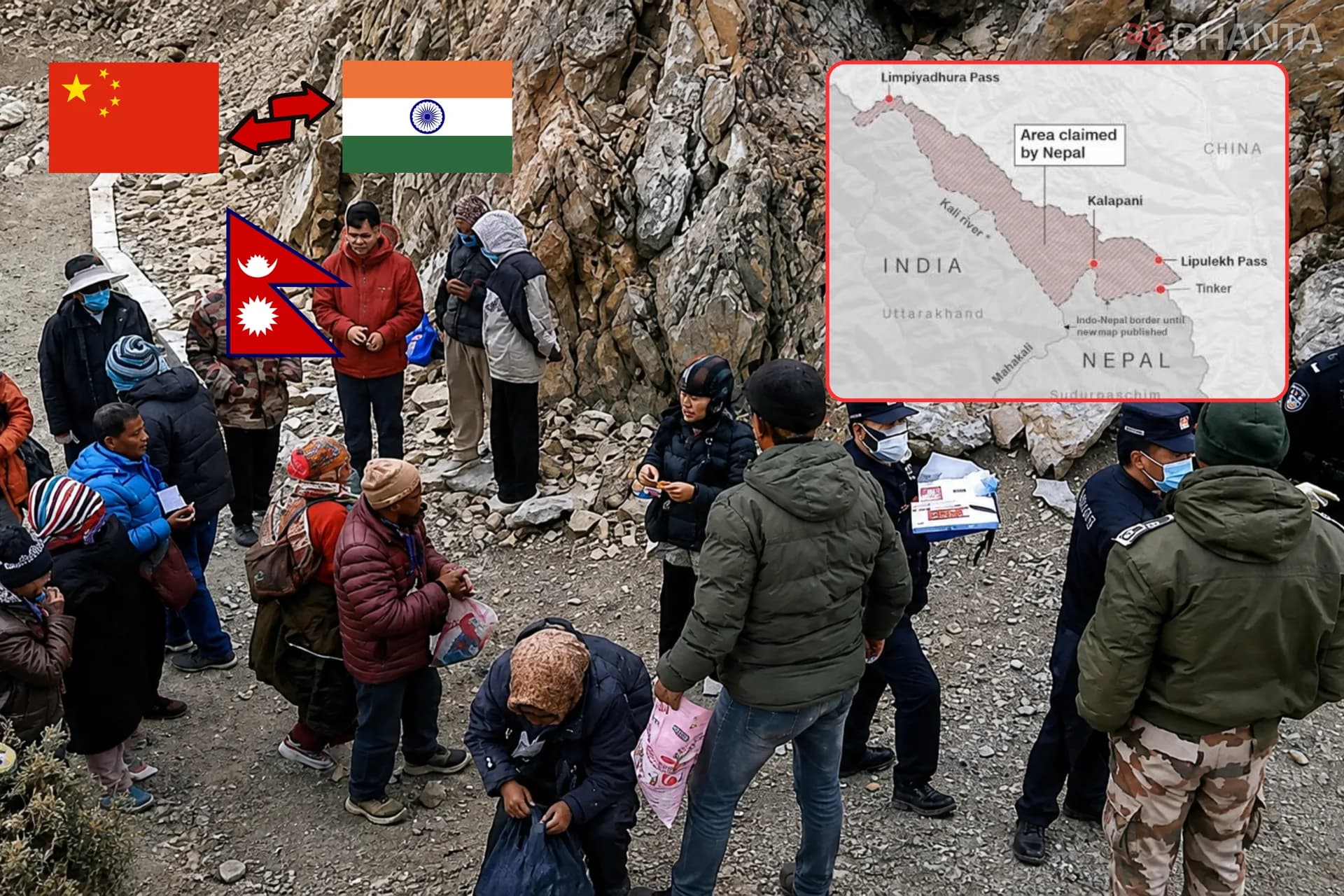
India and China have resumed border trade through the Lipulekh Pass after a gap of six years, despite Nepal’s objections regarding the use of the route.
According to Indian media reports, the 2026 border trade season officially started after Indian traders crossed Lipulekh Pass in Uttarakhand’s Pithoragarh district and entered the Tibet Autonomous Region of China.

The development has once again brought attention to the long-running territorial dispute surrounding Lipulekh.
First Group Of Indian Traders Reaches Tibet
The first group of Indian traders reached Taklakot market in Tibet after completing required border and immigration procedures.
The 20-member group included:
16 registered traders
4 support members
According to Indian officials, the traders completed immigration formalities at the Gunji office before travelling towards Lipulekh Pass.
After spending the night at Nabidhang, the group moved toward the border crossing.
Chinese officials completed formal procedures at Lipulekh Pass before allowing the Indian traders to enter Tibet.
Trade Route Reopens After Six Years
India-China border trade through Lipulekh had remained suspended for around six years.
The reopening follows renewed efforts between India and China to restore traditional trade routes between the two countries.
Officials from India’s side said more registered traders are expected to travel to Taklakot in phases after receiving approval from Chinese authorities.
Nepal Objects To Use Of Lipulekh Route
Nepal has repeatedly objected to India and China using Lipulekh as a trade route without consulting Kathmandu.
Nepal claims that Lipulekh lies within its territory and has maintained that any agreement involving the area should include Nepal.
The issue became more prominent after India published a new political map in 2019 showing Lipulekh within Indian territory.
Nepal later issued its own updated map in 2020, including Lipulekh, Kalapani and Limpiyadhura within Nepal’s borders.
Previous India-China Understanding Raised Nepal’s Concerns
The issue resurfaced after China and India reportedly agreed to continue using Lipulekh for border trade during Chinese Foreign Minister Wang Yi’s visit to India.
Nepal had expressed objections at that time, arguing that decisions affecting the disputed area should not be made without Nepal’s involvement.
The latest reopening of trade has renewed those concerns.
Location Of Lipulekh Pass
Lipulekh Pass is located in the Himalayan region near the Nepal-India-China tri-junction.
Nepal claims that the area lies within its western territory based on historical documents and border interpretations.
The route has strategic importance because it connects India’s Uttarakhand region with Tibet.
Diplomatic Issue Beyond Trade
While the reopening focuses on economic activity, Lipulekh remains a sensitive diplomatic issue involving Nepal, India and China.
Nepal has consistently called for dialogue to resolve border-related disagreements through diplomatic channels.
The resumption of trade through the route is expected to draw further attention to Nepal’s position on the disputed territory.
Published Aug 4 in Politics